

How to practice safety skills with your child
Practicing how to handle risky situations.


Bite-sized mental health skills for real parents 🌸
I Can Be Safe: A picture book about safety for kids (age 5+)
Last week, we recommended I Can Be Safe, which highlights the concept of safety skills — the idea that actively practicing skills for handling risky or dangerous situations empowers kids and helps them avoid harm (read that post here). This week, we share some resources to help you help your child develop safety skills, and answer your real-life questions about safety and empowering kids.
Buy I Can Be Safe or listen online for free
How to Talk About Safety with Your Child
We want to make developing safety skills feel as approachable as possible. Here are some ideas of how you can talk to your child about less safe situations. We’ve included some comments to help you understand why we recommend these steps.
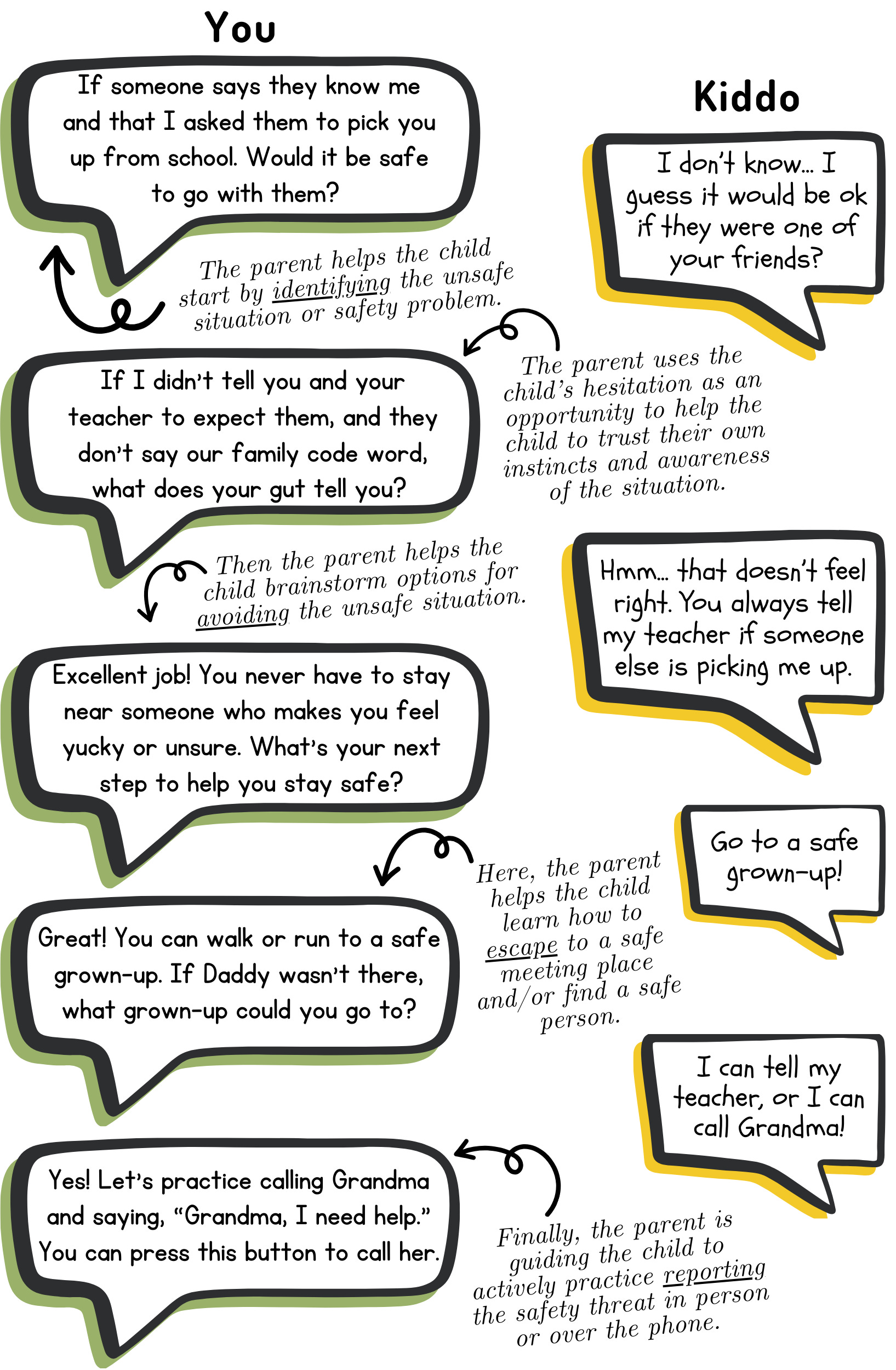
This discussion is just the beginning, and would need to be followed by rehearsing in real life, feedback, and regular practice of the skill. A great version of follow-up practice would be the parent taking the child to their school and standing in the pick-up zone and saying, “Let’s practice what you would do if a person you didn’t know tries to pick you up at school. I’ll pretend to be that unknown person…”
Questions From Our Community About Safety Skills
Q: How do you balance letting your kids take risks with keeping them safe?
A: This is one of the most common questions about safety for child psychologists! We like to encourage parents to trust their child’s instincts about which skills and activities they’re ready to try. For example, Betsy’s toddler recently looked like he was about to jump off a high platform on the playground's play structure. Through his actions, he was communicating to her that he’s ready to practice taking some big jumps. At this moment, she had concerns about the platform’s height, but we wouldn’t recommend that she only tell him, “Jumping’s not safe - no jumping!” because we don’t want to quash his opportunities to practice this developmental skill.
Instead, we want to encourage parents to trust their instincts about potential safety concerns and work with their child to find a safer way to practice the same skill. When you are in this moment of balancing letting your kid take risks while keeping them safe, try asking yourself: What are the realistic dangers here? Can we find a safer way for them to do the same activity and practice the same skill? Here, Betsy might have asked herself: Is this so high that he could be injured? Would it be safe for him to jump from this height if I were holding his hands? Can we practice big jumps at a lower height, so he can practice this skill? As much as you can, we recommend following your child’s instincts and the skills they’re naturally trying to grow into, but consider whether the context in which they are practicing needs to be modified to be safer at their current developmental level.
Q: What if I don’t know if something is safe or unsafe for my child?
A: This is such a great question, and it is easy for parents to fall into the habit of categorizing situations as safe or unsafe as quick mental shortcuts. But it's important to remember that safety is a spectrum: activities can be more or less safe (i.e., present more or less risk of harm), but nothing is ever perfectly safe or unsafe. When you are unsure how much danger a situation or activity poses for your child, we recommend first checking in with yourself and asking whether you’re worried about this activity because of your own fear or because of realistic safety concerns. Sometimes, as caregivers, we can get stuck on a safety rule we set for one developmental period, but as they grow, that rule is no longer keeping them safe and is now preventing their growth. But letting go of the rule (that has previously done such a great job of keeping them safe!) can feel really scary. This is a great moment to talk it through with a co-parent or ask other parents you know for a second opinion, and to hear how they dealt with transitioning into that activity at your child’s age.
If you are struggling to decide whether an activity is safe for your child because little ones’ abilities are always changing, you can also learn a lot of information by observing other kids in your environment. Look around the playground or schoolyard to see what types of activities kids are doing. If you see a kid around your child’s developmental level doing the same activity, this is a pretty good indication that you could let your child try it out safely.
Go deeper on the science and practice of safety skills:
If you are interested in age-by-age guidelines for talking with kids about safety, this Johns Hopkins Medicine website offers practical tips and example language for discussing safety skills with children in different grade ranges.
Internet safety is part of everyday safety! This short video by Amaze.org can be an awesome starting point for introducing simple recommendations to help kids stay safer online.
This Safety Hand activity is a great way to help kids practice naming several trusted adults so they know who to contact (and how to reach them) if they feel unsafe or need help.
This printable booklet covers how to talk with kids about personal safety at home, at school, and in an emergency.
If you are interested in learning more about the research behind strategies for firearm prevention for young kids (ages 0-5), check out this recent review article.
Have you talked to your child about how to handle less safe situations? Have you considered rehearsing these skills with your child? Share your experiences or questions about safety and handling risky situations in the comments!
FYI: The links above for buying I Can Be Safe are affiliate links (see this page for more information).