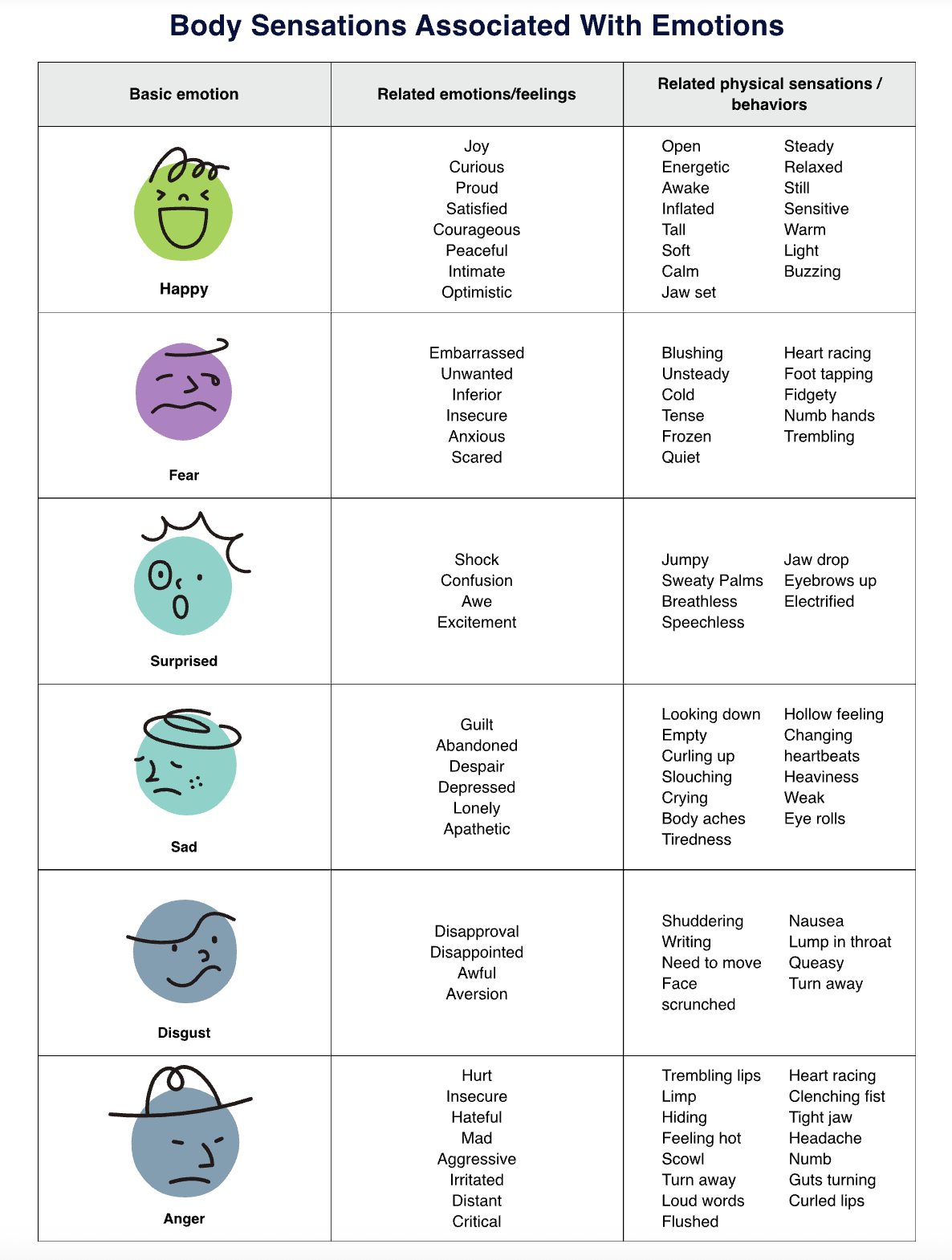
One powerful way to support your child’s emotional well-being is by helping them understand how emotions show up in their bodies. Emotions aren't just feelings in our minds—they often come with physical sensations like a racing heart, tense shoulders, or a fluttery stomach. And just like emotions, these sensations can feel different for everyone.
By talking with your child about how their body feels when they’re experiencing different emotions, you can help them build emotional awareness and self-regulation skills. It’s helpful to normalize these sensations as part of being human—and as useful clues about what we might be feeling.
We often use this handout from carepatron to spark conversations about how emotions and body sensations are connected. Asking questions like “What does anger feel like in your body?” or “Where do you feel excitement?” can be a great starting point. Building this kind of awareness lays the groundwork for recognizing and managing emotions in healthy ways.