



Clinical psychologists picking kids books rooted in mental health science 🌸
In My Heart: A Book of Feelings: A picture book about noticing emotions in the body for kids (age 5+)
Each week, we recommend one kids book that teaches a mental health concept. In honor of Valentine’s Day this week, we’re sharing In My Heart: A Book of Feelings, written by Jo Witek and illustrated by Christine Roussey. This book highlights that noticing how our bodies feel can help us identify what emotion we’re experiencing, which can help us manage big emotions. Read on to learn why we recommend In My Heart to the parents we know, the science behind body sensations and emotions, and tips for talking to your child about noticing feelings in their body.
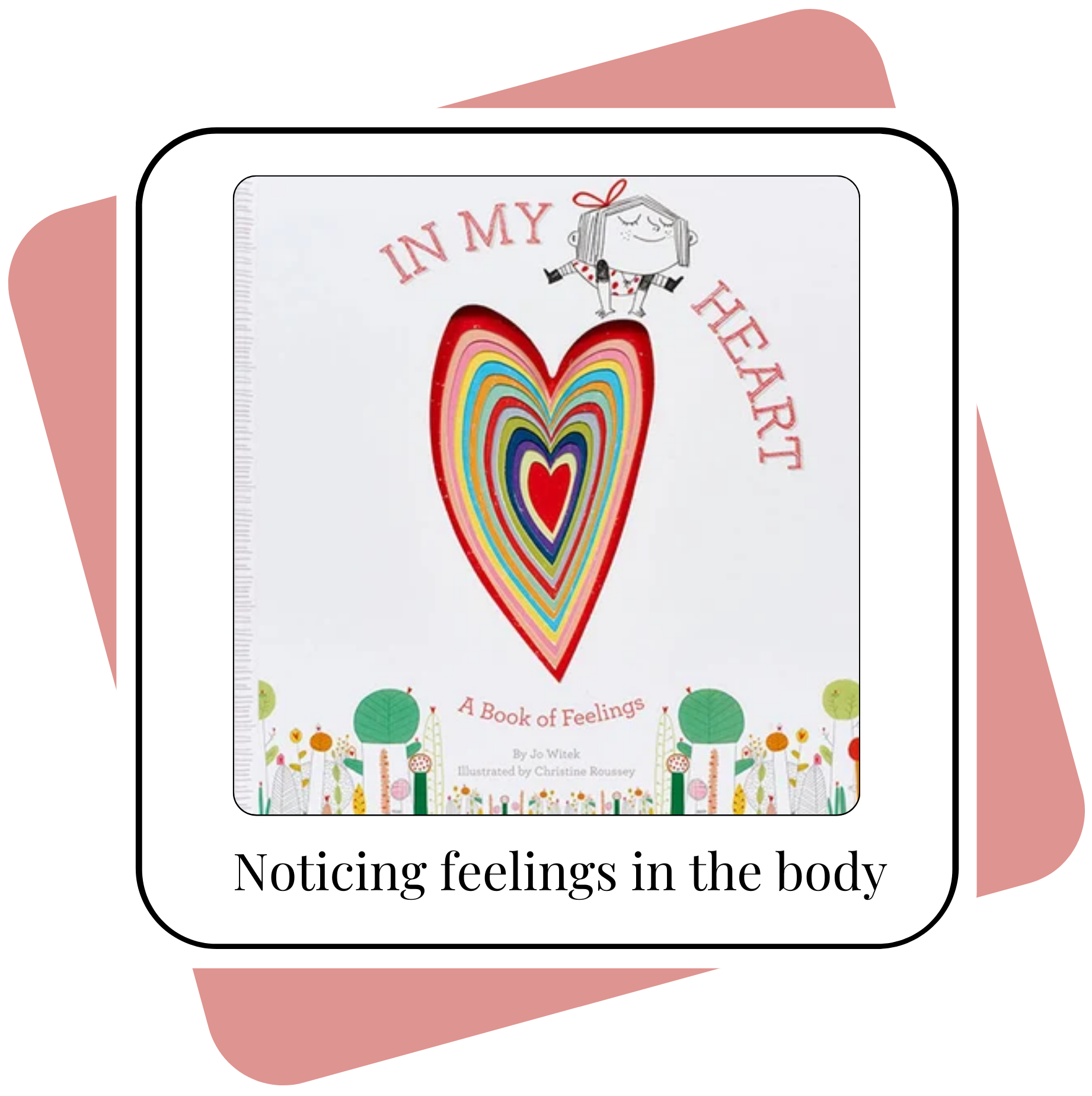
About the Book
In My Heart — which features sweet heart cut-outs throughout the whole book — follows a little girl who talks about all the feelings in her heart. On each page, she describes how different emotions feels in her body — when she’s happy, she feels like she’s blasting off into the sky, when she’s sad, her heart feels heavy like an elephant. We love how this book covers a wide range of possible emotions — from mad, to brave, to sad, to hopeful — and talks vividly about how each emotion can feel in the mind and body.
Buy In My Heart or listen online for free
What Science Tells Us about Noticing Feelings in the Body
One way we experience and recognize emotions is through sensations in the body. This is pretty intuitive — for example, it’s common to hear people talk about how being nervous or anxious can feel like having “butterflies in the stomach.” Researchers have explored the idea of emotions going with body sensations using a clever method called “body mapping.” In a study of over 700 people, researchers showed participants a silhouette of a body and asked them to highlight the parts of their body that felt active, or inactive, as they were experiencing a certain emotion. Using this method, researchers showed that different emotions have distinct “body sensation maps,” which are consistent across cultures. Here’s what these maps look like:
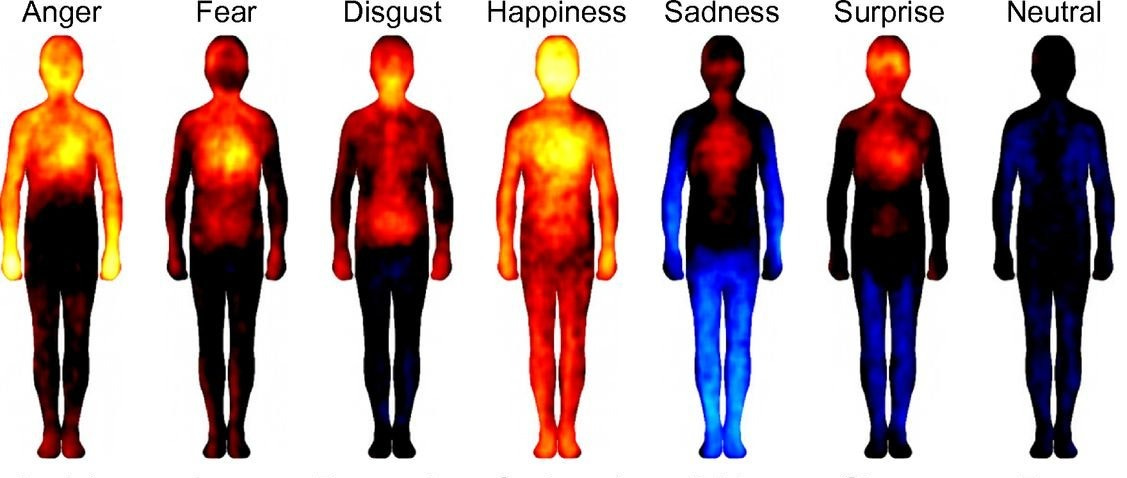
Figure 2 in “Bodily maps of emotions,” published in Proceedings of the National Academy of Sciences (Nummenmaa et al., 2014). Warm colors represent active areas; cool colors represent inactive areas.
Research using bodily maps of emotions in kids and teens has shown that kids as young as 6 have unique patterns of body sensations for emotions like happiness, fear, and surprise. Researchers also noticed that as kids get older, their emotional body maps become more precise. For example, bodily maps for anger, fear, and sadness all look pretty similar for 6-year-olds, but in older teens, they look much more distinct:
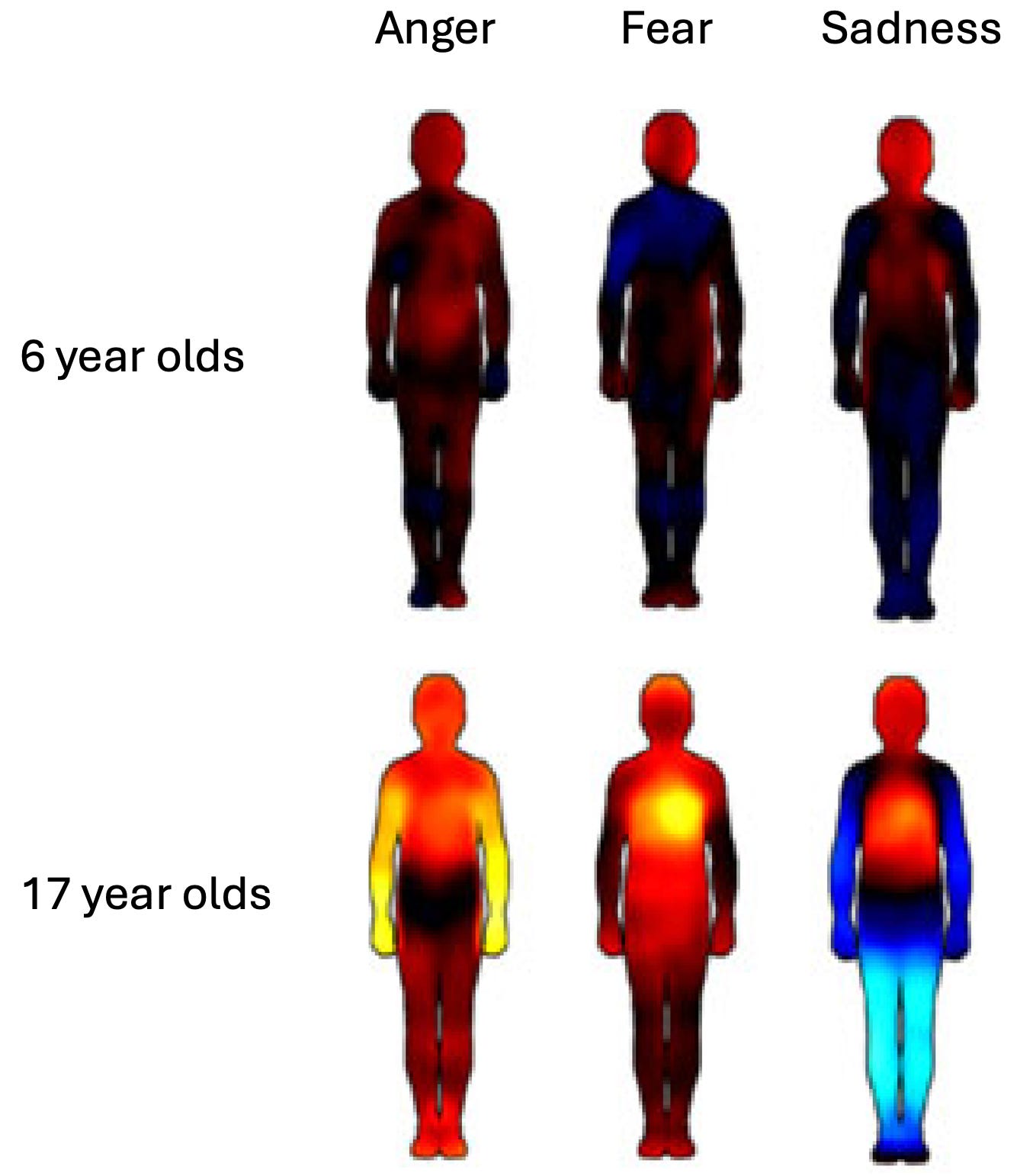
Adapted from Figure 2 in “Bodily maps of emotions across child development,” published in Developmental Science (Hietanen et al., 2016). Warm colors represent active areas; cool colors represent inactive areas.
Why does this matter? Research shows that being aware of emotions and being able to differentiate between emotions are both related to strong mental health. For over two decades, therapists have tried to help kids increase awareness of their emotional experiences using body-mapping activities, which involve creating an artistic representation of one’s own thoughts and experiences on a life-sized paper silhouette.
Research is still exploring the most effective ways to help children connect the sensations in their bodies to their emotions. Methods for doing this are being tested in programs like “I Spy Feelings,” which teaches kids to notice different “body clues” for each feeling and has been shown to help kids cope better with anger.
How to Help Your Child Begin to Notice Feelings in Their Body
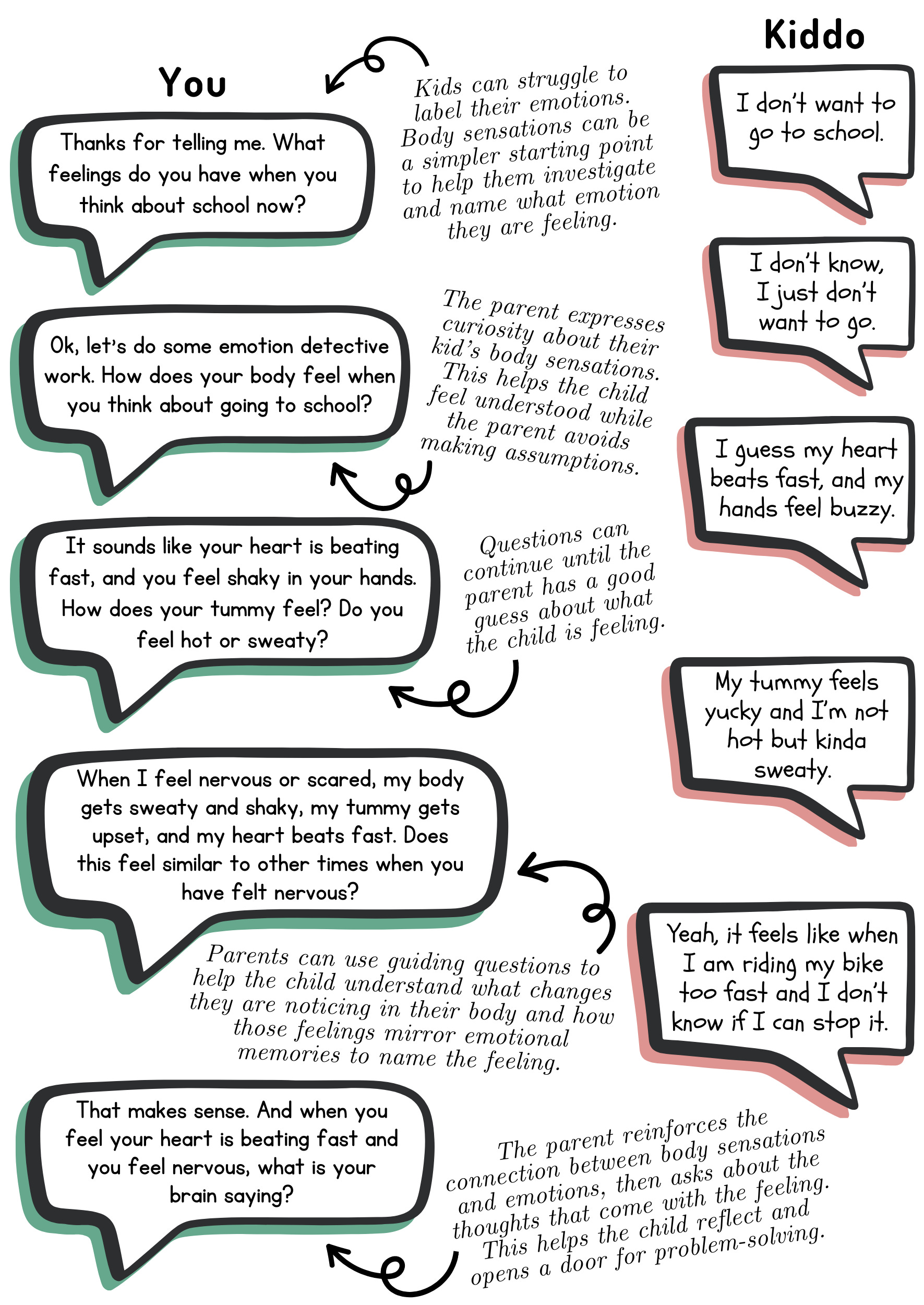
Try out these prompts for helping your kiddo notice how their body sensations are connected to their emotions:
What Marin likes about In My Heart: In my clinical work, I have seen how empowering it can be for kids to take the time to understand how their emotions connect to the sensations in their bodies. Suddenly, that really hot, uncomfortable feeling in their face and chest that comes with anger isn’t just a yucky feeling they need to get rid of as soon as possible, but instead it becomes a “clue” to what is happening in their minds. Taking time to explore kids’ physical experiences can also help parents understand what it actually feels like inside a kid’s bodies during a big emotional moment, which can build empathy (from learning that there’s an overwhelming amount of sensation flooding the whole body to learning that the child is feeling very little sensation at all). In My Heart does an awesome job of showing the richness of both literal sensations (her heart beating fast when she is excited) and metaphorical sensations (the feeling of heaviness in her heart when she is sad) that kids struggle with as they learn to link body feelings to emotion words.
What Betsy likes about In My Heart: Since it’s almost Valentine’s Day, I wanted to bring in some cool research on how knowing about emotions (a skill we can build when we practice noticing feelings in the body) can help kids build social connection and relationships. One study found that preschoolers with more emotion knowledge were more accepted by their peers, and another study found that this was because kids with better emotion knowledge have better social skills. Higher social acceptance matters, because it leads to stronger social connections and friendships. I love the idea that reading books like In My Heart could help strengthen kids’ social relationships. Just another reason to make talking about emotions part of your family culture!
Go deeper on the science of noticing feelings in the body:
We like this handout from Oxford Health for helping kids explore where they feel different emotions in their bodies, which has a lot in common with the body maps of emotions we talked about above.
We like this article from the Kids Mental Health Foundation, which gives parents ideas for how to support their kids as they learn to identify emotions.
This mindfulness activity of mentally “scanning” the body from head to toe with the help of the “Stress Bot” can help your kiddo learn to notice how the sensations in their body can change as they practice their coping skills.
This short video can be a great starting point for discussing with younger kiddos (3 and under) if an emotion makes their body feel comfortable or uncomfortable.
We always love when an adult band starts making kid music, and we especially love this new song by Wild Child called “Feelings” which normalizes having lots of different emotions. It’s from their forthcoming album “Wild Child for Kids” (coming out in April!).
Buy In My Heart or listen online for free
We think In My Heart would be a great addition to any child’s library. We’d love to hear your reactions to this review and your questions about noticing feelings in our bodies. Reply to this email, or join our community to leave a comment!
FYI: The links above for buying In My Heart are affiliate links (see this page for more information).