

Raising confident help-seekers
Pick of the week: February 24, 2026


Clinical psychologists picking kids books rooted in mental health science 🌸
Lailah’s Lunchbox: A picture book about help seeking for kids (age 5+)
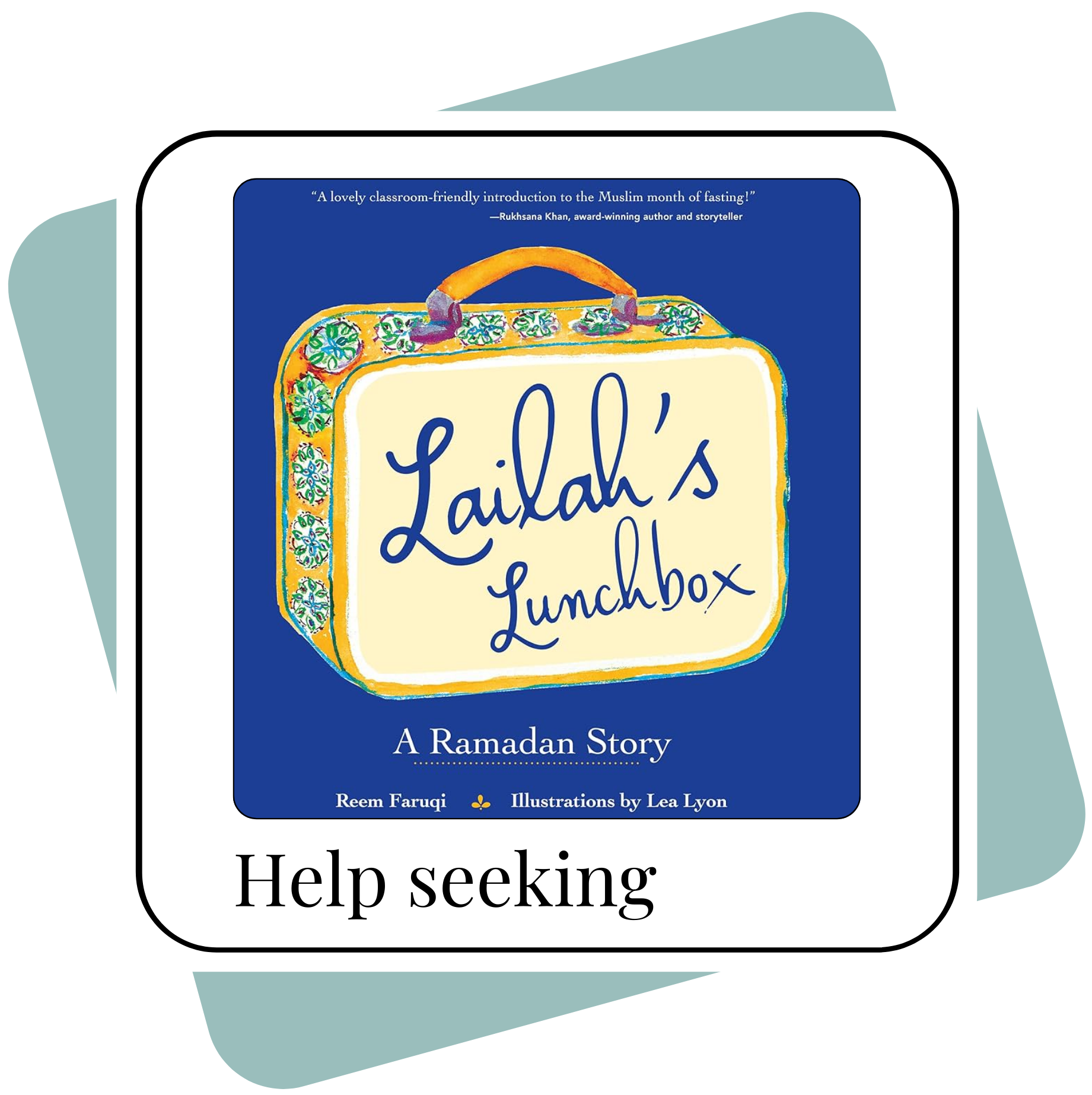
Each week, we recommend one kids book that teaches a mental health concept. Today, we’re sharing a book that tackles asking for help: Lailah’s Lunchbox: A Ramadan Story, written by Reem Faruqi and illustrated by Lea Lyon. This book highlights the concept of help seeking — the idea that knowing when and how to ask for help boosts kids’ confidence and strengthens their problem-solving abilities. Read on to learn why we recommend Lailah’s Lunchbox to the parents we know, the science behind help seeking, and tips for talking to your kiddo about asking for help without giving up.
About the Book
In Lailah’s Lunchbox, Lailah — who moved from Abu Dhabi to Peachtree City, Georgia when she was young — is excited to be fasting for the first time for the month of Ramadan. But when Lailah’s mom writes a note to her teacher asking her to be excused from lunch, Lailah starts to worry that no one at school will know about Ramadan and avoids passing on the note. Over lunch, when other students think Lailah left her lunch at home and offer her food, Lailah ends up in the library, where she opens up to the librarian about her worries. With the librarian's encouragement, Lailah finds her own way to talk to her teacher about fasting and getting the help she needs.
Buy Lailah’s Lunchbox or listen online for free
What Science Tells Us about Help Seeking
The ability to ask for help is an important part of problem solving across a range of situations — it can help us navigate daily problems, like not being able to reach something, mental health problems, like having worries or fears that won’t go away, or having trouble in school, like not understanding an assignment. But help seeking hasn’t always been seen as a good thing, and in the 20th century, some researchers thought that help seeking indicated dependence (for example, in 1955, Dr. Glen Heathers wrote that one form of dependence is “when a person seeks help in reaching goals”).
Responding to this idea, Dr. Sharon Nelson-Le Gall at the University of Pittsburgh published a paper in 1981 called “Help-seeking: An understudied problem-solving skill in children.” She argued that viewing help seeking as a type of dependence is a misconception. Help seeking requires “a fair amount of sophistication,” she wrote, and shouldn’t be assumed to mean that a child isn’t engaging in independent problem solving:
“Seeking out a competent person for aid or advice may be an independent method of solving a difficult problem.”
Dr. Nelson-Le Gall advocated for thinking about help seeking as a problem-solving skill, and was interested in boosting kids’ ability to ask for help effectively. As more research has been carried out, it has backed up the idea that help seeking is an important skill. Help seeking is related to academic achievement — one study found that kids between 8-17 who sought help after making a mistake had better school performance (measured via GPA) than those who didn’t. Help seeking also seems to be good for mental health: A randomized trial involving 18 schools in Pennsylvania taught some adolescents about help seeking for depression. They found that teens who were taught this skill were more likely to ask for help and get treatment for depression several months later. Dr. Nadia Bounoua, a clinical psychologist and Assistant Professor at the University of Maryland who researches ADHD and trauma recovery for kids, explained this, noting, “teaching school-age kids help-seeking skills can give them the language and confidence to speak up when something feels confusing, uncomfortable, or misunderstood.” When Dr. Bounoua talks with parents, she often stresses the importance of helping kids identify who they can trust. She uses language like: “A trusted adult is someone who listens, takes your feelings seriously, and helps you figure out what to do next.”
How can parents capitalize on these benefits of help seeking? It can help to conceptualize help seeking as a problem-solving skill that’s supports kids when they’ve reached the edge of their knowledge and are trying to learn something new. Developmental psychologists understand that kids can develop new knowledge or problem-solving abilities by seeking support from an adult or more knowledgeable peer (this is called the “Zone of Proximal Development” and was introduced by the psychologist Vygotsky).
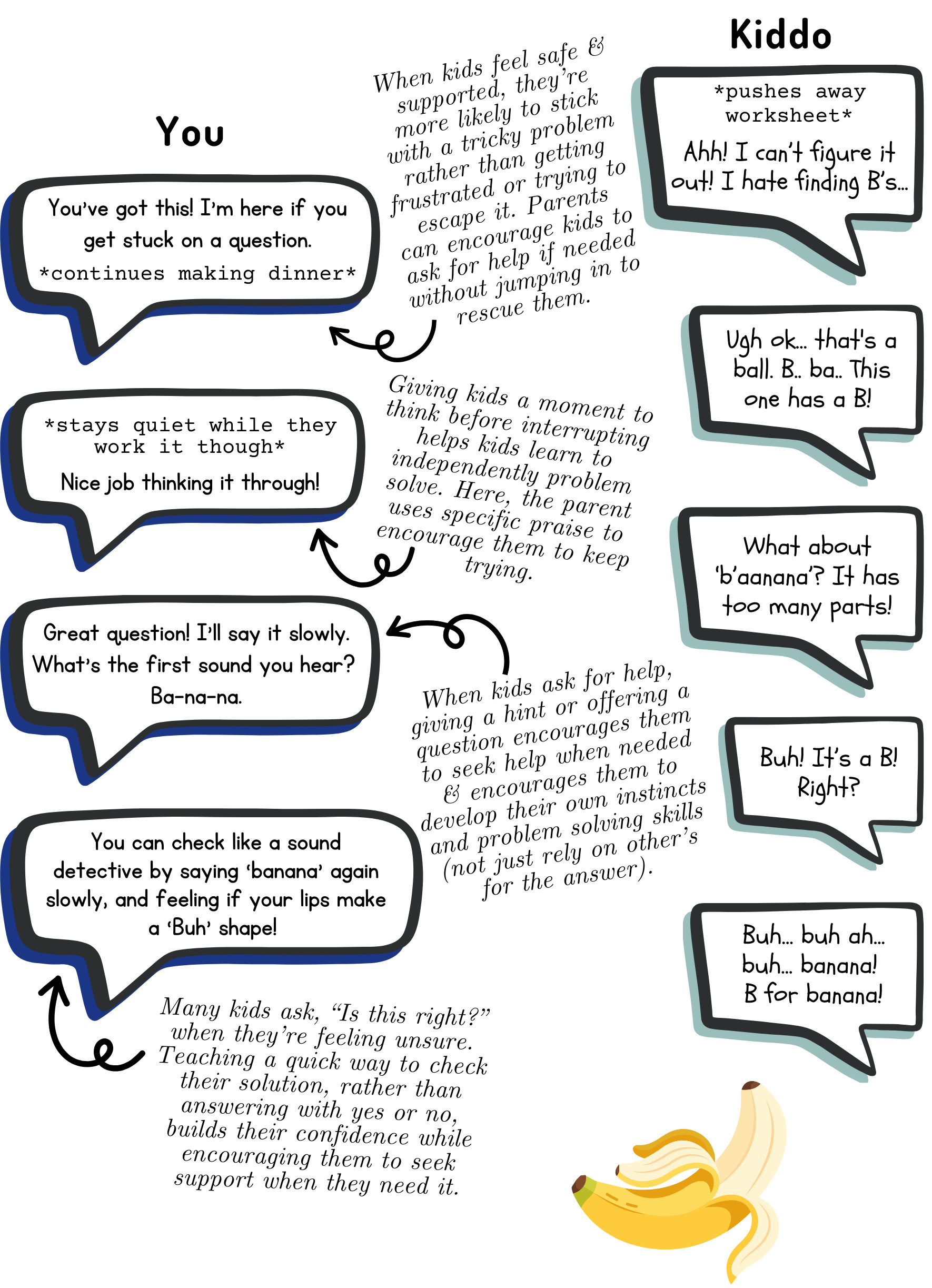
When a child is working on a difficult task or trying something new, try these steps for supporting them, based on Zones of Proximal Development:
Signal that you believe in their ability to do it! When you give them the message that you’re there to support them, they will feel safe enough to try it on their own without giving up early. This step can be as simple as saying something like, “You can do it! I’m here if you need me.”
When a kid gets stuck, pause before stepping in. The goal is to not interrupt their thinking and natural problem-solving abilities.
Encourage kids to practice the skill of asking for help. Avoid “rescuing” your child by offering help or supplying the answer before they request help or have fully tried. This helps your child learn when and how to most effectively ask for help, which is a skill in and of itself! If you see that your child is really struggling and has forgotten to ask for help, feel free to prompt them (“Is there something I can help you with?”).
Once your child does ask for help, offer support that builds on your kid’s current skills, like a problem-solving suggestion and a question to inspire their thinking.
How to Support Your Child’s Help Seeking
Here’s an example of what scaffolding help-seeking skills can look like when your kiddo is feeling stuck:
What psychologists like about Lailah’s Lunchbox: Dr. Bounoua, the University of Maryland, College Park professor and psychologist, likes how Lailah’s Lunchbox shows how asking for help from the librarian, a trusted adult, helped Lailah move from feeling anxious to feeling empowered. As someone who also celebrates Ramadan, she also appreciates how Lailah’s Lunchbox captures the mix of excitement and nervousness that comes with fasting for the first time — especially at school, where it can feel unfamiliar or hard to explain. We love how this book support both kids celebrating Ramadan, as well as kids who might want to learn more about what fasting is like for their friends and neighbors during this time of year.
Go deeper on the science of help seeking:
Check out this Scientific American article, where two developmental psychologists describe their research findings that kids are often scared to ask for help because they’re worried what other people will think.
We also like this post about ways to encourage help seeking in kids.
Seeking help can make the person helping you happy! This study found that people often underestimate how willing others are to help, and how happy it makes people to be helpful (here is an interview with the author about the study).
Interested in learning more about the Zone of Proximal Development? Check out this short article (written for teachers) on how it can relate to teaching and learning!
If you want to learn more about what it means to be a “trusted adult” and how warm, positive relationships help kids learn across development, check out this resource from the Center on the Developing Child at Harvard University.
Buy Lailah’s Lunchbox or listen online for free
We think Lailah’s Lunchbox would be a great addition to any child’s library. We’d love to hear your reactions to this review and your questions about help seeking. Reply to this email, or join our community to leave a comment!
FYI: The links above for buying Lailah’s Lunchbox are affiliate links (see this page for more information).