



Clinical psychologists picking kids books rooted in mental health science 🌸
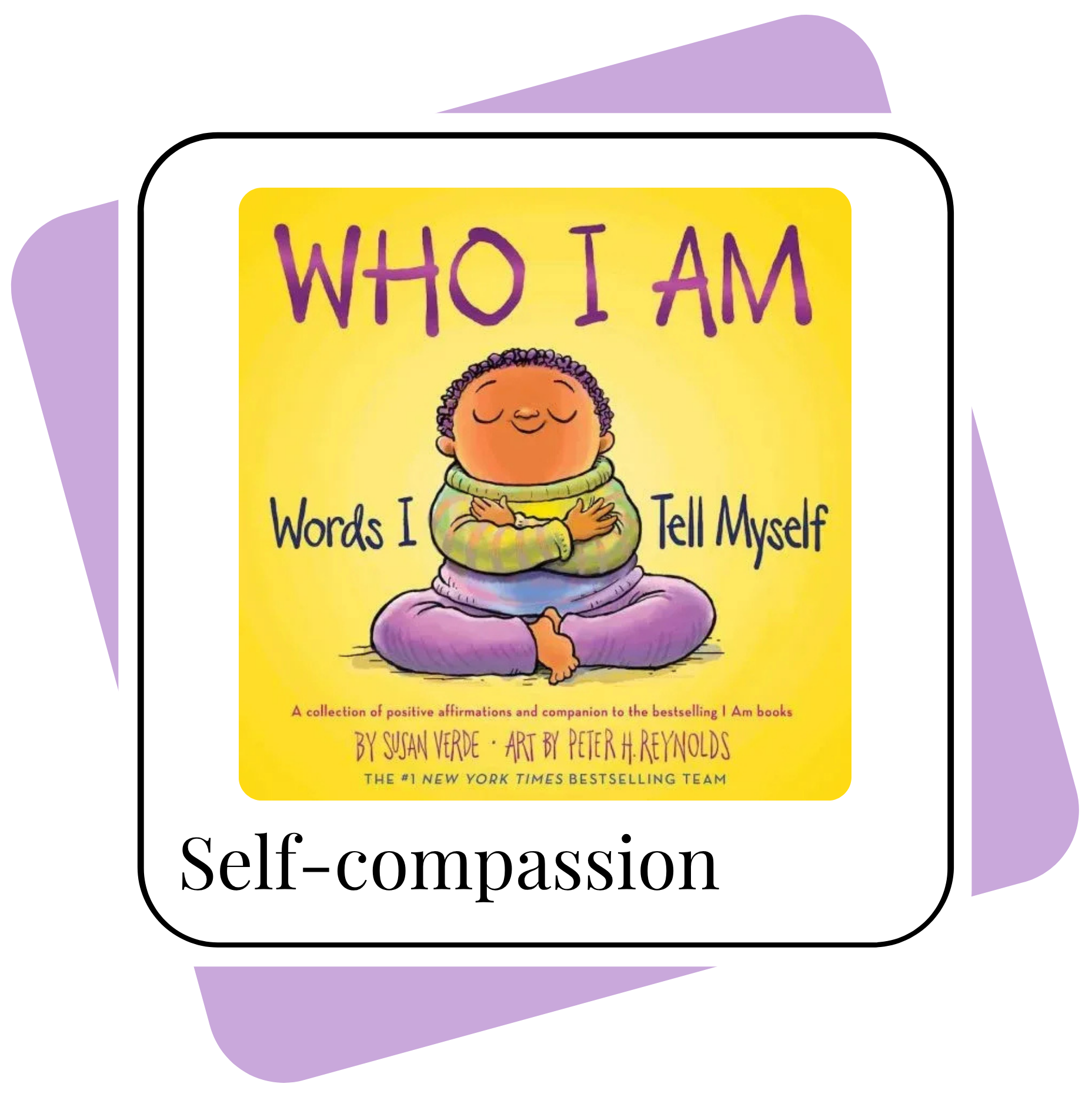
Who I Am: Words I Tell Myself: A picture book about self-compassion for kids (age 5+)
Each week, we recommend one kids book that teaches a mental health concept. Today, we’re sharing a book that tackles negative self-talk: Who I Am: Words I Tell Myself written by Susan Verde and illustrated by Peter H. Reynolds. This book highlights the concept of self-compassion — the practice of being kind and understanding toward yourself, especially when you're struggling. Read on to learn why we recommend Who I Am to the parents we know, the science behind negative self-talk, and tips for talking to your kiddo about self-compassion.
About the Book
Who I Am is a sweet and uplifting book that teaches kids how to deal with unpleasant or uncomfortable thoughts and feelings. It gives kids specific phrases they can use when tough thoughts pop up — whether the thoughts are related to sadness, anger, worry, perfectionism, or fear of failure. Though the book’s subtitle calls these phrases “positive affirmations,” we think they’re better understood as examples of gentle, compassionate self-talk. This is a great book parents can use to introduce the idea of talking to oneself in a way that acknowledges one’s “goodness and effort and importance.”
Buy Who I Am (or listen online for free)
What Science Tells Us about Self-Compassion
Most of us know what compassion is — caring about others when they are suffering or struggling. Self-compassion means directing that same kindness and concern toward ourselves. It’s an important part of kids’ and teens’ mental health. A meta-analysis (a study combining data from many studies) found that teens with higher self-compassion had lower levels of depression, anxiety, and stress.
Even though it’s important, it can be really challenging to be kind to ourselves. We talked to Dr. Susan Murray, a psychologist at Penn Medicine Princeton Health who specializes in self-compassion. “After making mistakes, our brains often tell us, ‘I don’t deserve kindness,’ or ‘if I’m not hard on myself I won’t learn to be better,’ Susan shared. “In reality, being kind to ourselves can help us learn from our mistakes and grow, whereas beating ourselves up can keep us stuck and actually make learning harder.” Susan pointed out that making mistakes and messing up is bound to happen because it’s part of being human. She encourages parents to model self-kindness in front of their kids when they make mistakes, like saying, “Oh shoot, I just broke that plate. Darn it! I’m feeling frustrated! [deep breath] I’m also reminding myself that everyone makes mistakes — that’s just part of being human!”
When we work with kids facing a wide range of mental health challenges, we often use Who I Am to help teach self-compassion. The book helps kids understand that it’s normal for our minds to sometimes say unkind things, and it offers ways to respond with self-compassion — which the book calls talking to ourselves with “encouragement and love.” For example, when we don’t succeed at something, we can tell ourselves, “I am brave — I have the courage to try.” Research shows that doing this type of kind self-talk protects kids and teens from developing depression later on in life. Who I Am is a great resource for families to open up a conversation about negative self-talk and explore how to use compassionate self-talk instead.
How to Talk About Self-Compassion with Your Kiddo
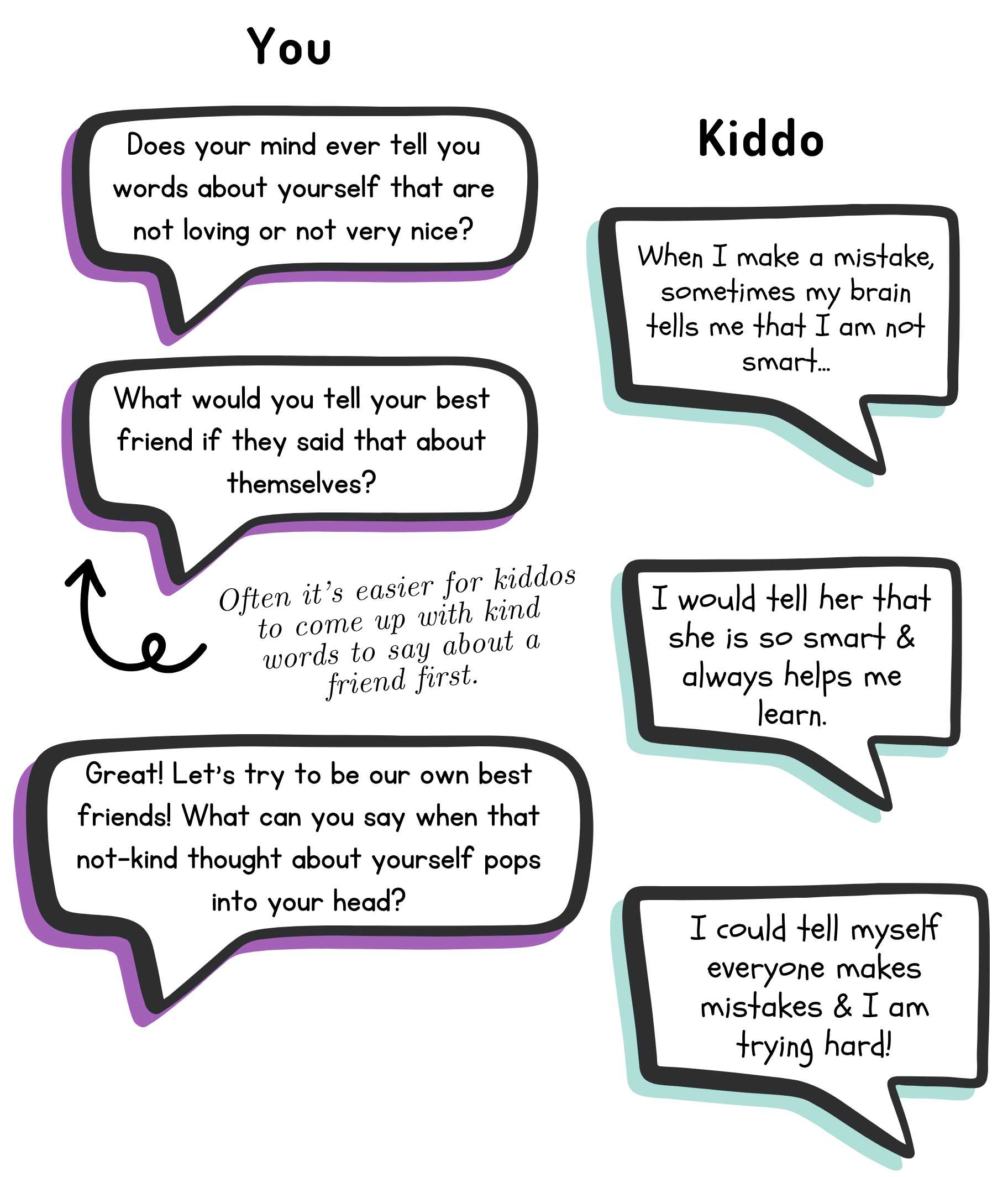
Try out these prompts for encouraging your kid to practice being kind to themself:
What Marin likes about Who I Am: This delightful book reminds us that just because it feels like a thought is true, that doesn’t mean it is. In psychology, we call this thinking pattern “emotional reasoning” (i.e., believing that feelings are facts). When kids get caught in emotional reasoning and negative self-talk, they may start to actually believe that there is something inherently “wrong” or “bad” about them — even when that’s obviously not true.
What Betsy likes about Who I Am: I love how Who I Am gives parents easy ways to talk to kids about mistakes and push back against perfectionism. For example, in response to the thought “I shouldn't make a mistake,” Who I Am suggests telling ourselves, “I am always learning. Mistakes are how I grow.” I’ll be using this line with my kiddo — and with myself!
Go deeper on the science of negative thoughts and self-compassion:
To learn more about cultivating your kid’s sense of self-compassion, check out this article from the University of California, Berkeley.
Guided meditations can help kids and teens develop their own sense of self-compassion. We recommend practicing this activity together as a family and discussing it afterward.
Parents can learn more about self-compassion from this brief handout from the Center for Clinical Interventions.
Older kiddos (11+) or their parents can take the free, 20-minute Project Care training from researchers at Northwestern University (click to launch Project YES, then when prompted, select Project CARE).
Buy Who I Am (or listen online for free)
We think Who I Am: Words I Tell Myself would be a great addition to any child’s library. We’d love to hear your reactions to this review and your questions about compassionate self-talk. Reply to this email, or join our community to leave a comment!
FYI: The links above for buying Who I Am are affiliate links (see this page for more information).