

Helping toddlers build healthy body image
Pick of the week: January 19, 2026


Clinical psychologists picking kids books rooted in mental health science 🌸
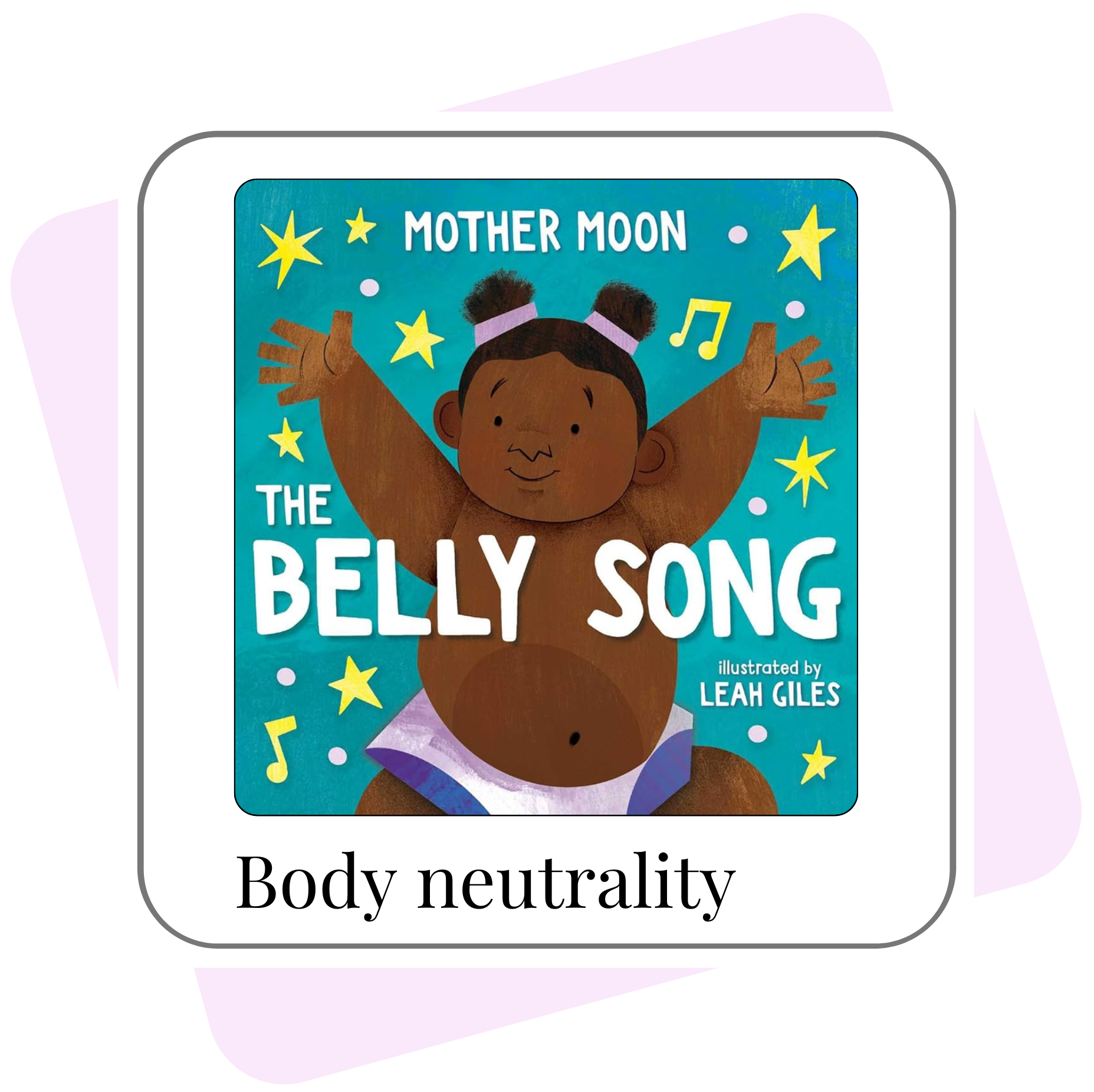
Belly Song: A board book about body neutrality for toddlers (age 1+)
Each week, we recommend one kids book that teaches a mental health concept. Today, we’re sharing a book that can help little ones learn to appreciate their bodies before body image issues emerge: Belly Song, written by Mother Moon and illustrated by Leah Giles. This book highlights the concept of body neutrality — the idea that talking about our bodies in plain, non-judgmental language can help us build a healthy relationship with our bodies. Read on to learn why we recommend Belly Song to the parents we know, the science behind body neutrality, and tips for talking to your kiddo about their body and eating.
About the Book
Belly Song is a simple, sweet board book all about bellies. It actually began as a song before it was a book (listen here)! Belly Song shows a bunch of different people with all different kinds of bellies — some with lots of muscle, some with lots of fat, some that wiggle, and some that jiggle. By showcasing many different kinds of bellies and describing them in neutral descriptive language, Belly Song demonstrates the concept of body neutrality (i.e., how describing bodies plainly rather than labeling them as “good” or “bad”) can help us build healthy relationships with our bodies.
Buy Belly Song or listen to the song online (and preview the book) for free
What Science Tells Us about Body Neutrality
Research has repeatedly shown that parents' comments about children’s weight or body shape are harmful to kids’ mental health. First, a meta-analysis (a study that combines other studies) showed that when parents encourage their kids to lose weight or criticize their bodies, kids have poorer body image, diet more, and engage in more behaviors related to eating disorders, like fasting or purging. These patterns were found even in kids younger than 11. Another study of over 300 teen girls also found that when parents talk about weight, teens were more likely to do eating disorder-related behaviors. But wait, it’s not just parents’ comments about kids’ bodies that do harm! Parents’ relationships with their own bodies also matter. In the same study, when parents dieted or talked about their own weight, their daughters did more unhealthy eating behaviors, like fasting, eating very little, and skipping meals. We see this as persuasive evidence that avoiding commenting on children’s (and our own) weight and not encouraging kids to lose weight are critical parenting skills.
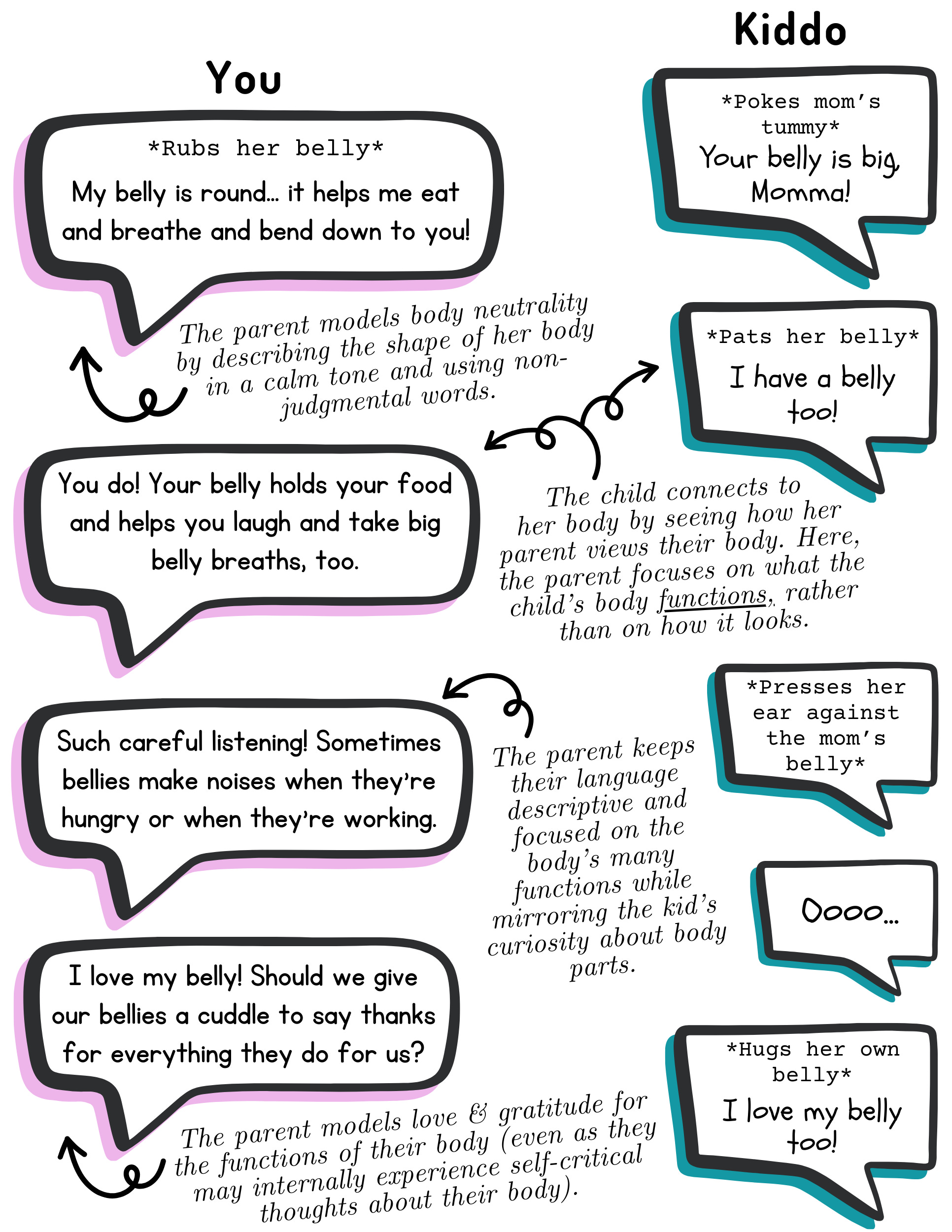
So, how can parents talk to their kids about their bodies and help kids develop a healthy body image? One idea is learning to talk about bodies in neutral and nonjudgmental terms, called “body neutrality.” This involves describing our body parts plainly (for example, saying “my belly is white and round”) rather than labeling body parts as good or bad or using judgmental language like “my belly is ugly.” Evidence for body neutrality comes from a treatment called mirror exposure therapy, which teaches people to use nonjudgmental language when talking about their bodies. This intervention increases body satisfaction and reduces feelings of anxiety in college women, adolescents with obesity, and individuals with eating disorders.
Body neutrality is a relatively new concept, and there aren’t yet any conclusive studies showing that using body-neutral language can protect kids from developing body issues. There is active research in this area: One study found that youth who did a 20-minute body neutrality intervention liked their bodies better and had improved mental health after the training (however, this study didn’t have a control group). Even though research on body neutrality is relatively early, we think that body neutrality is a great skill to teach to all kids, especially so that they can develop a strong internal voice to counter harmful, critical body talk, which is very common in society.
How to Model Body Neutrality for Your Child
Try out these prompts for practicing body neutrality with your kiddo:
What Marin likes about Belly Song: Belly Song uses words like “fat,” “round,” and “jiggle” with so much joy and silliness that it helped me continue to reshape my relationship to these words. This lovely book reminds us that we can challenge self-consciousness and shame while celebrating our bodies by practicing with these neutral, simple, and descriptive words.
What Betsy likes about Belly Song: I love how Belly Song shows so many different realistic belly shapes and bodies — with all sorts of folds and rolls and skin tones. It’s so rare to see realistic depictions of bodies in kids books and society in general. Plus, I think toddlers will love noticing the tiny baby balanced on her papa’s big belly on the first page.
Go deeper on the science of body neutrality:
We love this article from the Kids Mental Health Foundation with some practical tips about talking to kids about food and bodies.
Want to get a sense of what body neutrality is all about? You can try out the brief body neutrality intervention we mentioned above, created by Professor Jessica Schleider at Northwestern (the training is designed for teens, but the same concepts apply to adults).
Wondering how body neutrality relates to body positivity? This article from Verywell Mind talks about the difference between them and the value of each one.
Parents who want to learn more in-depth about using body neutrality can check out this article on body neutral parenting with kids and teens, published in the journal The Professional Counselor.
Want to read about the science behind mirror exposure therapy, discussed above? Check out this Psychology Today article and Dr. Trevor C. Griffen’s National Eating Disorder Information Centre bulletin on the topic (click here to download the bulletin).
Buy Belly Song or listen to the song online (and preview the book) for free
We think Belly Song would be a great addition to any child’s library. We’d love to hear your reactions to this review and your questions about body neutrality. Reply to this email, or join our community to leave a comment!
FYI: The links above for buying Belly Song are affiliate links (see this page for more information).