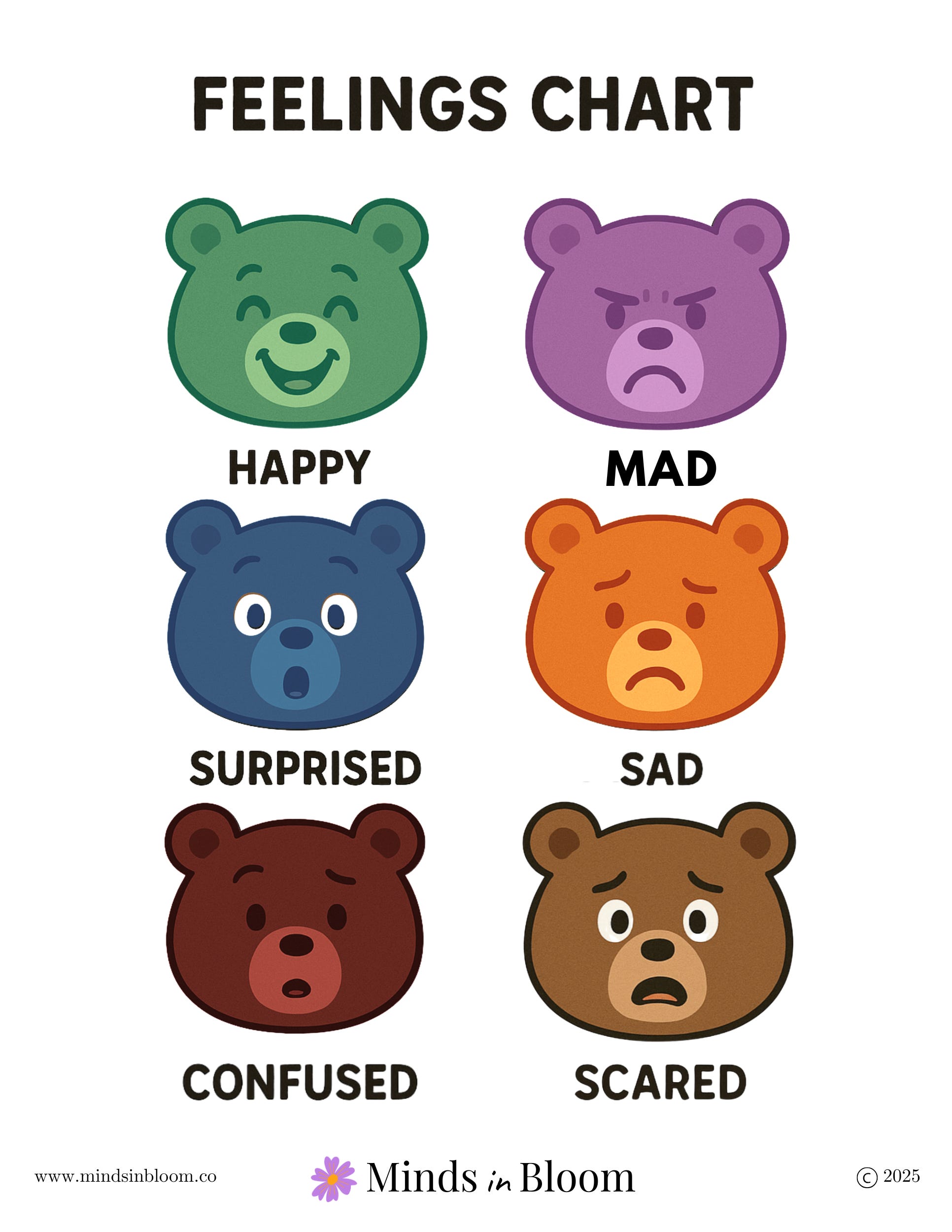
Helping your child recognize and name their feelings is important for supporting their emotional growth. When children can identify the emotions they’re feeling (like happy, sad, scared, or confused) they can better express their needs and build healthy connections with others.
Labeling emotions also helps children feel more in control and builds their confidence. Instead of acting out or shutting down when they’re experiencing big emotions, they learn to use words to communicate. This skill of naming emotions, sometimes called affective identification, is linked to stronger social skills, better problem-solving, and even success in school. Here is an article summarizing the evidence for why it is important to help kids practice identifying both positive and negative emotions.
Children who can name their feelings are also more likely to recognize other peoples’ emotions. Empathy begins by noticing how someone else feels and being able to respond with care.
Caregivers can help children build their affective identification skill every day by:
Naming your own feelings out loud ("I'm feeling frustrated because we're running late")
Labeling your child’s emotions with curiosity and kindness ("It looks like you're feeling disappointed we can’t stay longer")
Using books, games, and emotion charts to explore different feelings together
Teaching your child the words for their feelings gives them tools they'll use for a lifetime. Check out this printable beginners “Feelings Chart” handout to jumpstart conversations about feelings. This version is recommended for children aged 2-6 years old. Feelings charts for older kids coming soon!