



Clinical psychologists picking kids books rooted in mental health science 🌸
I Feel… Meh: A picture book about mood-boosting activities for preschoolers (age 3+)
Each week, we recommend one kids book that teaches a mental health concept. Today, we’re sharing a book that talks about what to do when nothing sounds fun or when energy is low: I Feel… Meh, written and illustrated by DJ Corchin. This book highlights the concept of mood-boosting activities — the idea that doing an activity we typically enjoy, especially when energy is low or nothing sounds fun, can actually help boost our mood. Read on to learn why we recommend I Feel… Meh to the parents we know, the science behind mood-boosting activities, and tips for talking to your kiddo about getting unstuck from low moods.
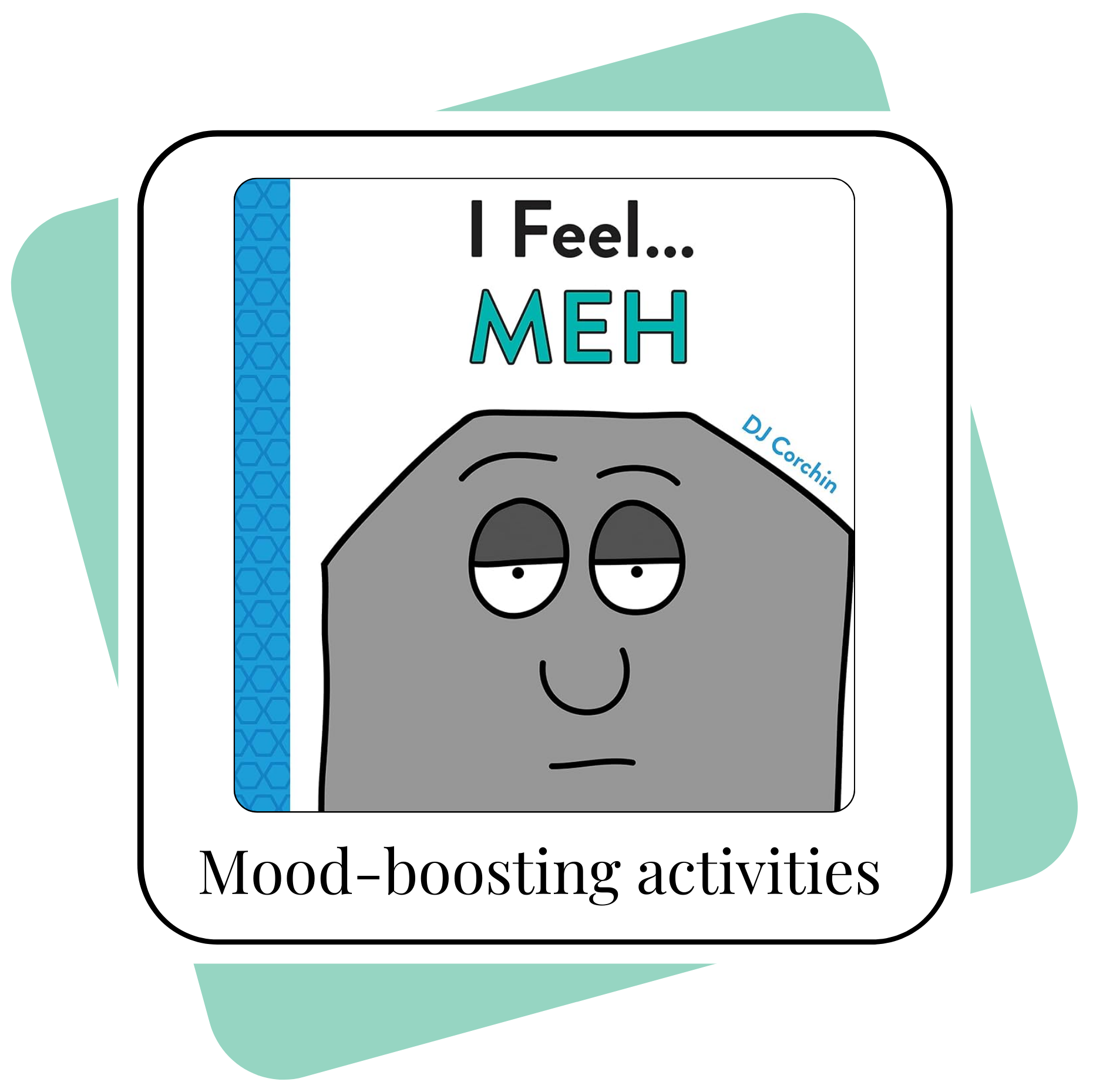
About the Book
I Feel… Meh is about a color-changing shape that just feels ‘meh!’ Nothing sounds fun to this shape, including activities that they usually love doing, like playing or making art. The shape then introduces a strategy it uses when it feels ‘meh’ — it purposefully tries out different activities to help it get out of the slump. We call this strategy choosing “mood-boosting activities,” and it’s a science-backed way to deal with periods of low energy and/or difficulty experiencing enjoyment (the clinical name for this is “anhedonia”). The book ends with an explanation page for parents, which explains more about mood-boosting activities.
Buy I Feel… Meh or listen online for free
What Science Tells Us about Mood-Boosting Activities
Have you ever felt like nothing sounds fun, even things you typically like, and that you just don’t have the energy to try? Or have you ever had trouble feeling happy even when you’re doing something fun or when something good happens? The clinical term for this experience is “anhedonia,” which literally means “difficulty experiencing pleasure.” All humans experience anhedonia at some point or another, but anhedonia is also elevated in some clinical disorders, like depression and PTSD.
Scientists have learned that anhedonia plays a role in keeping depression alive. This is because it creates a negative cycle: When we don’t feel like doing anything, and then skip or avoid activities like hobbies, chores, or socializing, we have fewer chances to have fun, enjoyable, and satisfying experiences, which can keep our mood and motivation (i.e., “energy”) low. When we treat depression in therapy, we break this negative cycle with a skill called “mood-boosting activities” (the scientific term for this is “behavioral activation” or “activity scheduling”). Doing fun or social activities has a proven effect on mood: Research found that both leisure activities and socializing boost the mood of teens and young people, especially those with depression.
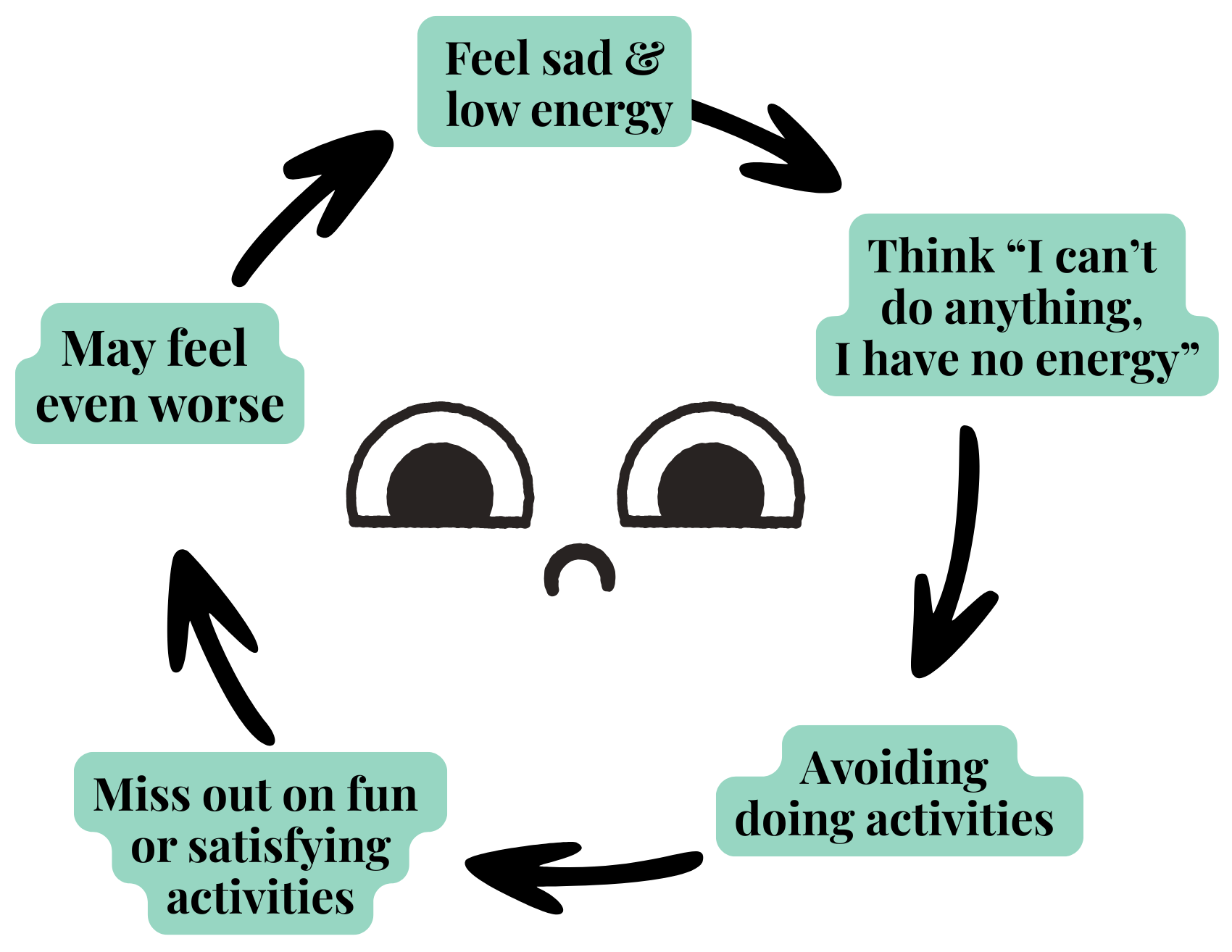
At the most basic level, doing mood-boosting activities involves planning and doing activities, especially those that are enjoyable or make us feel accomplished, even on days when we just don’t want to do anything. Instead of waiting to feel better before we get active, we get active in order to feel better. Doing mood-boosting activities has been shown in meta-analyses to be an effective treatment for child and teen depression, both as a standalone treatment and when it’s studied as a part of a broader cognitive behavioral therapy treatment package (mood-boosting activities are the “behavior” part of CBT for depression). It’s also very effective for treating adults and seems to improve anxiety for adults and kids, too!
How can parents use this information to help their kiddos?
Parents can know that occasionally feeling like “nothing sounds fun” or “I’m too tired to do anything” is a common experience. Parents can talk with kiddos about how everyone feels like this sometimes by reading I Feel… Meh together.
Parents can also understand the activity-mood cycle — that when we withdraw from activities or avoid them for extended periods of time, it can actually make us feel worse. Using this knowledge, parents can practice finding a balance between observing their child’s sadness and gently asking if they want to try a mood-boosting activity to see how it affects their mood.
When kids are feeling ‘meh,’ parents can help them brainstorm mood-boosting activities. Try framing this as an experiment: “What if we go for a walk outside together and see how you feel after?” Avoid framing activity suggestions as “You’ll feel better if you go for a walk,” because we don’t know which activities will be the most effective mood-boosters for each person, and it works best when kids discover this on their own!
After the ‘meh’ feeling passes, parents can help their child reflect on what activities they did that helped shift their mood or boost their energy. Parents can say things like, “It sounds like playing with Ezra and painting helped the ‘meh’ feeling get smaller. Let’s make a list of the things that helped when you were feeling ‘meh’ so we remember that they are good options to try next time.”
How to Talk About Mood-Boosting Activities with Your Child
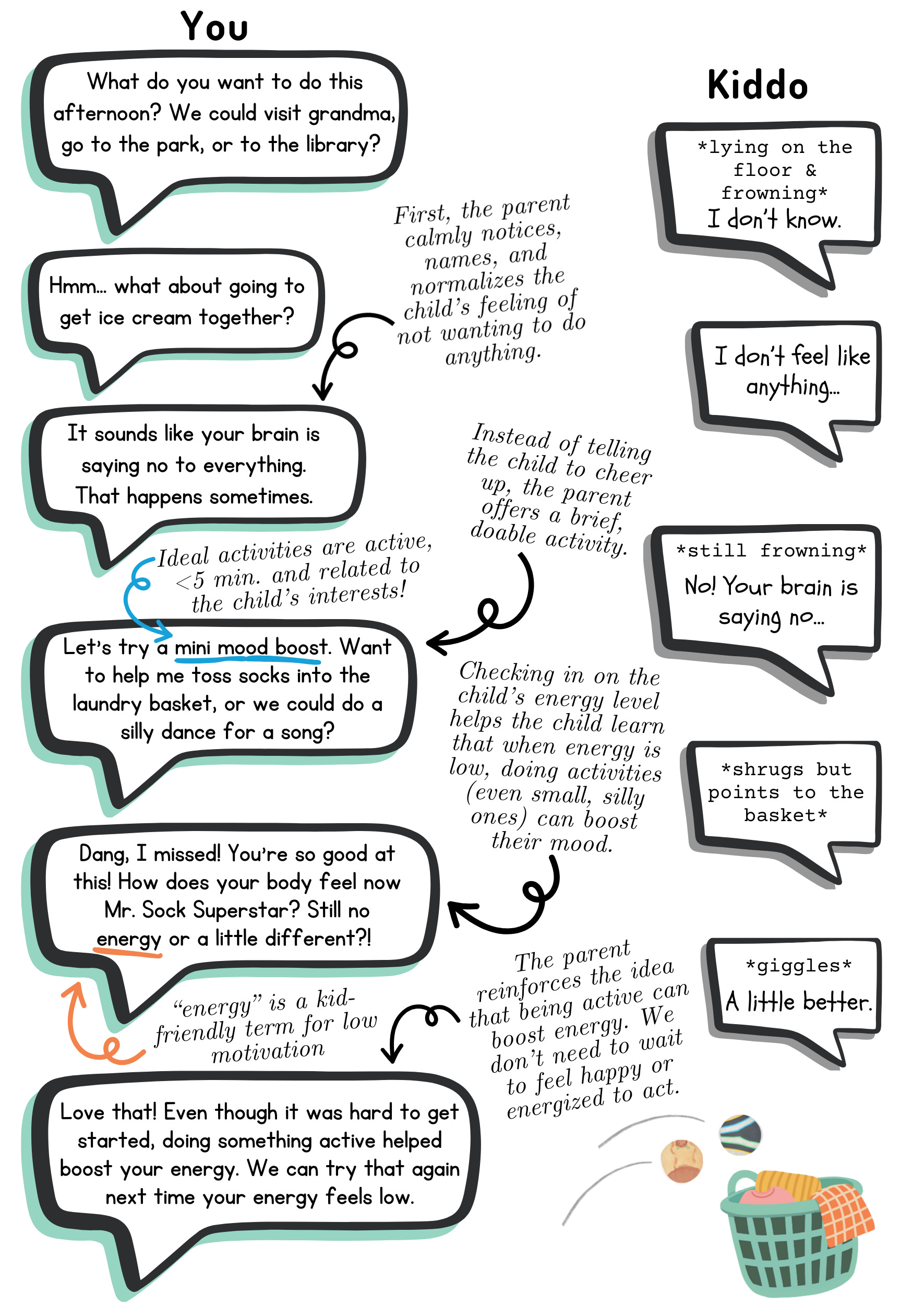
Try out these prompts for when you notice your kiddo stuck in a mood where nothing feels enjoyable, or they have no energy:
What Marin likes about I Feel… Meh: I really like that this book shows how expansive the feeling of ‘meh’ can be, almost like this grey fog or shadow that can creep across so many different parts of our lives (school and work, time with friends and family, hobbies and simple pleasures). The hardest part about mood-boosting activities for most of my patients is the idea of having to do the most basic activities when all they want to do is sleep, zone out, or shut down. Once they start consistently doing even very small activities (<5 minutes), it can be amazing to see how quickly the fog can lift. Convincing ourselves and our kids to be active is no easy task, though, so I really hope this book reminds us all that getting out of that fog can be full of silliness, even if it doesn’t feel fun at first.
What Betsy likes about I Feel… Meh: I love how I Feel… Meh really shows what anhedonia can feel like: It’s not feeling happy or sad, it’s just feeling kind of… gray. It can be hard to describe this feeling, especially because there’s not necessarily an emotion that goes along with it. A lot of my patients have found it really helpful simply to learn what anhedonia is and that it’s a thing a lot of people experience. Having a name for this experience makes it a lot easier to cope with. I love how I Feel… Meh introduces anhedonia — which doesn’t get talked about enough! — to little kiddos, while highlighting the importance of doing mood-boosting activities to break the ‘meh’ cycle.
One thing we don’t like about I Feel… Meh: Though we love how this book describes anhedonia and mood-boosting activities in a kid-friendly way, we think it oversimplifies the process a bit. The book makes it sound like brainstorming or starting a fun activity when we’re feeling ‘meh’ is easy, when in reality, these are often really hard steps. Oftentimes, when we’re feeling ‘meh,’ it can be really hard to convince our brain to try out a fun activity — our brains come up with reasons why it’s not a good idea, like “I don’t feel good enough to do that.” Because actually starting a mood-boosting activity can be so hard, we recommend framing the process of picking a mood-boosting activity as an “experiment.” This can help depressurize the situation and make the activity easier to try out.
Go deeper on the science of anhedonia and mood-boosting activities:
We love this Boston Children’s Hospital video about “Making Time for Fun” (another term for mood-boosting activities) on this page. The video has a great section on common concerns parents have to help them troubleshoot. This matching handout is also great and introduces the idea of tracking your mood before and after doing an activity to see how it impacts your mood.
We like this article on behavioral activation for kids and teens by the Child Mind Institute. It talks about the role of values (the things you care about) in planning activity goals.
For an adult-focused behavioral activation video, we like this one from the NHS, which does a great job explaining the cycle of low mood and why doing activities can help.
Parents who want to try out behavioral activation in their own lives can use this chapter from the University of Michigan, which walks you step-by-step through the process.
For parents who want to dive deeper into the science of why doing valued, rewarding activities helps improve youths’ mood, check out this article published by BMC Psychology.
Buy I Feel… Meh or listen online for free
We think I Feel… Meh would be a great addition to any child’s library. We’d love to hear your reactions to this review and your questions about mood-boosting activities. Reply to this email, or join our community to leave a comment!
FYI: The links above for buying I Feel… Meh are affiliate links (see this page for more information).