

Empowering kids with safety skills
Pick of the week: March 18, 2026


Clinical psychologists picking kids books rooted in mental health science 🌸
As a reminder, we’re trying out a new format to create space to answer your questions about each post’s mental health skill before we introduce a new topic. We’re now introducing a new evidence-based skill and accompanying kids’ book every other week, and on the alternate week, we offer examples and answer your questions about using the skill in your real life. We’re hoping this change makes our posts even more digestible for busy parents. We’d love to hear what you think about this new format, or other ideas for how we can improve Minds in Bloom. Tell us what you think in the comments or over email: mindsinbloombooks@gmail.com 🌸
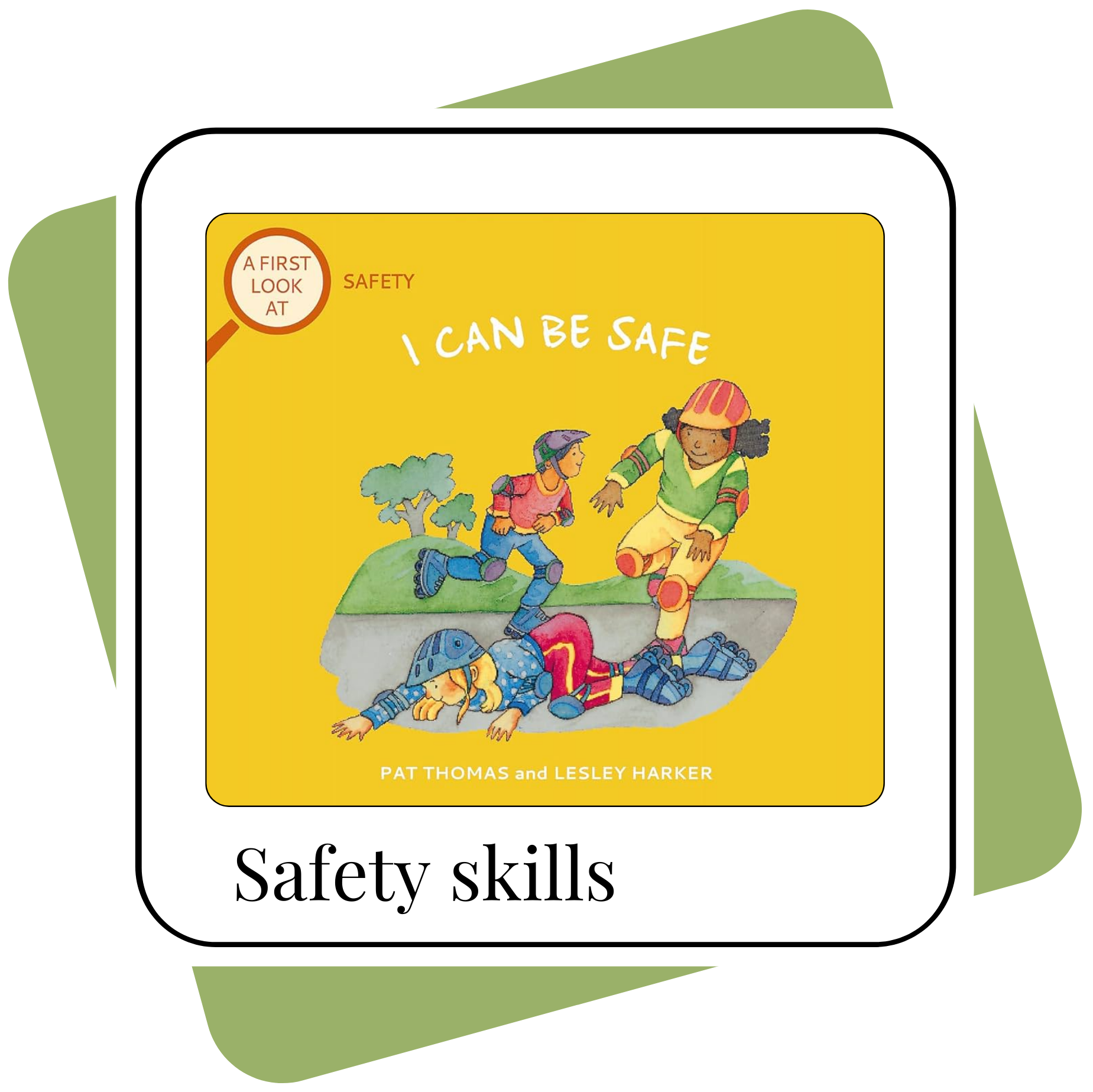
I Can Be Safe: A picture book about safety for kids (age 5+)
Each week, we recommend one kids book that teaches a mental health concept. Today, we’re sharing a book that tackles safety: I Can Be Safe, written by Pat Thomas and illustrated by Lesley Harker. This book highlights the concept of safety skills — the idea that actively practicing skills for handling risky or dangerous situations empowers kids and helps them avoid harm. Read on to learn why we recommend I Can Be Safe to the parents we know, the science behind safety skills, and tips for talking to your kiddo about risk and danger.
About the Book
I Can Be Safe introduces the concept of safety in a kid-friendly way and talks about staying safe across a range of situations, from riding a bike, to crossing the road, to being approached by a stranger. The book empowers kids by teaching them concrete steps they can take to keep themselves safe, both preventative, like learning to swim and knowing their home address and phone number, and reactive, like telling a trusted adult if someone touches their body inappropriately. We like how I Can Be Safe introduces the concepts of danger and safety skills to kids in a frank and simple manner.
Buy I Can Be Safe or listen online for free
What Science Tells Us about Safety Skills
It is scary for parents to think about a child encountering danger. Fortunately, research has shown that we can proactively teach children skills to use for when they encounter something dangerous. By teaching kids safety skills, we can empower them to navigate risky or dangerous situations.
Safety skills involve the following four steps:
Identifying the danger
Avoiding the danger
Escaping the danger
Reporting what happened
For example, I Can Be Safe coaches kids on 1) noticing if someone is trying to talk to them or touch them in a way that makes them feel unsafe or afraid (identify), 2) saying no (avoid), 3) shouting or kicking at the person (escape), and 4) telling a trusted grown-up if this happens (report).
How do we know that teaching safety skills works? Because dangerous situations happen relatively rarely, this can make it hard for parents to know if a child really knows how to use a safety skill they’ve been taught. In fact, one study showed that even kids who know how to deal with firearms safely during role plays need additional practice to be able to use these skills in real-life situations. Fortunately, researchers came up with a clever approach called “in situ assessment.” This means creating a realistic but safe situation that the child doesn’t know is a test. For example, a parent might send their child into the kitchen, where researchers have placed an open pill bottle on the counter. The child doesn’t know the pills are fake and that they’re being observed. Researchers then watch to see if the child uses the core safety steps: Noticing the pills (identify), choosing not to touch them (avoid), walking away (escape), and telling a parent (report). This kind of setup has helped researchers learn how children respond to dangerous situations like finding an unattended firearm or something poisonous, or even navigating an attempted kidnapping.
Using this approach, researchers have shown that only active learning helps children learn safety skills. Other approaches, like telling your child how to act in a dangerous situation without having them practice, aren’t enough. It’s crucial that your child has the opportunity to practice safety skills in real-world settings. This process should involve:
Teaching (describing a dangerous situation and what it would look like for the child to identify, avoid, escape, and report the danger in that situation)
Modeling (demonstrating those safety skills to your child)
Rehearsing (asking your child to practice demonstrating the safety skills)
Feedback (praising your child for correctly using the safety skills, and helping them improve their skill use).
Parents can use I Can Be Safe as a jumping-off point to discuss many different places where kids need safety skills. We especially love the discussion question boxes sprinkled throughout the book to start the “teaching” and “modeling” steps!
Stay tuned for our post next week, where we’ll give you an example of how to practice safety skills with your kid at home.

What Marin likes about I Can Be Safe: When I teach safety skills in therapy, parents often feel confident that their child has the basics covered. But when we ask a child to share a parent’s full name, phone number, or address during session, kids often struggle to remember these basics in real time. I always remind parents that this isn’t anyone’s fault. Most kids often can share this information when it is first taught, but over time, without real-world practice, even important safety skills can fade. I love that all the discussion question boxes in this book remind parents and kids that regular, everyday practice is what makes these skills stick! Simple ideas like letting your child help guide their walk home once a week, typing in phone numbers together to call your co-parent, or spending a whole week calling each other by your full names can make a big difference. This book does a great job of reminding us that regular safety skills practice can be fun and spontaneous, and this kind of practice builds kids’ confidence to use them when it really counts.
What Betsy likes about I Can Be Safe: I really like the page that talks about how fear is an instinct designed to let us know when things are not safe, which aligns with what we talked about the Q&A about fear and anxiety last week. The book encourages kids to notice different body signals that might indicate they are unsafe: Your stomach or your head feeling funny, your heart beating faster, or having a hard time breathing. I love how I Can Be Safe lets kids know that fear can tell them an important message, and it encourages kids to trust their own judgment.
Buy I Can Be Safe or listen online for free
We think I Can Be Safe would be a great addition to any child’s library. We’d love to hear your reactions to this review and your questions about safety skills — we’ll highlight some answers in future posts. Reply to this email, or join our community to leave a comment!
FYI: The links above for buying I Can Be Safe are affiliate links (see this page for more information).