



Clinical psychologists picking kids books rooted in mental health science 🌸
When I Feel Angry: A book about managing anger for school-aged kids (5+)
Each week, we recommend one kids book that teaches a mental health concept. Today, we’re sharing a book that tackles anger: When I Feel Angry, written by Cornelia Maude Spelman and illustrated by Nancy Cote. This book highlights strategies for managing anger — the idea that parents can help kids choose from a menu of safe activities that can help them manage their anger safely. Read on to learn why we recommend When I Feel Angry to the parents we know, the science behind anger, and tips for helping your kiddo safely manage their anger.
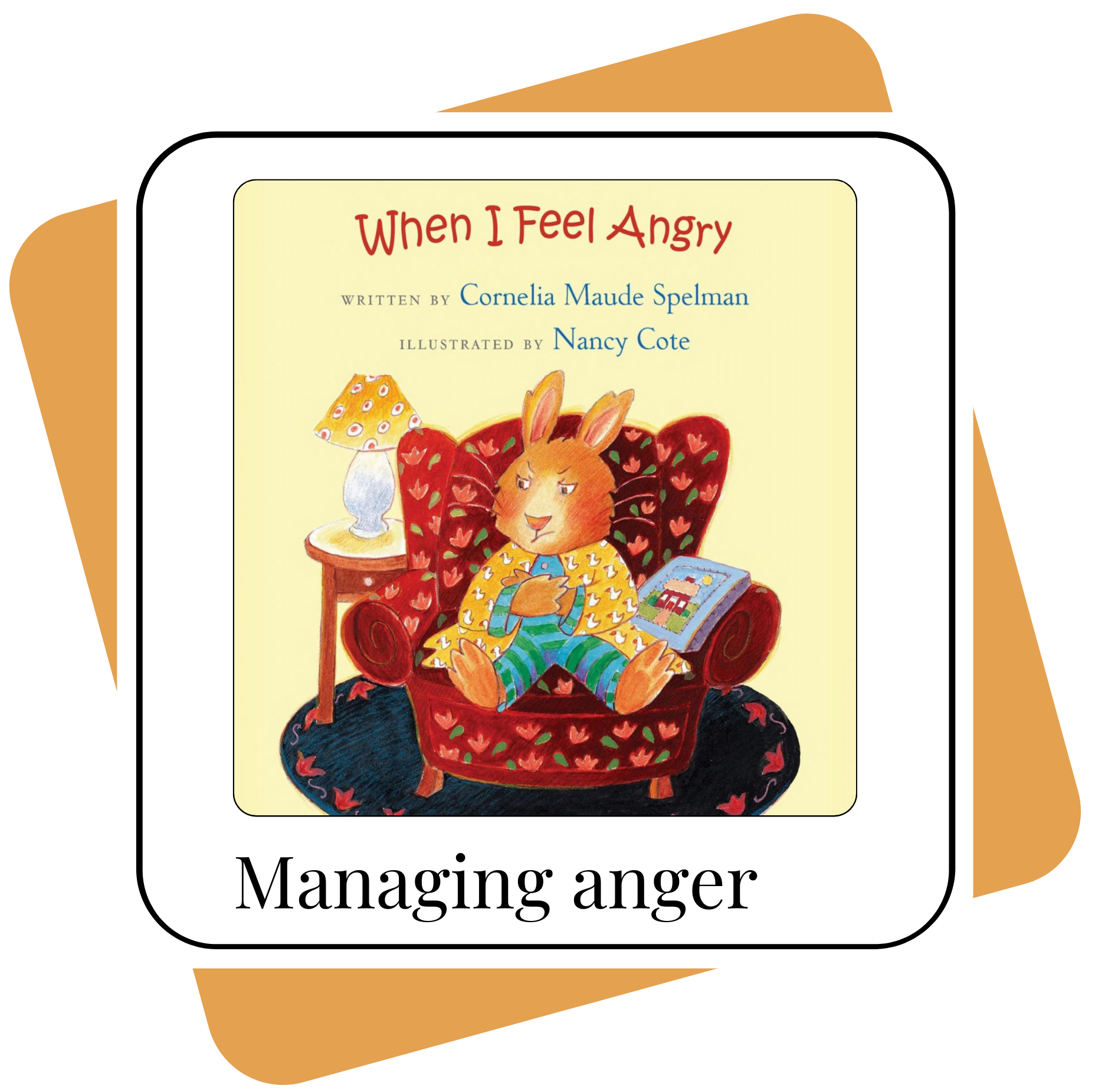
About the Book
When I Feel Angry is a picture book all about anger. The main character is a bunny who tells the reader about situations that make him feel angry, what anger feels like in his body, and things he’s learned to do to cope with his anger. The book does a beautiful job of normalizing anger and highlighting that there’s nothing wrong with feeling angry, while empowering kids to choose anger-releasing activities that keep them and others safe. With kid-friendly examples, practical coping strategies, and lots of cute drawings of grumpy bunnies, this is our go-to book about anger for elementary-school aged kids.
Buy When I Feel Angry or listen online for free.
What Science Tells Us about Managing Anger
It can be scary for both kids and parents to experience anger or see a loved one experiencing anger. But everyone has unpleasant emotions at times, including anger — it’s a part of being human! When we feel angry, there are things we can do to cope and to help make the anger smaller (aka make the anger feel less intense). These are called “anger management” strategies. There is strong research showing that activities that help calm our bodies — like deep breathing, mindfulness (like noticing 5 things near you), or muscle-relaxation exercises — are effective for managing anger. Additionally, research on how engaging our senses can help us regulate emotions provides good reason to think that sensory activities — like squeezing play-dough (touch), listening to music (sound), or running outside (multisensory!) — could help calm anger.
We love using When I Feel Angry to normalize anger and introduce the idea that there are safe activities that can help us cope and calm down from anger. Because being angry makes it hard to think straight, the best time to talk about managing anger is when everyone is calm. Parents can offer kids a “menu” of activities to choose from to help them manage anger (hint: try our expressing anger safely worksheet for this 🌸), and can help kids select one or two skills ahead of time to try when they get angry.
Using anger management skills is not a requirement for kids who are angry, and we encourage parents to hold this skill lightly. When a child gets angry, the parent can gently remind the child of the skill they picked ahead of time. It’s not uncommon for a child to not want to try the skill they pre-selected, or to try the skill, and have it not work terribly well the first time. That’s part of the process! After the fact, parents can help their kids reflect on what skills worked and what didn’t, and can be curious about what was helpful and what the kid might want to try next time. Through repeating this process multiple times, adults can reinforce the ideas that 1) anger is a normal part of being human, 2) we can experiment with strategies to help us cool down when we’re mad, and 3) having a plan ahead of time for things to try when we’re angry can make the experience less scary for both parents and kids.
How to Help Your Child Express Anger
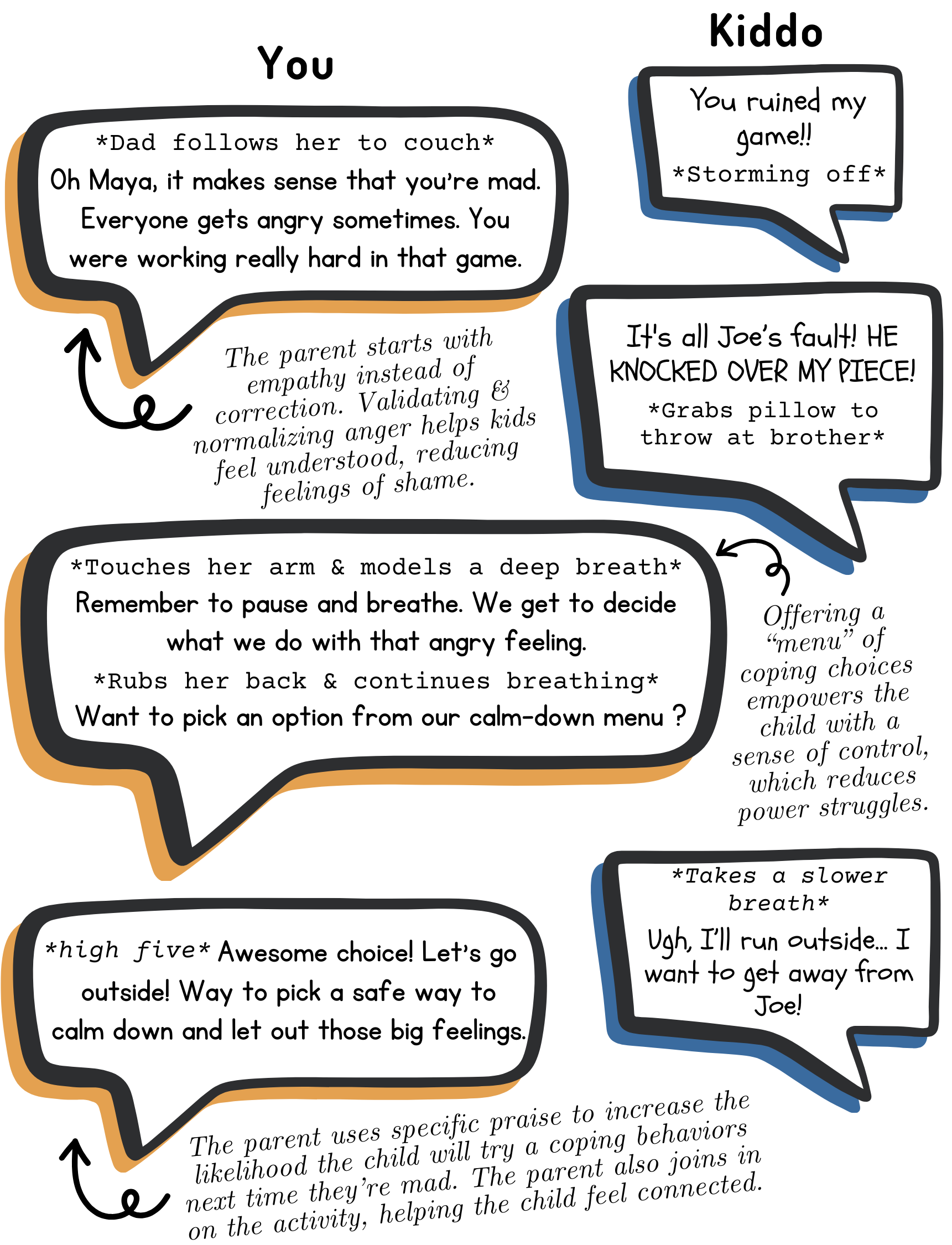
Try out these prompts for helping an angry school-age kid (age +5) express their anger:
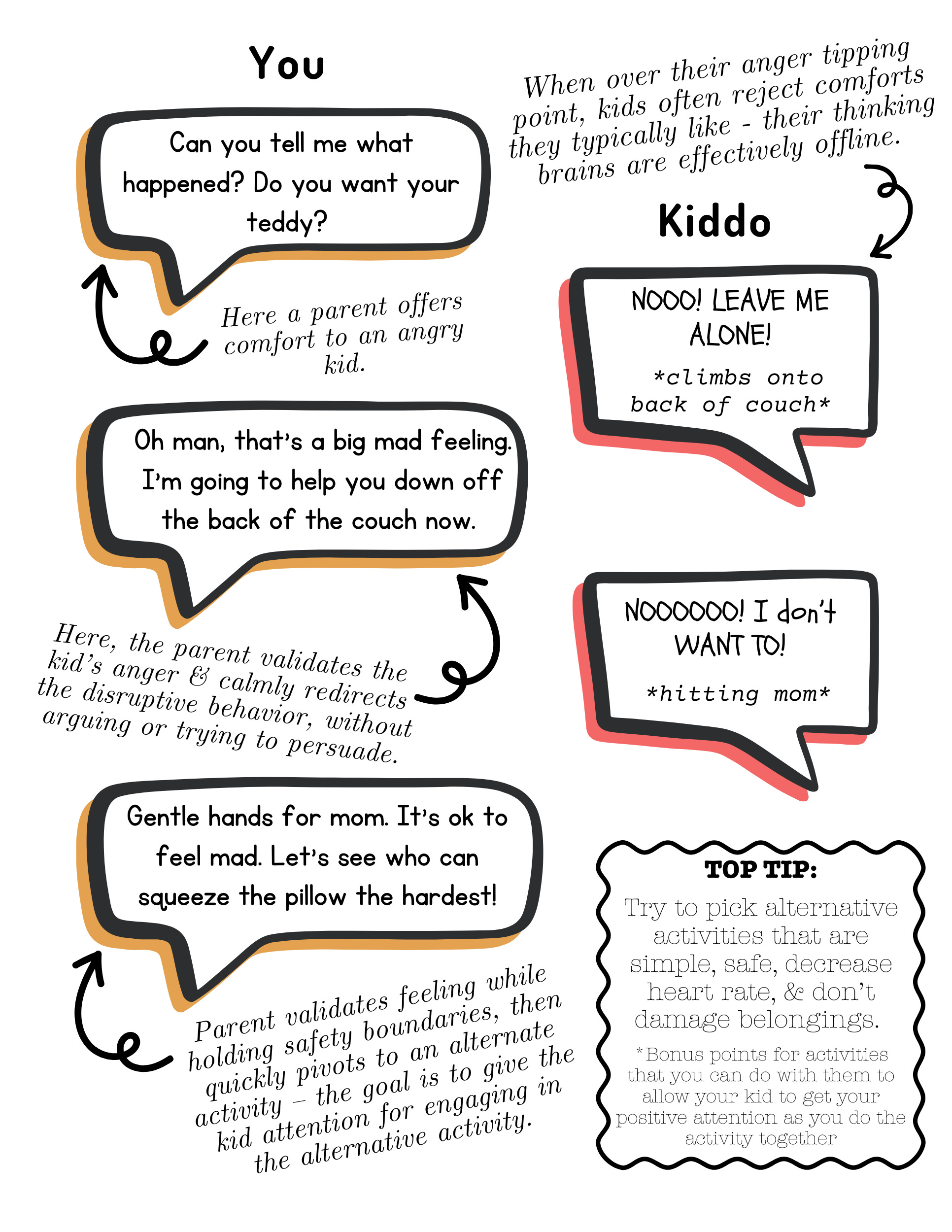
If you have a younger toddler (+1) or preschool age kid (+3), remember that they are still learning how to regulate their anger, and they may need more support and guidance when picking alternative safe activities:
What Marin likes about When I Feel Angry: This book reminds us that everyone is responsible for how they act when they have a big feeling. As it says, “feelings can’t hurt anyone or get me in trouble, but doing can.” It highlights the importance of learning to tell the difference between feeling an emotion and acting on it, which is a skill that benefits both kids and adults. Managing anger is a lifelong lesson, and it’s never too early or too late to start. This book reminds us that we are all on the journey together!
What Betsy likes about When I Feel Angry: I like how the book talks about the difference between urges and actions. The bunny feels an urge to yell or hit, but pauses and notices he doesn’t have to follow every urge. This is one of the key points of cognitive behavioral therapy — finding the space between what we want to do and what we actually do. I love how talking about urges openly with kids can normalize those moments when our brains tell us to do things that aren’t safe or kind — while also highlighting that we get to choose what we do with our actions.
Go deeper on the science of managing anger:
For preschoolers (3+) and older kids, check out our expressing anger safely worksheet 🌸 — try brainstorming some safe and fun ways to express anger with your kiddo before the next explosion.
To help kids recognize and manage anger in healthy ways, Sesame Street offers a short video on expressing big feelings and a guide for parents on responding to mean or aggressive behavior (the video caption talks about trauma, but video is appropriate for all kids).
For helping toddlers manage their anger, check out this great handout by Parenting Counts on managing anger during temper tantrums. 🌋
We love hearing kids talk about anger in their own words in this 3.5-minute video called “Just Breathe.” These kids describe how they use mindful breathing to regain control when anger takes over, like how glitter in a jar settles to the bottom when you stop shaking the jar. Watch “Just Breathe” with your kiddo and discuss (and consider making your very own “Calming Jar”!).
To go deeper on the science of emotion regulation from toddlerhood to adulthood, check out this review, which explains how kids’ ability to manage emotions develops and why strengthening these skills is key to healthy coping across all stages of growth.
Buy When I Feel Angry or listen online for free.
We think When I Feel Angry would be a great addition to any child’s library. We’d love to hear your reactions to this review and your questions about managing anger. Reply to this email, or join our community to leave a comment!
FYI: The links above for buying When I Feel Angry are affiliate links (see this page for more information).