



Clinical psychologists picking kids books rooted in mental health science 🌸
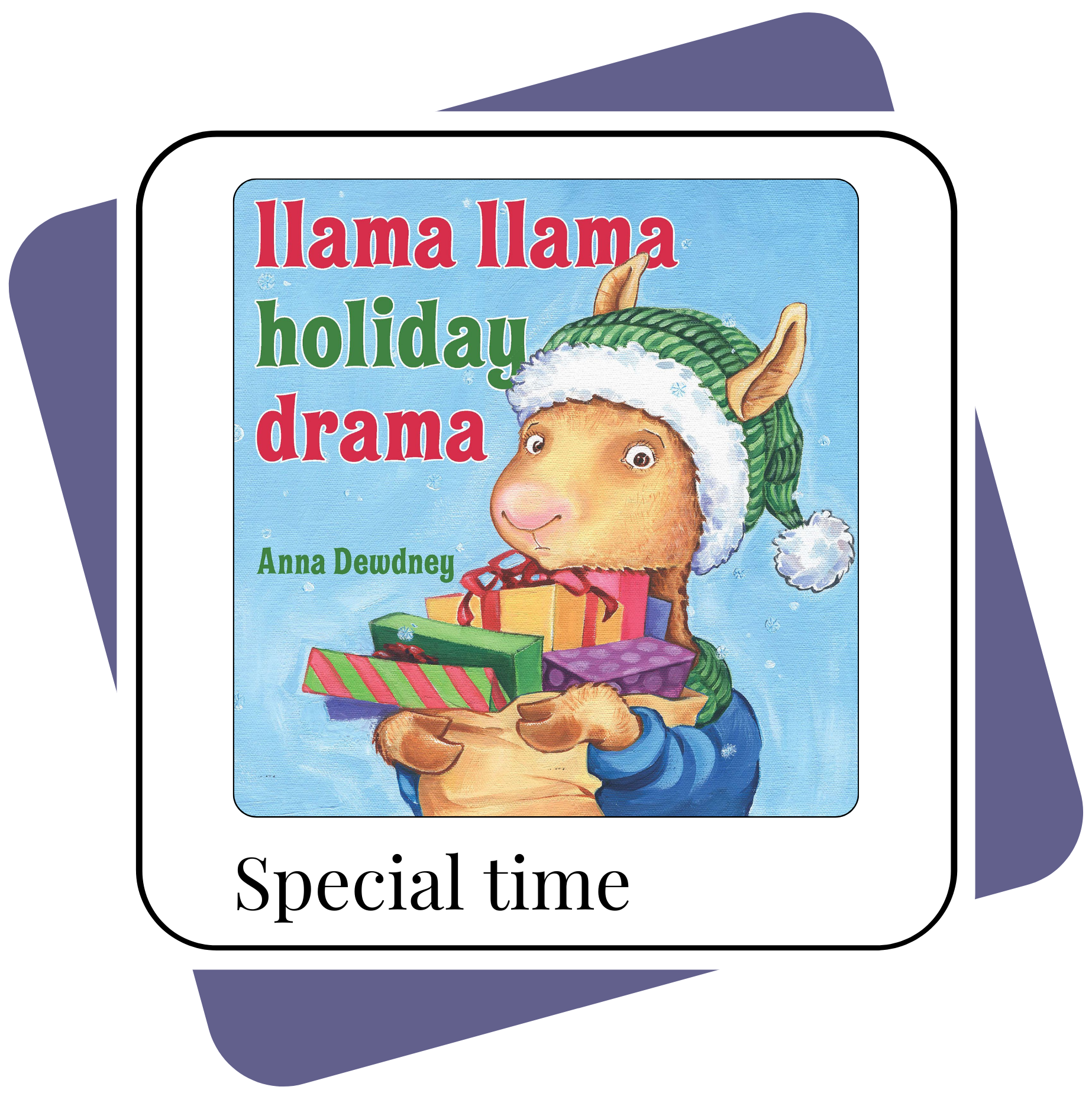
Llama Llama Holiday Drama: A picture book about special time for preschoolers (age 3+)
Each week, we recommend one kids book that teaches a mental health concept. Today, we’re sharing a book that tackles building and maintaining the connections between kids and parents during busy seasons: Llama Llama Holiday Drama, written and illustrated by Anna Dewdney. This book highlights a skill called “special time” — the idea that when parents intentionally pay attention to their child’s behavior during one-on-one playtime, it increases the parent-child connection, builds self-esteem, and decreases children’s disruptive behavior. Read on to learn why we recommend Llama Llama Holiday Drama to the parents we know, the science behind building deeper connections through play, and tips for using special time with your kiddo!
About the Book
Llama Llama Holiday Drama follows one young llama navigating the busy holiday season with her mom — from shopping for gifts to putting up holiday decorations to baking holiday cookies. After waiting patiently for many days, the young llama ultimately gets frustrated that she has to wait to open her presents and starts to have a meltdown. When Llama hits her limit, her mama sits down with her and gives her full attention. This simple act — which exemplifies the core aspect of special time — helps the young llama regain her composure and feel connected to her mama again.
Buy Llama Llama Holiday Drama or listen online for free
What Science Tells Us about Special Time
Even though we often think it should feel like the most magical time of the year, the holiday season can be hard for both kids and parents. Families are often running around to lots of different activities (gift shopping! traveling to see family! going to holiday parties!). Many parents are so focused on making sure all of these wonderful experiences go off without a hitch that it leaves little time to give one-on-one attention to their kids. That lack of positive attention can lead kids to do behaviors that are guaranteed to get their parents’ attention. In Llama Llama, we see the little llama having a “holidrama” meltdown.
Fortunately, there’s a skill developed by child psychologists that helps parents give their kids positive, one-on-one attention in a structured way that still fits into busy parents’ daily schedules — and it’s backed by decades of research. It’s called Special Time, and just like we see in Llama Llama, individual, positive attention is a powerful antidote for a child feeling stressed, overstimulated, or frustrated.
Special Time involves these simple steps:
The child chooses an activity (the kid is ‘in the driver’s seat’)
The parent sets a timer for 5-15 minutes
The parent watches the child play and describes out loud what the child is doing
The parent imitates the child enthusiastically
The parent goes with the child’s flow without asking questions, giving commands or directions, or criticizing their child or what they are doing
Special Time helps reduce stress and improve behavior by balancing the kind of attention kids receive. Many families fall into patterns where most parent-kid interactions involve instructions, corrections, or reminders, which can leave kids feeling criticized, disconnected, or unsure of how their parent sees them. Most adults have experienced a friend or boss constantly telling us what to do or that we’re doing things wrong — this doesn’t feel good for anyone! Special Time offers an antidote: A predictable dose of positive attention where the child leads and the parent is fully present. Even ten minutes of being ‘in the driver’s seat’ can make kids feel more connected and valued, which in turn increases self-esteem and makes it easier for them to handle daily expectations and cooperate throughout the day.
We know that Special Time is effective from decades of research on parent-child interaction therapy (PCIT), which involves training parents to use special time with their kids. PCIT is a pretty powerful intervention: A meta-analysis found that it reduces child disruptive behavior, improves how much kids follow directions from parents, and reduces both child and parent stress. PCIT is even being studied as a method for preventing child behavioral problems (in these papers, “Special Time” is part of “child-directed interaction” part of PCIT).
How to Use Special Time with Your Child
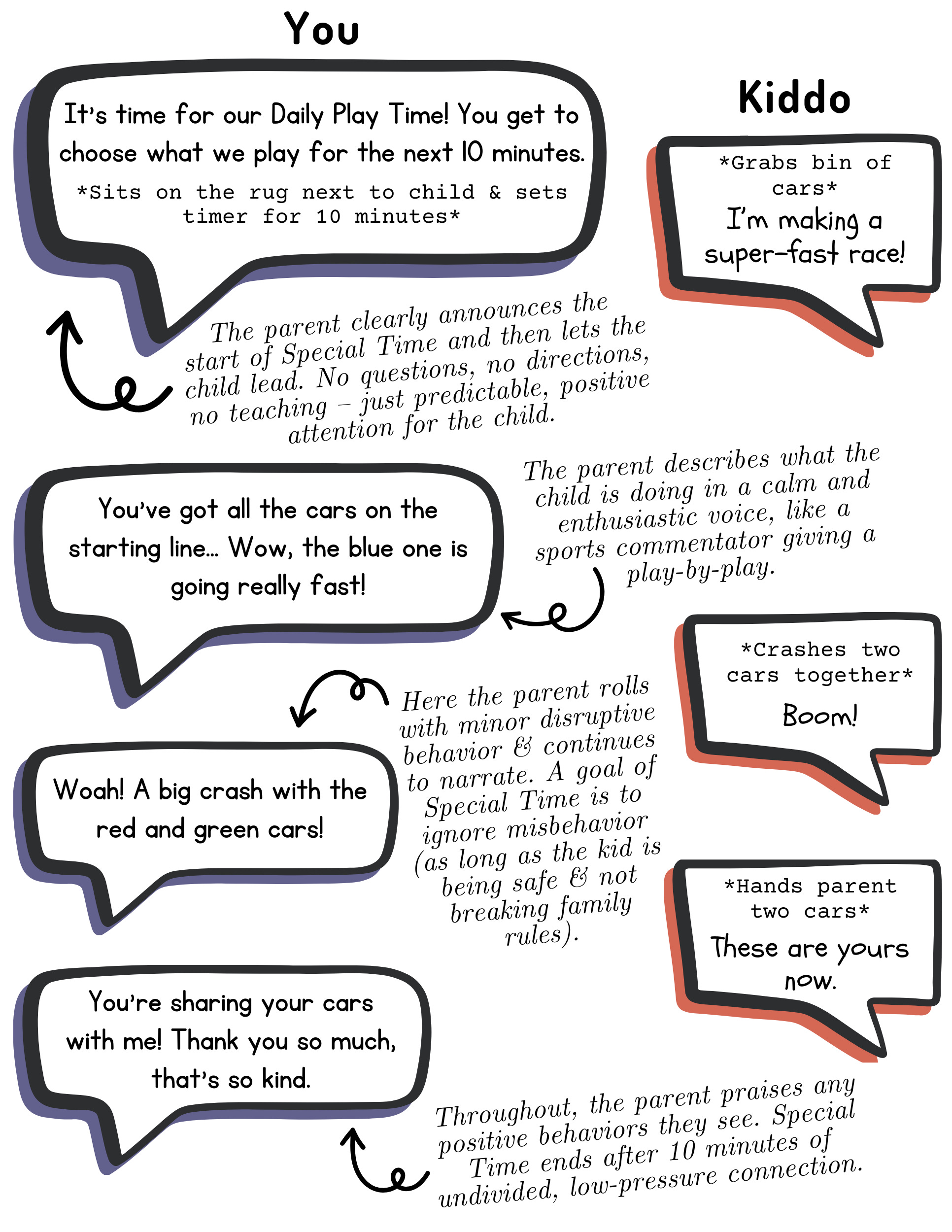
Here’s what it can look like to use special time with your kiddo:
What Marin likes about Llama Llama Holiday Drama: To me, this book really highlighted all the labor of love that parents put into making holiday magic happen for their kids. We know that special time can be hugely beneficial for kids’ mental health, but this book really reminded me how valuable parents might also find that restorative one-on-one time. Slowing down and being present during all the exciting festive activities is definitely my goal this cozy season!
What Betsy likes about Llama Llama Holiday Drama: I love how this book shows the little llama waiting, and waiting, and waiting as she navigates the holiday season. There are presents under the tree, but we can’t open them yet! We are baking cookies, but we can’t eat them yet! Little llama does a lot of very patient waiting before she melts down! Waiting can be frustrating for little brains, and in that context, big emotions and difficult behavior seem pretty understandable. Seeing how tough these parts of the holidays can be through a child’s eyes made me want to approach this holiday season with a lot more understanding.
One thing we wish was different about Llama Llama Holiday Drama: When the little llama is about to have a meltdown, her mama picks her up and looks her in the eye. At this point, the book’s narrator talks about how waiting and wanting things can take us away from the real purpose of the holidays, and how the true gift we have is each other. While we don’t disagree with this message, it looks a bit like the mama llama is lecturing the kiddo. Instead, we’d like to imagine that the mama is playing with her kiddo while the narrator talks about this holiday message. We want to make sure that parents know that special time doesn’t involve lecturing your child or trying to teach them lessons — in fact, during special time, parents aim to simply describe their child’s actions as they play!
Go deeper on the science and practice of special time:
The awesome experts in child psychology at Seattle Children’s Hospital have put together an excellent 5-minute video on how to do special time and why it works.
Want to know even more about how to use special time with your kiddo? We love this detailed tipsheet from Nemours Health.
Check out this 14-minute NPR podcast about why special time is so effective!
If you want to learn more about the science behind how play impacts the development of kids' brains, check out this article by the American Academy of Pediatrics.
We also like these activity cards, which have a bunch of ideas for special time activities that kids can pick from. And, if you are looking for holiday-inspired activities to offer during a special time, check out these suggestions from Johns Hopkins University. 🎁
Buy Llama Llama Holiday Drama or listen online for free
We think Llama Llama Holiday Drama would be a great addition to any child’s library. We’d love to hear your reactions to this review and your questions about special time. Reply to this email, or join our community to leave a comment!
FYI: The links above for buying Llama Llama Holiday Drama are affiliate links (see this page for more information).