

Why honest conversations about death help kids
Pick of the week: July 13, 2026


Clinical psychologists picking kids books rooted in mental health science 🌸
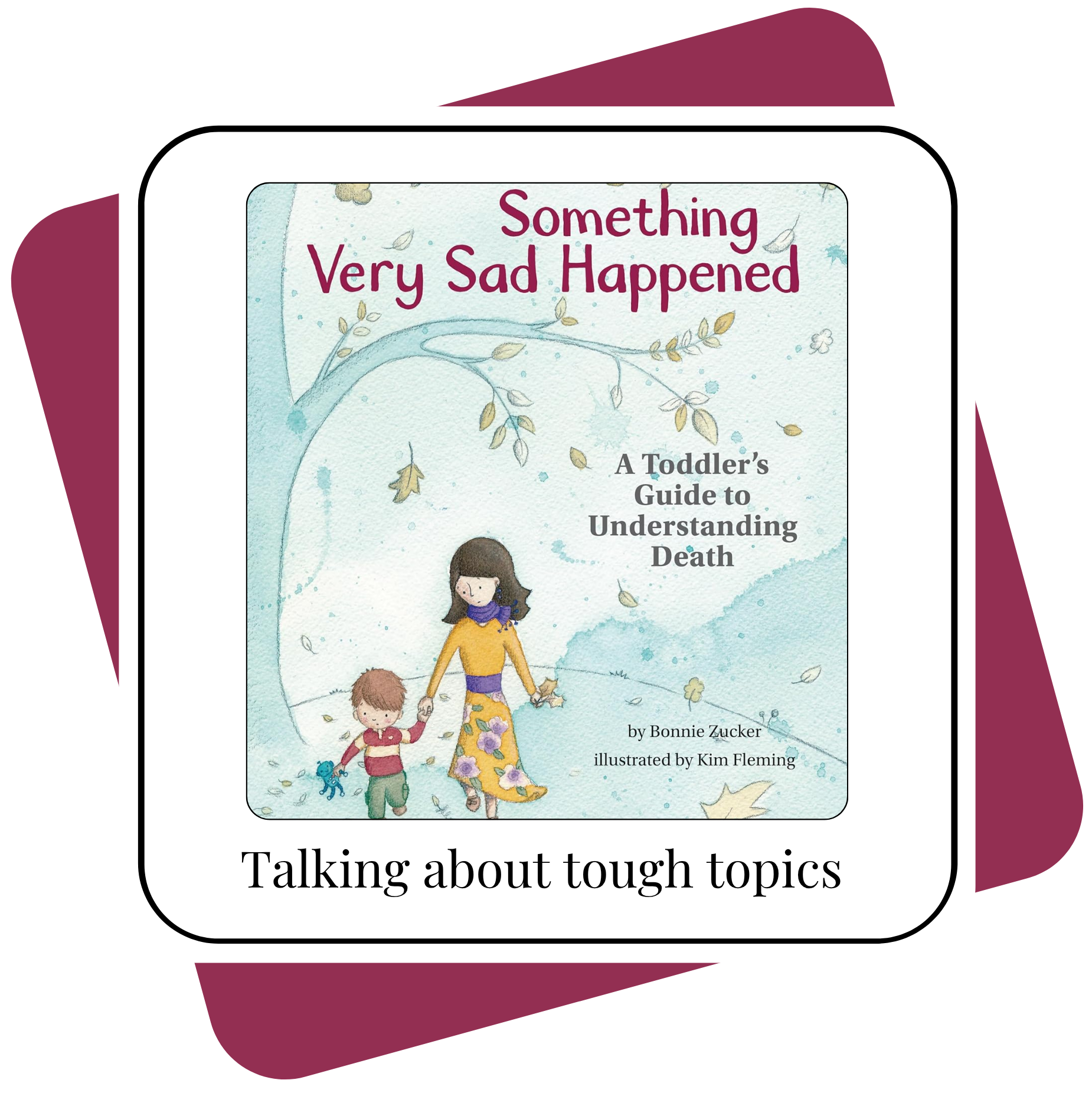
Something Very Sad Happened: A Toddler’s Guide to Understanding Death: A picture book about death and grief for toddlers (age 2+)
Each week, we recommend one kids book that teaches a mental health concept. Today, we’re sharing a book that tackles talking about death: Something Very Sad Happened: A Toddler’s Guide to Understanding Death, written by Bonnie Zucker and illustrated by Kim Fleming. This book highlights the concept of talking about tough topics — the idea that giving kids straightforward, truthful, and age-appropriate explanations about difficult topics, like death. Read on to learn why we recommend Something Very Sad Happened to the parents we know, the science behind having hard conversations, and tips for talking to your kiddo about death.
About the Book
Something Very Sad Happened: A Toddler’s Guide to Understanding Death follows a little boy whose grandma just died. The book explains death in age-appropriate language — when someone dies, their body stops working — and uses child-friendly metaphors (“like when your toy stops working”). The book also talks about the different emotions people can feel when someone they love dies, like feeling sad, scared, or mad. This book also includes recommendations for parents and caregivers on answering kids' questions about death. By talking about death in straightforward and simple language, Something Very Sad Happened exemplifies how experts recommend having honest and developmentally appropriate conversations with kids about death.
Buy Something Very Sad Happened or listen online for free
What Science Tells Us about Talking to Kids About Death
Wondering about death is a normal and healthy part of childhood. Researchers have identified that children begin asking questions about death as early as age 3, and their questions typically focus on the biological aspects of death, like “what happens to people when they die?”. It also seems that when kids learn about the body and the biology of life, it helps them understand death. In one study, 60 preschoolers (between 3 and 6) were randomized to receive either a training about different body parts and how the body works to support life, or no training. They were interviewed about the human body and their understanding of death before and after the training. Children who received the training understood death better than non-trained children (for example, they understood that death eventually happens to everyone, that death is permanent, and that when we die, our bodies stop working). The researchers concluded that when kids learned about how the body functions to support life, it helped them realize that death is caused by a breakdown in body functioning (even though they weren’t taught this explicitly).
Parents sometimes worry that giving kids straightforward and truthful information about death might make children fear death or feel anxious. In fact, the opposite might be true. In one study, nearly 100 children between the ages of 4 and 8 were interviewed about their understanding of death and their fear of death. Children with more “mature” understandings of death (understanding that when someone dies, their body stops working, and that eventually, everyone dies) actually had less anxiety about death than children who didn’t understand these things. Because this research is correlational (it didn’t test out different explanations of death and how they impact death-related anxiety), it doesn’t prove that straightforward explanations of death definitely reduce anxiety, but it’s a strong hint in that direction.
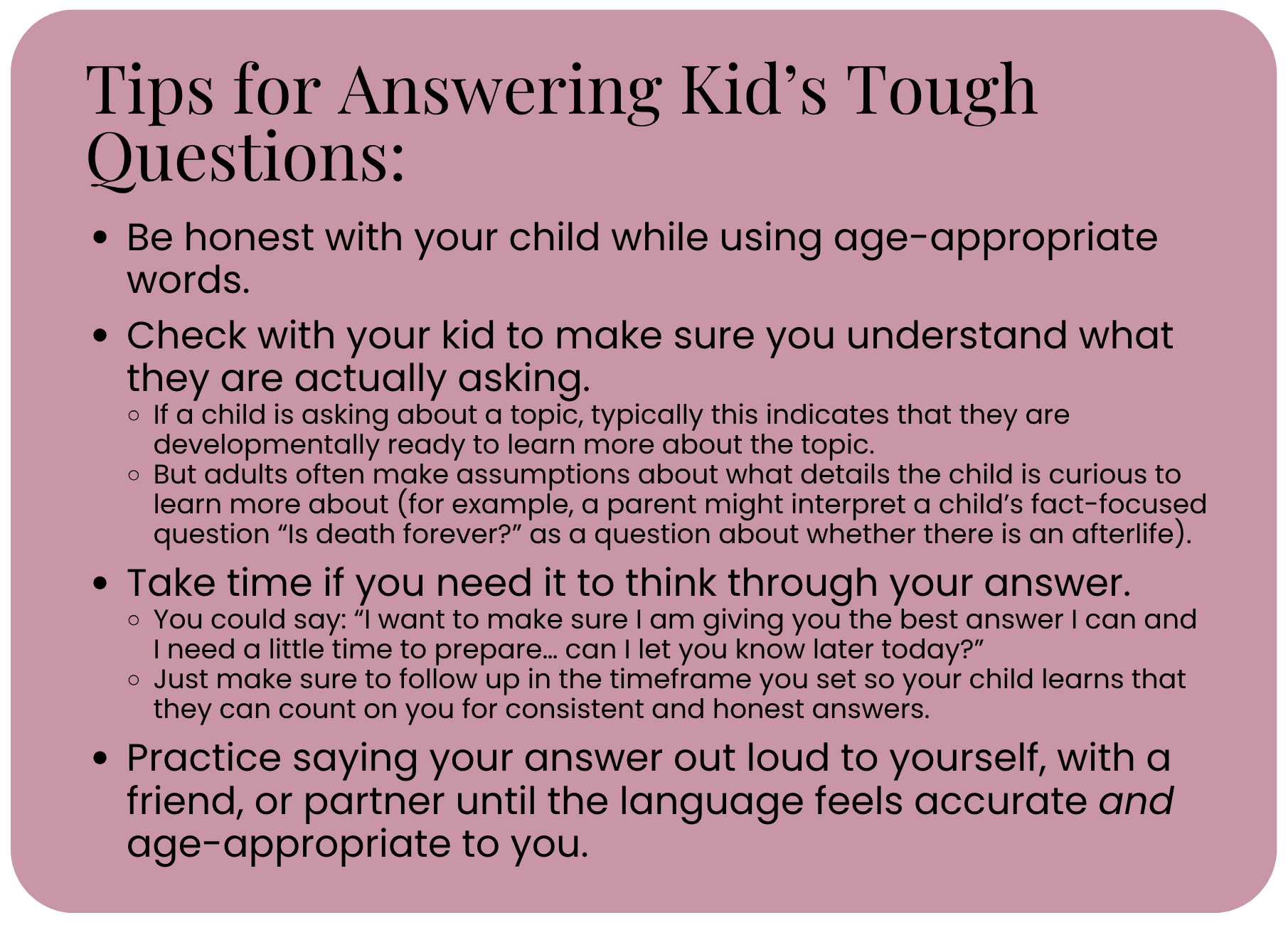
How can we talk to young kids about death? Experts recommend keeping these conversations simple, straightforward, and truthful. Use direct language like “Grandma got sick and her body stopped working. She went to the hospital where doctors and nurses helped her, but she died,” and avoid using expressions like “We lost Grandma,” “Grandma is asleep,” or “Grandma went home,” which may confuse toddlers or even make them fear regular activities like going home or falling asleep. Telling your child more information than they’re asking for can make them more upset or confused. Answer your child’s question directly and briefly, then pause and see if they have any more questions. You may be surprised by what their questions are and what information satisfies them!
What Marin likes about Something Very Sad Happened: While rituals for grief and remembrance can look very different across cultures & between families, I really value the practical, straightforward tips this book offers for helping kids maintain connections with the person who has died. For example, the mom suggests they can look at pictures of Grandma and tell stories about her as they “continue to love her.” Many grief books we reviewed talked about helping kids feel connected to the person who passed away, but Something Very Sad Happened stood out because it offers clear ideas about what this can actually look like, especially for toddlers.
What Betsy likes about Something Very Sad Happened: I really appreciate how Something Very Sad Happened talks about emotions kids’ parents might feel when someone they love dies, and shows the little boy’s mom crying. This normalizes tough emotions like sadness and anger and helps kids understand why their parents might be upset after someone dies. It also reminds me of our post about helping kids name others’ emotions, which discusses the importance of helping kids learn how one emotion might be expressed differently by different people.
Buy Something Very Sad Happened or listen online for free
We think Something Very Sad Happened would be a great addition to any child’s library. We’d love to hear your reactions to this review and your questions about talking to kids about death — we’ll highlight some answers in next week’s post. Reply to this email, or join our community to leave a comment!
FYI: The links above for buying Something Very Sad Happened are affiliate links (see this page for more information).