



Clinical psychologists picking kids books rooted in mental health science 🌸
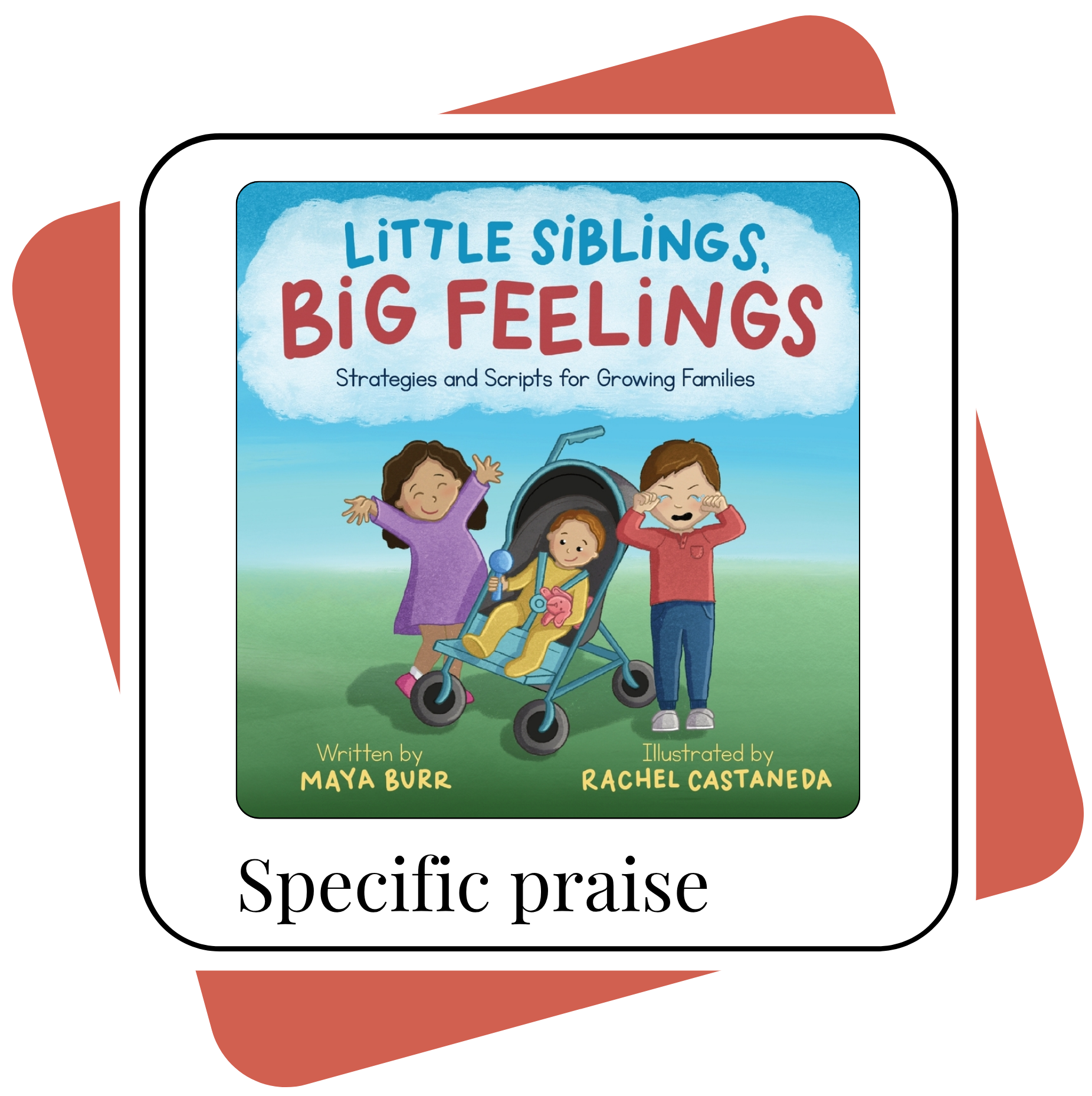
Little Siblings, Big Feelings: A picture book about the transition to sibling-hood for toddlers (age 1+)
Each week, we recommend one kids book that teaches a mental health concept. Today, we’re sharing a book that helps kids and parents when their family is growing: Little Siblings, Big Feelings, written by Maya Burr and illustrated by Rachel Castaneda. This book highlights the concept of specific praise — the idea that when parents label and praise behaviors that they want their child to repeat, it can reduce challenging behaviors. Using specific praise can help kids manage the feelings that come with big life transitions (like welcoming a new sibling). Read on to learn why we recommend Little Siblings, Big Feelings to the parents we know, the science behind specific praise, and tips for talking to your kiddo about sibling relationships.
About the Book
Little Siblings, Big Feelings is a book designed to help toddlers as they transition into the role of an older sibling. Little Siblings highlights the big emotions that can come with the arrival of a new sibling, like anger, loneliness, or sadness, and gives toddlers scripts and strategies for managing these emotions. In addition to giving toddlers concrete ideas of things to do (e.g., speaking up when they need space, using a breathing skill), the book also coaches parents through applying the specific praise skill to help shape the behavior they want to see from their older child and reduce challenging behaviors.
Buy Little Siblings, Big Feelings, or listen to the author talk about it here.
What Science Tells Us about Specific Praise
We know that adding a child to a family is both SO exciting and also SO stressful. An empirical review (like a “report card” of real-world studies) that looked at children’s transition to sibling-hood confirmed this, finding that children have more negative emotions and behavior problems after the birth of a younger sibling. In other words, it’s normal to see big emotions and disruptive behaviors after adding a new sibling to a family!
For parents, managing big emotions or difficult behaviors in an older child is often challenging — and even more so when they’re simultaneously caring for a brand new baby and dealing with sleep deprivation! Older siblings’ reactions can take the form of big negative emotions (e.g., anger, sadness, irritation) or disruptive behavior (e.g., tantrums, hitting, yelling, throwing). These can even be directed at the new sibling or parents. This can cause negative cycles: in response to a child’s disruptive behavior, parents may scold or yell, or withdraw positive attention (e.g., spending less special, connected time together). This can, in turn, make some of those big, negative emotions worse or even cause the child to escalate these concerning behaviors to try to regain their parents’ attention.
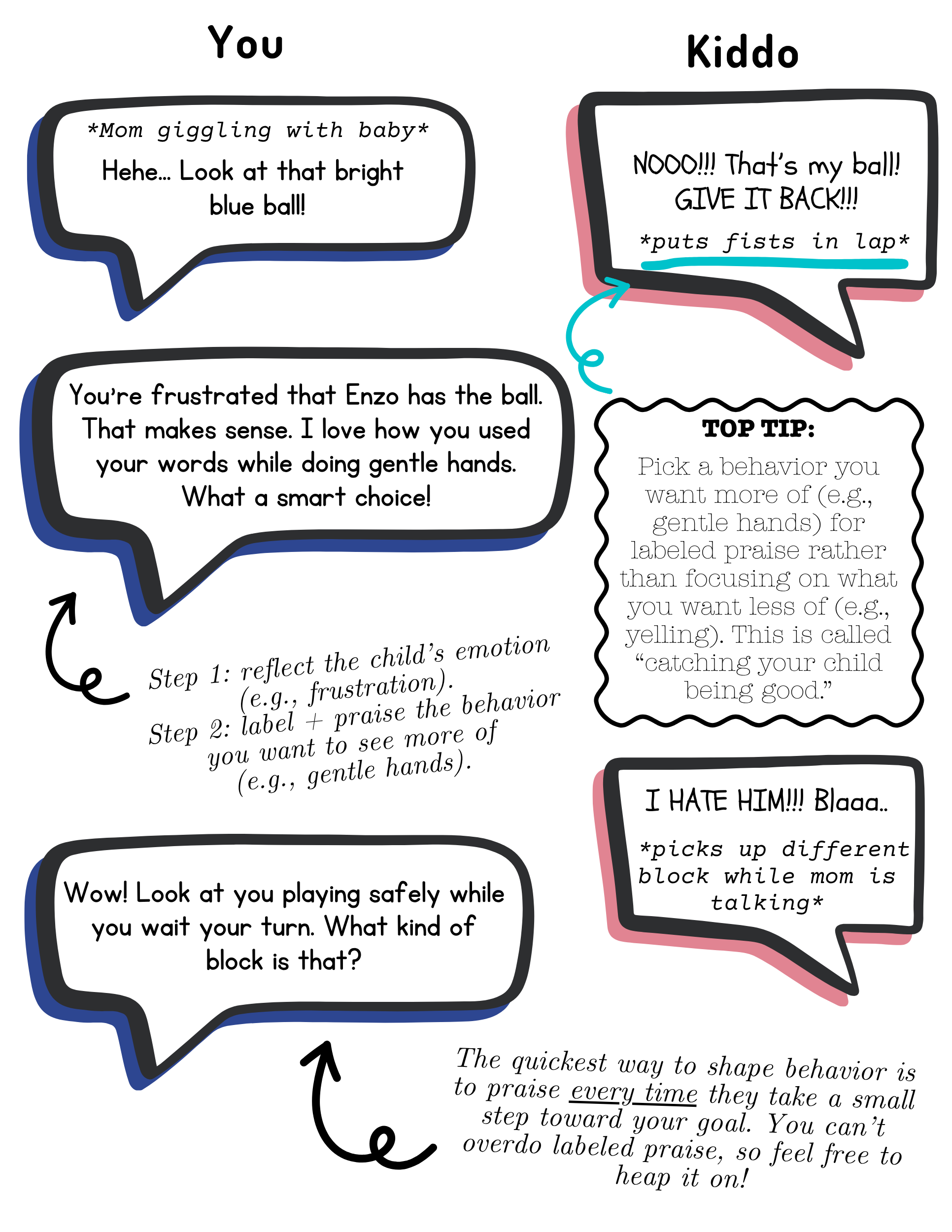
Fortunately, Little Siblings shows how a skill called specific praise can prevent and break these challenge cycles. Specific praise involves pairing praise language with a description of the older child’s behavior to help the child understand exactly what behavior the parent wants to see more of. For example, imagine a big sibling sits down quietly and gently passes a toy to their new sibling, and a parent says, “Good job!” (general praise). Without specific praise, the child has no idea what they did to get this positive attention (Could it be for the sitting? The sharing? The gentle touching? The finishing their snack after school? Who knows?!). To help the child learn what we want to see more of, we need to be very clear and direct: “Awesome job using gentle hands to touch your brother” (specific praise). This serves as positive reinforcement and creates a cycle that leads to more positive interactions between the parents and child.
Not all types of praise are equally helpful (see our post on specific vs. judgment-based praise), but we know that specific praise improves child behavior from 50 years of research using specific praise in schools. We also know that a treatment involving specific praise, Parent-Child Interaction Therapy (PCIT), improves behavior. In a meta-analysis, PCIT was shown to a) reduce children’s challenging behaviors, b) improve children’s listening, and c) reduce parent and child stress levels. This is strong evidence that specific labeled praise can improve child behavior and the parent-child relationship.
How to Use Specific Praise with Your Child
Here’s what it can look like to use specific praise with your kiddo:
What Marin likes about Little Siblings, Big Feelings: I have recommended Little Siblings to several friends who are growing their families and colleagues working with child clients. I fell in love with how clearly and simply Little Siblings shows the power of specific praise to help shape positive behaviors for kiddos transitioning into sibling-hood. The examples feel so realistic and yet so simple that I haven’t been able to resist singing its praise (pun intended!). Growing your family can feel overwhelming in so many ways, but this book does a wonderful job of reminding us that each small, consistent piece of praise can add up to a lot of peace and joy!
What Betsy likes about Little Siblings, Big Feelings: I love how Little Siblings identifies some of the specific thoughts and emotions that can come up for older siblings, like showing how older siblings sometimes feel left out and crave attention from the adults in their life. Little Siblings states these things so plainly, and I feel like it really helps normalize these types of reactions (which is good for both kids and parents). I love how this book can help the entire family prepare for the exiting — and scary! — transition of adding a new family member.
Go deeper on the science of specific praise for sibling relationships:
To learn more about specific praise and how to start practicing it in your home, check out our how-to guide on specific praise! 🌸
We also love this CDC tip sheet on specific praise, and this video showing specific praise in action!
Parents can get comfortable with specific praise using this “mixer” which shows a bunch of different examples of doing specific praise.
To go deeper, this article offers a step-by-step guide on how families can incorporate specific praise into daily routines at home and provides more details on the science of why it works.
If your child is struggling with serious disruptive behaviors, check out this resource which provides guidance for finding a PCIT therapist.
Buy Little Siblings, Big Feelings, or listen to the author talk about it here
We think Little Siblings, Big Feelings would be a great addition to any child’s library. We’d love to hear your reactions to this review and your questions about specific praise. Reply to this email, or join our community to leave a comment!
FYI: The links above for buying Little Siblings, Big Feelings are affiliate links (see this page for more information).