



Clinical psychologists picking kids books rooted in mental health science 🌸
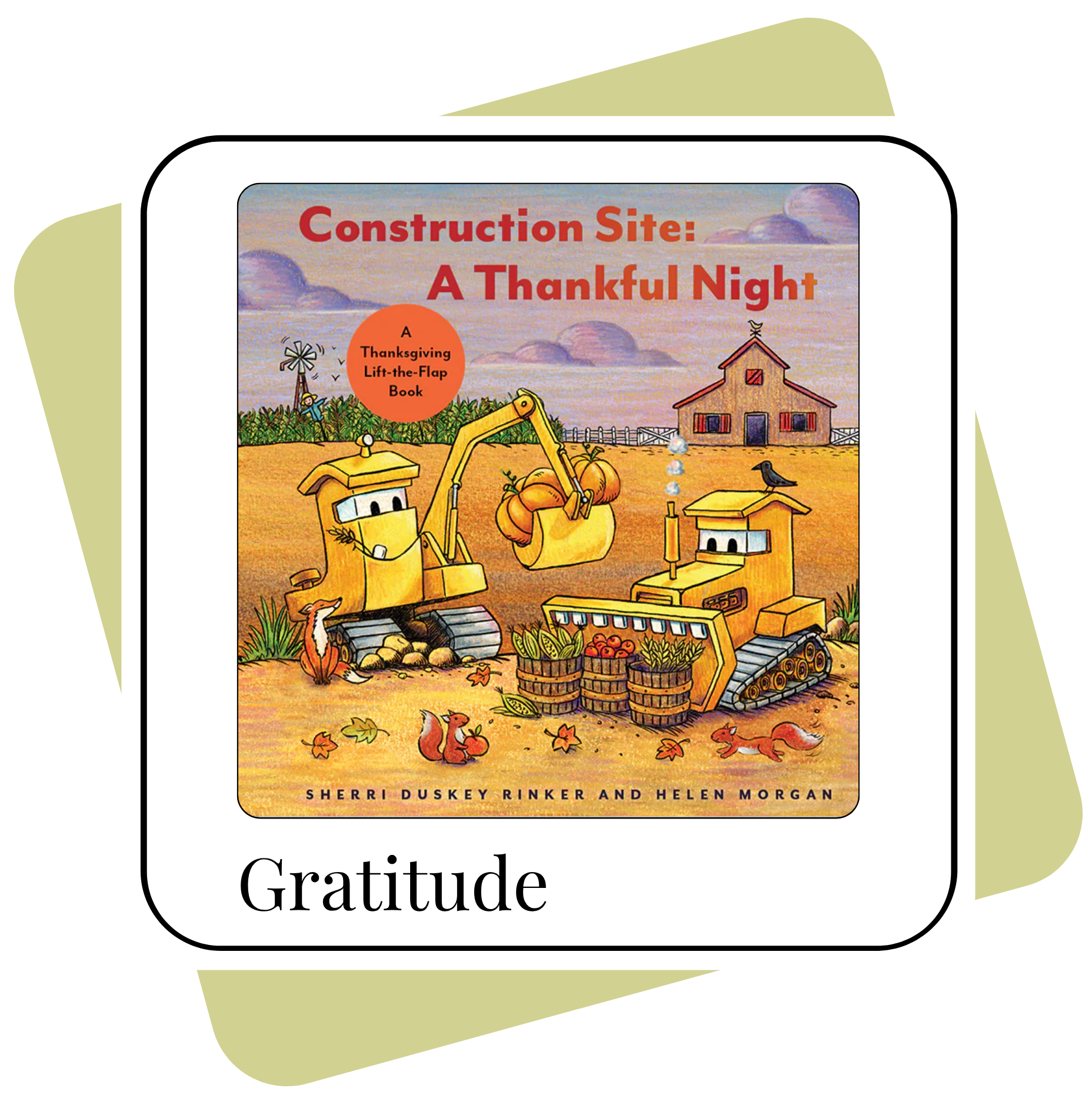
Construction Site, A Thankful Night: A board book about gratitude for toddlers (age 1+)
Each week, we recommend one kids book that teaches a mental health concept. Today, we’re sharing a book that talks about thankfulness: Construction Site, A Thankful Night, written by Sherri Duskey Rinker and illustrated by Helen Morgan. This book highlights the concept of gratitude — the idea that we experience happiness when we notice things we’ve been given and think about the kindness they were given with. Read on to learn why we recommend Construction Site, A Thankful Night to the parents we know, the science behind gratitude, and tips for talking to your kiddo about expressing thanks.
About the Book
Construction Site, A Thankful Night is an adorable book from the Goodnight, Goodnight, Construction Site family. In this lift-the-flap book, a team of construction trucks working together on Thanksgiving talk about what they’re grateful for. Near the end of the book, the Excavator names qualities he values in each of the other trucks, and they talk about how together they are grateful to be a “mighty crew.” With adorable fall vibes sprinkled throughout, this book highlights many ways we can practice gratitude for the special moments and people around us!
Buy Construction Site, A Thankful Night or listen online for free
What Science Tells Us about Gratitude
Science shows that being thankful improves our lives! In two very popular studies, researchers found that people who feel a lot of gratitude have higher levels of both well-being and happiness with their lives. These positive impacts were found regardless of people’s personality traits, which tells us that the link between gratitude and well-being isn’t just a by-product of personality traits (like how extraverted someone is). Gratitude even makes families stronger — one study found that when parents practiced gratitude more often, their well-being was higher and their families functioned better.
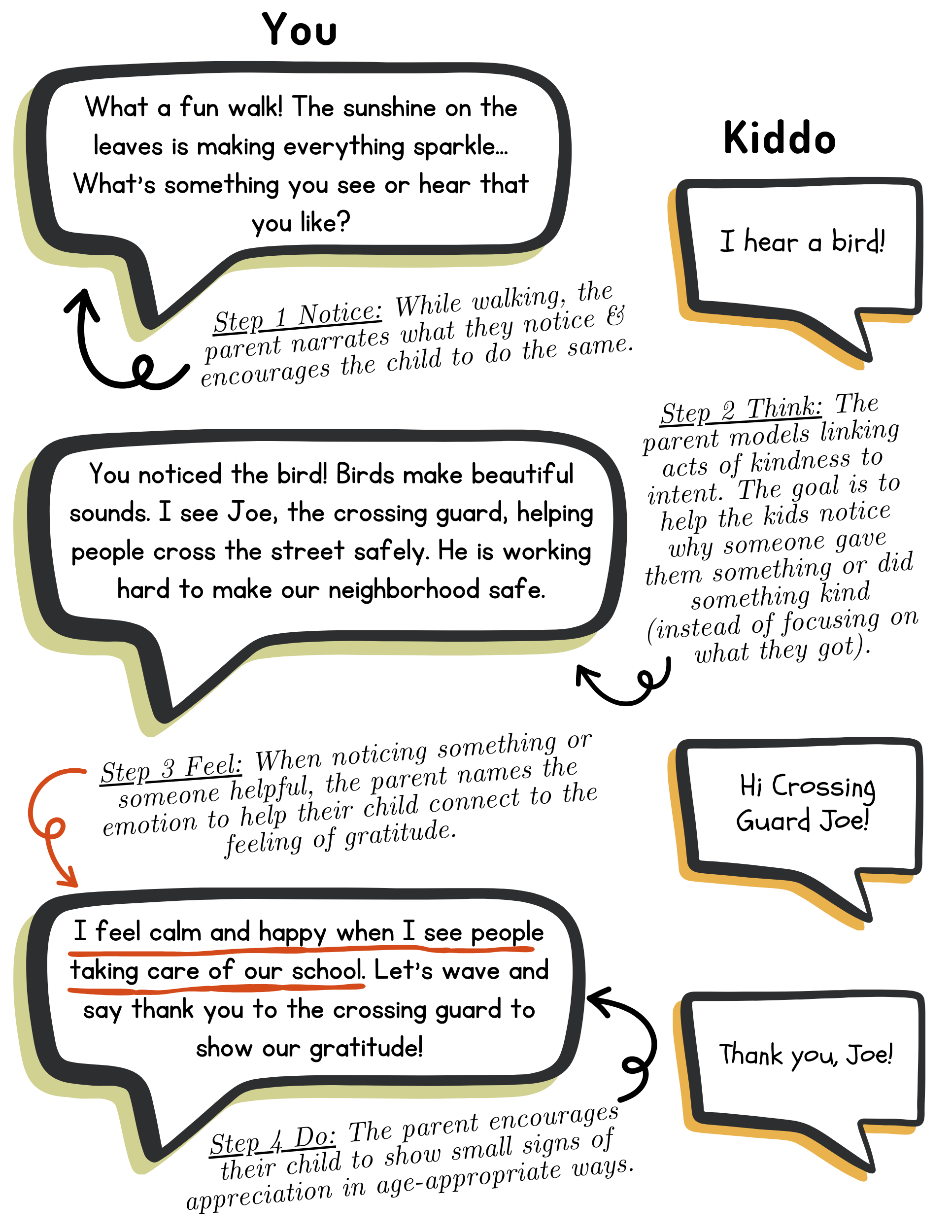
All this research on gratitude tells us that one way parents can help kids be happier is to help them develop gratitude skills. It turns out that this is more than telling kids to say “thank you” — researchers highlight that gratitude actually consists of four steps:
Noticing something good we’ve experienced or been given.
Thinking about how the giver was trying to be kind or helpful.
Feeling positive emotions because of what we experienced or received.
Showing appreciation in some way, like saying thank you or doing something kind in return.
The “think” part — guiding your child to reflect on how someone was trying to be kind or helpful — may be especially important, because that’s where kids can start recognizing the goodness of others. Over time, this practice can help shift kids’ attention — they become more likely to notice kindness, more aware of other peoples’ good intentions, and more likely to see positive moments in everyday life.
How to Talk About Gratitude with Your Child
Try out these prompts for discussing gratitude with your kiddo:
What Marin likes about Construction Site, A Thankful Night: I love how this book shows how we can be thankful for the ways other people help us. When we pay attention to how other people (or trucks!) help us and what they do for us, we can find so many moments to generate gratitude. The moment when the Excavator named a strength of each of his teammates really touched my heart 🧡 I thought it was a wonderful example of how we can appreciate our friends and family just for being uniquely themselves, exactly as they are in the moment.
What Betsy likes about Construction Site, A Thankful Night: I related to Dump Truck, who is grateful for the pumpkins brightening his way. As we head into the dark days of winter, I find myself so grateful for fall and winter decorations like pumpkins and lights — and for the people who decorate their houses to help spread light and cheer around the neighborhood!
Go deeper on the science of gratitude:
Check out our Gratitude Scavenger Hunt for a fun activity to do with your kids to help foster their gratitude. 🌸
We love these printable gratitude conversation cards and conversation prompts from Harvard’s Making Caring Common Project. You could even print them out and put them on your kitchen table!
This article from Berkeley’s Greater Good Science Center talks about how gratitude changes your brain — so cool!
Keeping a gratitude journal is an evidence-based way to increase your happiness. It’s probably one of the quickest and simplest things you can do to increase your own well-being. This article goes more in depth (and gives instructions for) gratitude journaling.
Parents with slightly older kids (age 9+) can take a free, 45-minute gratitude conversation training program from Professor Andrea Hussong at UNC. It’s designed to help parents have conversations about gratitude with their children —using the notice, think, feel, show steps outlined above.
Happy Thanksgiving, everyone!
Buy Construction Site, A Thankful Night or listen online for free
We think Construction Site, A Thankful Night would be a great addition to any child’s library. We’d love to hear your reactions to this review and your questions about gratitude. Reply to this email, or join our community to leave a comment!
FYI: The links above for buying Construction Site, A Thankful Night are affiliate links (see this page for more information).