

A magical thinking skill to make hard situations easier
Pick of the week: April 13th, 2026


Clinical psychologists picking kids books rooted in mental health science 🌸
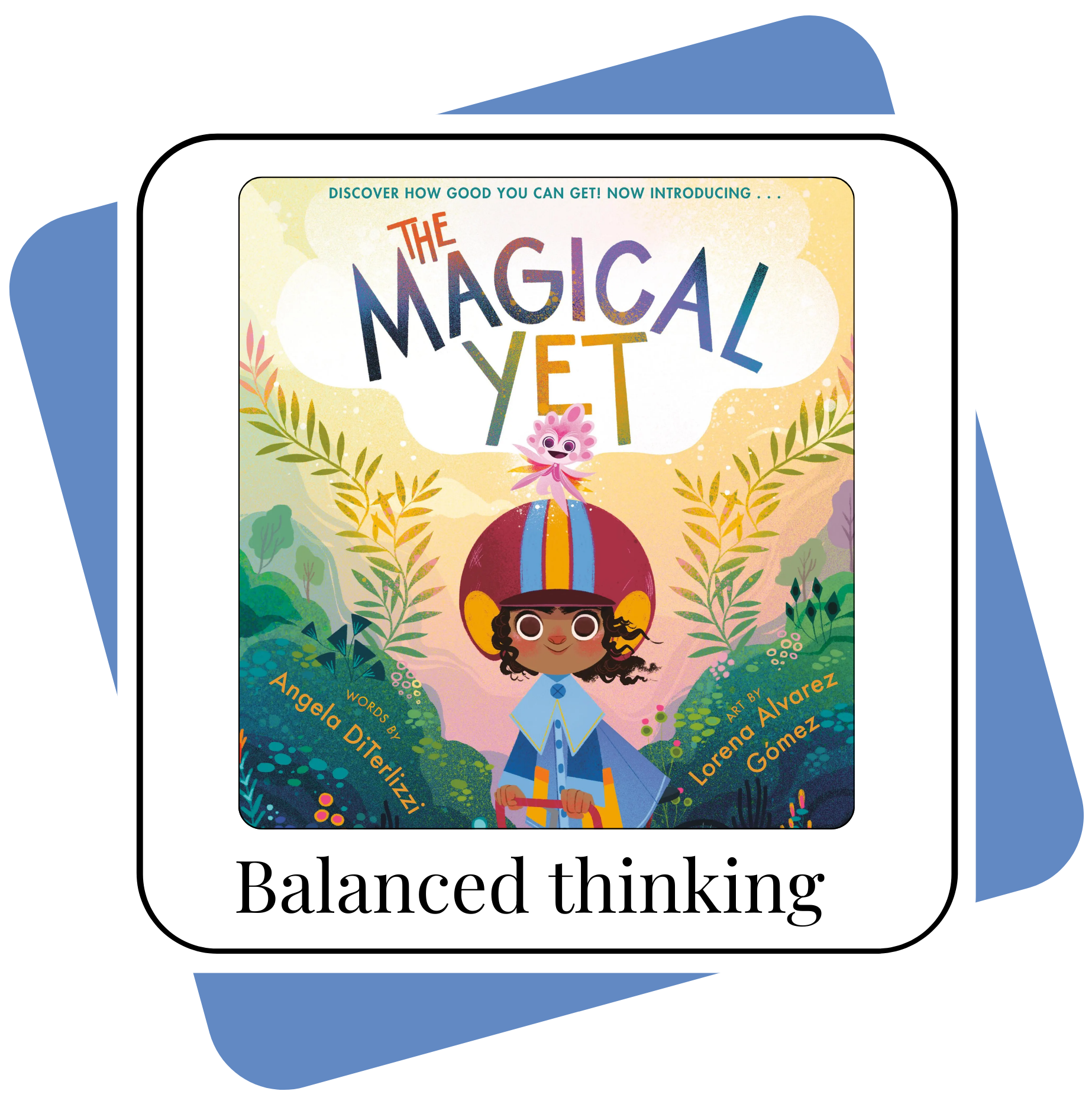
The Magical Yet: A picture book about balanced thinking for kids (age 5+)
Each week, we recommend one kids book that teaches a mental health concept. Today, we’re sharing a book that teaches a coping skill for managing unhelpful or hurtful thoughts: The Magical Yet, written by Angela DiTerlizzi and illustrated by Lorena Alvarez Gómez. This book highlights the concept of balanced thinking — the idea that changing the way you think can change how you feel and act! Read on to learn why we recommend The Magical Yet to the parents we know, the science behind balanced thinking, and tips for talking to your kiddo about unhelpful thoughts.
About the Book
The Magical Yet is about a child who gets really frustrated while trying to learn to ride her bike. Just when she vows that she’ll never ride again, she’s visited by the Magical Yet, a fairy-life creature who helps the kid think differently about the situation — it’s not that she can’t ride her bike… it’s that she can’t do it yet! With this new mindset, the child sticks with her bike practice and, through do-overs, re-dos, stumbles, and flops, figures out how to ride. With colorful, enchanting illustrations, Magical Yet highlights that we all have the “magical” power to shift our perspective, and by changing our thinking, we can make hard situations easier to face.
Buy The Magical Yet or listen online for free
What Science Tells Us about Balanced Thinking
How we talk to ourselves matters, including when we’re learning new skills. In psychology, cognitive theory says that our thoughts influence our emotions and behaviors. This theory says that negative, hurtful, or untrue thoughts (like “I can’t ride my bike,” “I’ll never learn how,” or even “I’ve failed”) can lead to negative emotions (like sadness or frustration) or unhelpful behavior (like giving up). This also means that when we’re feeling a difficult emotion, there’s often a hurtful or untrue thought driving that feeling.
Once we catch a hurtful or untrue thought, we can address it using a skill called “balanced thinking,” which involves finding more helpful and true ways to talk to ourselves. This skill has many names, including “cognitive restructuring” and “cognitive coping.” Balanced thinking is a core part of cognitive and behavioral therapy (CBT). Countless meta-analyses have found balanced thinking effective for a wide array of different problems, including depression, anxiety, stress, and anger. Studies focused on kids and teens specifically have found that balanced thinking helps kids struggling with depression, anxiety, and anger. Balanced thinking works fast: A new meta-analysis found that learning balanced thinking in a single therapy session can reduce patients’ symptoms of depression by the very next session.
We love that Magical Yet highlights how balanced thinking can help kids in upsetting moments in their daily lives. Here are some tips for helping kids practice balanced thinking:
Identify an unhelpful thought. When a kiddo is experiencing negative emotions, we can ask, “What is your brain telling you?" An unhelpful thought could sound like “I always mess up!” “Everyone hates me,” or “I never get what I want.”
Ask some questions about the thought: “Is that thought 100% true, partly true, or not at all true? Is it helpful or hurtful? What’s not true/unhelpful about that thought?”
Find ways to balance the thought by making it more true and more helpful:
A lot of times, changing just one word can make a thought more true, like swapping “never” or “always” with “sometimes” (e.g., “I never win” can become “I sometimes win”).
To make thoughts more helpful, we can ask questions like, “What would you say to a friend?” or “What could you say to yourself that would be more helpful?” For example, “I’m stupid” is hurtful, but “I’m learning” is helpful. Many of us would say “I’m stupid” to ourselves, but would be much kinder when talking to a friend about the same situation.
Remember that even true thoughts can often be made more helpful (“I failed my test” may be true, but it may be more helpful to tell ourselves “I failed, but now I know how I should study for the next one").
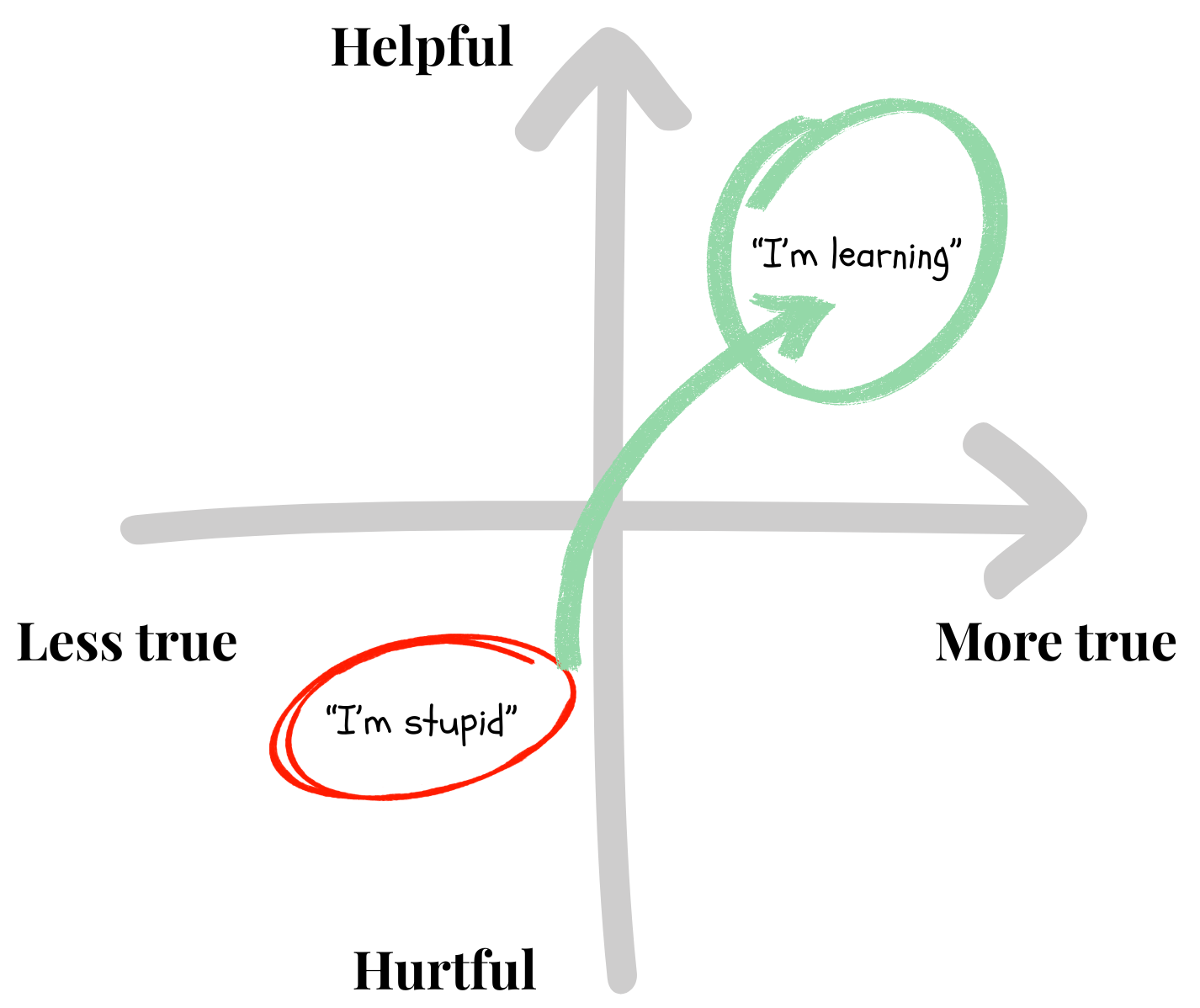
For older kids, parents can help draw the connection between balanced thinking and helpful actions. For example, saying “I’m stupid” might make us want to quit practicing something, while saying “I’m learning” might motivate us to keep trying. For younger ages, the connection between thoughts and actions can be a little complex, so we recommend focusing first on the link between thoughts and feelings (e.g., hurtful thoughts make us feel sad, helpful thoughts make us feel excited).

What Marin likes about The Magical Yet: When I am teaching balanced thinking, one of the responses I often get from my clients is “Wow, it’s like a superpower!” I love that this book takes the power of balanced thinking and illustrates how magical it can be. Often, kids may feel frustrated or powerless because they are still learning so much, and many of their daily choices are decided by caregivers and authority figures. Kids often find it very empowered to learn that even if a situation stays exactly the same, they can change their experience and sometimes the outcome of the situation just by changing their thoughts.
What Betsy likes about The Magical Yet: I really love how this book shows how darn frustrating it can be when we can’t initially figure out how to do something! The illustration of how angry the child in Yet looks as she pushes her bike home felt really relatable to me. This book made me think about how getting frustrated when trying new skills actually reflects being excited about gaining a new skill or ability. That’s actually a really cool thing!
One thing to clarify about The Magical Yet: The balanced thinking skill shown in Magical Yet is very subtle! The book never directly says the lesson taught by the Magical Yet. After reading the book, it might help some kids to talk directly about the book’s message: When we can’t do something now, it just means that we can’t do it yet.
Buy The Magical Yet or listen online for free
We think The Magical Yet would be a great addition to any child’s library. We’d love to hear your reactions to this review and your questions about coping with unhelpful or hurtful thoughts — we’ll highlight some answers in future posts. Reply to this email, or join our community to leave a comment!
FYI: The links above for buying The Magical Yet are affiliate links (see this page for more information).