

How to practice balanced thinking with your child
Practicing a skill for dealing with negative thoughts.


Bite-sized mental health skills for real parents 🌸
Last week, we recommended The Magical Yet, which highlights the concept of balanced thinking — the idea that changing the way you think can change how you feel and act (read that post here). This week, we share some resources to try balanced thinking with your kiddo at home, and answer your real-life questions about negative thoughts.
Buy The Magical Yet or listen online for free
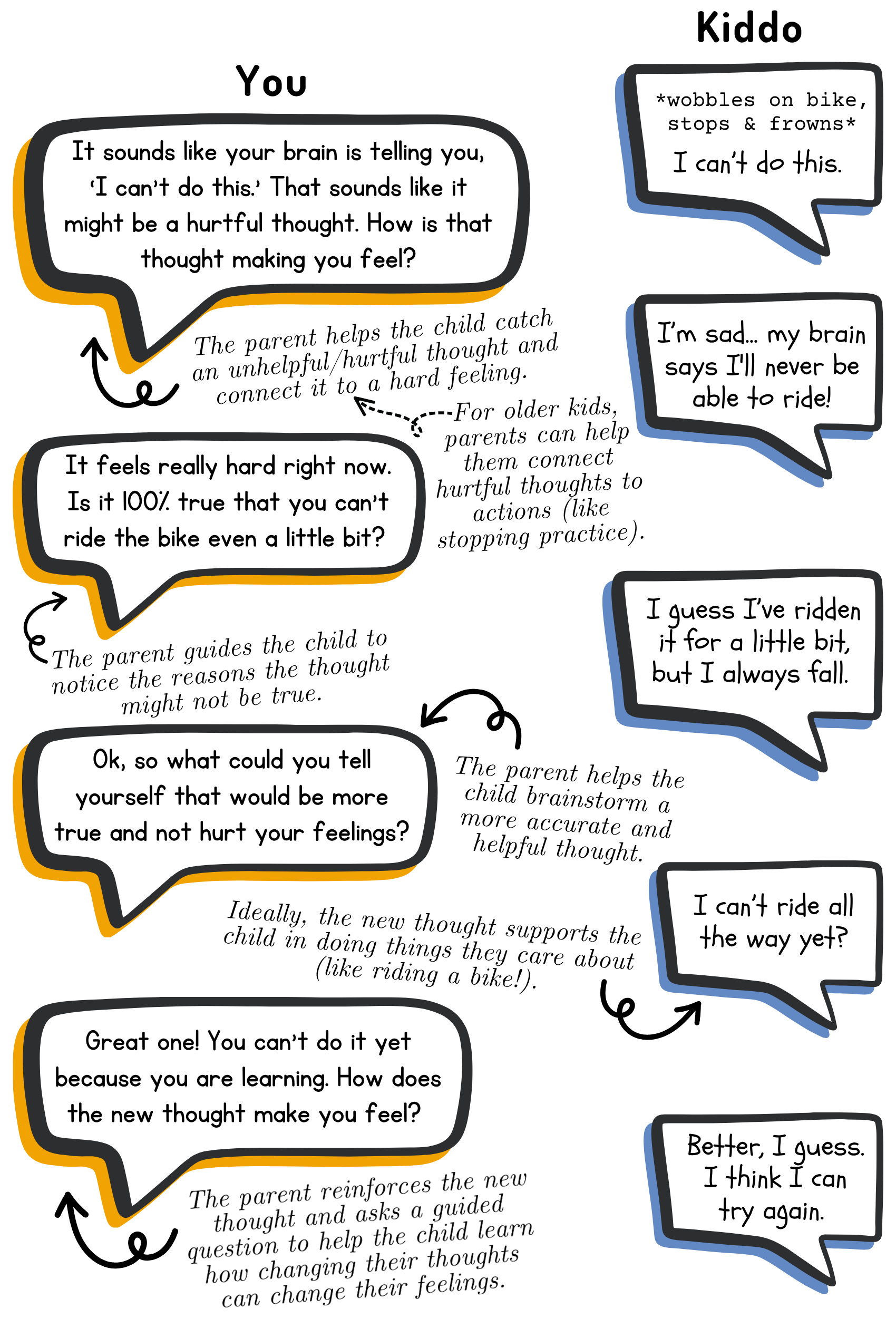
How to Talk About Balanced Thinking with Your Child
We want to make developing balanced thinking skills feel as approachable as possible. Here are some ideas of how you can talk to your child about making unhelpful thoughts more balanced. We’ve included some comments to help you understand why we recommend these steps.
Questions From Our Community About Balanced Thinking
Q: Before music lessons, my kid often says he doesn’t want to go because it’s too long & too hard to learn new things. Once he’s there, he often seems to like it and feel proud. How can I help when he wants to avoid going to practice?
A: This is an excellent question. The first step is to ask what kinds of thoughts he’s having before music class. When he says it’s too long or too hard, you might ask:
“Hey, what is your brain telling you is going to happen at music practice today?”
Once you identify the thought, it can be helpful to explore with him how true that thought is. For example, you might say, “Ok, it sounds like your brain is telling you, ‘It’s going to be really hard, and I’m going to do a bad job.’ Is that thought 100% true, partly true, or not at all true?”
Often, kids can recognize: “I guess I don’t know 100%. I might have a hard time with some parts, but I might do okay in others. I practiced a lot this week.” This is a great start because it helps them see that their thoughts might not be completely accurate. In this example, they might start to realize that they can’t predict the future, even if their brain tells them they’re definitely going to struggle.
Then you can ask: “Okay, if we know it’s not 100% true that you’re going to do poorly in class, what’s a more true version of that thought?” Or, if that feels too abstract, another helpful approach is: “If you had a friend in music class who said, ‘I know I’m going to do terribly today,’ what would you tell that friend?”
Then you can help him come up with a more balanced, more true thought, such as:
“Music practice might feel hard because I’m still learning”
“I don’t know for sure I’ll do a bad job — all I can do is try”
“I don’t know how to play this song yet — but every time I practice I improve!”
“I might struggle with some parts, and I might do well in others”
Once he has picked a new truer version of the thought, it can be helpful to ask: “How do you feel when you think that new thought?” This can help your kiddo understand that by making thoughts truer and more balanced often makes us feel more hopeful and ready to take on a challenge, even when the situation itself hasn’t changed.
Q: Sometimes my child gets frustrated by a new task and begins to yell or cry — what can I do to help her think through how to accomplish it?
A: This is such an important question. When kids are trying something new, it can feel really frustrating or overwhelming. Kids are learning so many new things all the time, and these new challenges can bring up a lot of big emotions.
If your kiddo is already at the point of yelling or crying, this is when we would want to consider focusing on coping skills first (like belly breathing or other safe ways to calm their body). The goal here is to help them regulate the intensity of their emotions in their body or to “bring the feelings thermometer down.”
When they’re feeling calmer, then you can come back to the balanced thinking skills we talked about above. Keep in mind this might be several hours later or even the next day. Cognitive skills are really hard to use when a kid is in a very emotional space, so waiting until they relaxed will give you the best bang for your buck.
Go deeper on the science of coping with unhelpful thoughts and balanced thinking:
This handout from Anxiety Canada goes in depth on how parents can teach balanced thinking skills to kids!
This video is a great resources for teaching kids about the “cognitive triangle” — how thoughts drive feelings and actions.
We also love this adult-focused NHS resource about balanced thinking, especially this video on challenging unhelpful thoughts.
We like this card game for helping older kids (5+) discover the connection between their thoughts and feelings and actions!
For ideas on dealing with parenting-related fears and worries using balanced thinking, check out this post! 🌸
Vanderbilt Professor Steven Hollon, a leading expert in cognitive therapy, was interviewed on the “Let’s Talk CBT” podcast, and it’s worth a listen! We like the way Dr. Hollon describes helping people suffer less through balanced thinking — for example, he has said “I…. take offense at the way [my clients’] inaccurate beliefs lead them to beat up on themselves.”
Have you noticed your child using negative self-talk? Have you considered helping them try out balanced thinking? Share your experiences or questions about negative thinking in the comments!
FYI: The links above for buying The Magical Yet are affiliate links (see this page for more information).