

How breathing can help us cope with big feelings
Pick of the week: March 30, 2026


Clinical psychologists picking kids books rooted in mental health science 🌸
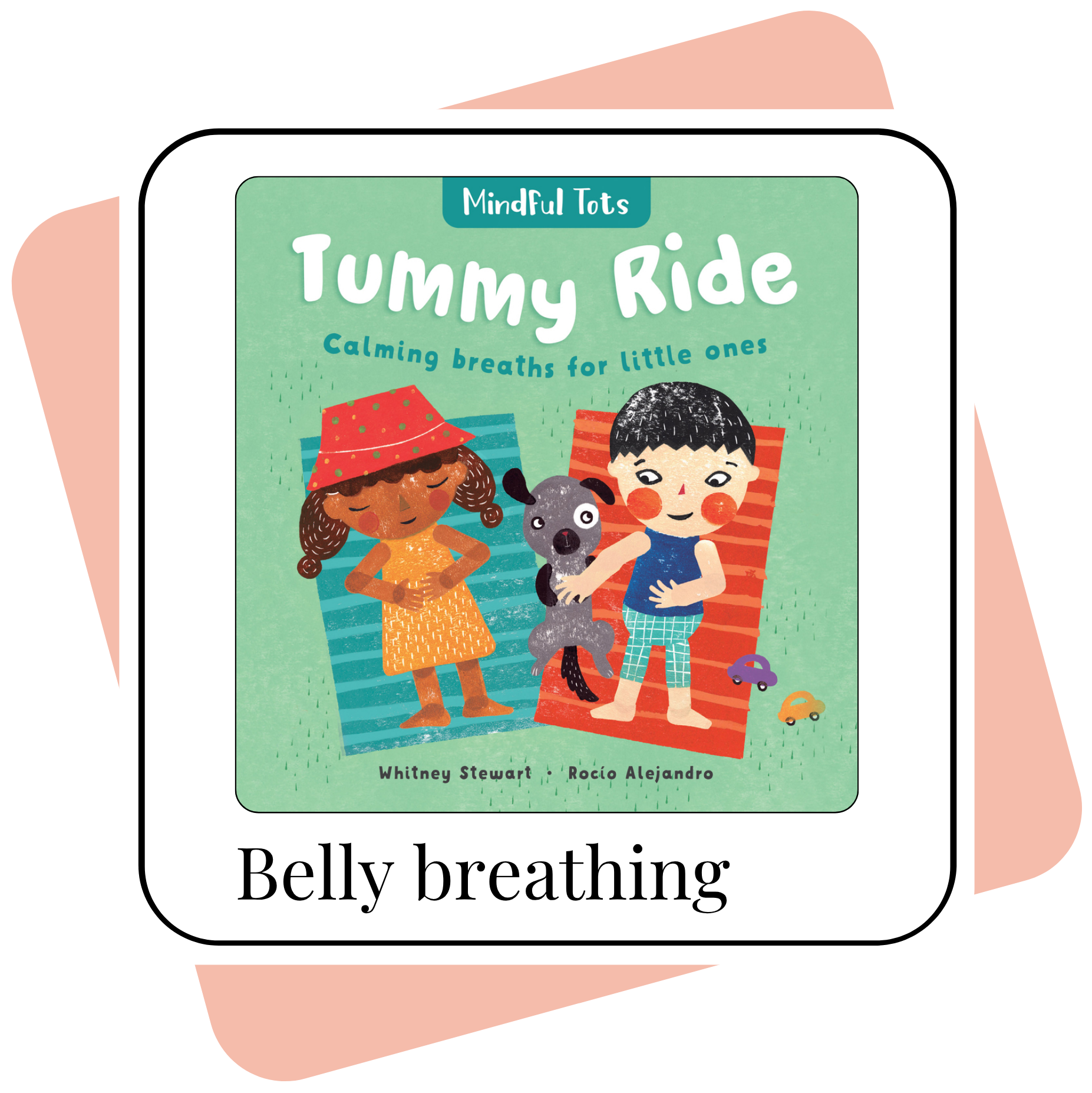
Tummy Ride: A board book about belly breathing for toddlers (age 1+)
Each week, we recommend one kids book that teaches a mental health concept. Today, we’re sharing a book that tackles a favorite coping skill for helping kids manage big feelings: Tummy Ride, written by Whitney Stewart and illustrated by Rocío Alejandro. This book highlights the concept of belly breathing — the idea that taking deep and slow breaths low in the belly can help us make big emotions smaller and help us cope when we are stressed. Read on to learn why we recommend Tummy Ride to the parents we know, the science behind belly breathing, and how you can think about practicing it with your child.
About the Book
Tummy Ride is an adorable board book featuring kids practicing belly breathing in all sorts of places — on the floor, on the beach, in the pool! The book shows kids using body cues — like resting hands or a toy on the tummy — to ensure their belly expands during inhales and contracts during exhales. We love how Tummy Ride represents a diversity of kids and families and features fun illustrations (like a kid and her dog practicing belly breathing together and kids wearing mermaid costumes).
Buy Tummy Ride or listen online for free
What Science Tells Us about Belly Breathing
When we’re experiencing big emotions, it can often be hard to think straight. This is because when we feel big emotions like fear or anger, they often trigger the fight-or-flight response. This means that our body activates its system in charge of protecting us from danger, the sympathetic nervous system. During these moments, the sympathetic nervous system sends signals to many different parts of the body, like telling our heart to beat fast and our muscles to tense up. It also tells our breathing system to speed up and breathe faster — the theory is this helps get more oxygen to the body, which is needed to fight or flee. When we have big emotions or feel stressed, these body changes often happen without us realizing, but they can make us feel uncomfortable, like feeling lightheaded or numb or having tingling sensations. This can create a vicious cycle: We feel anxious, our sympathetic nervous system activates, we start breathing faster, this causes unpleasant sensations in our body, our anxiety increases, we breathe even faster — and the loop keeps reinforcing itself.
Belly breathing (also called diaphragmatic breathing) is a tool we can use to disrupt this cycle, make big emotions smaller, and help our bodies and brains realize we are safe. By purposefully taking deep and slow breaths low in the diaphragm (the muscle that divides our chest from our belly and helps us breathe), we can disrupt the fight-or-flight reaction. Meta-analytic research (which combines the results of multiple studies) has found that belly breathing activates our parasympathetic nervous system, which helps us “rest and digest.” Specifically, belly breathing led to higher heart rate variability (the way the timing between participants’ heartbeats changed over time), which is a sign of being calm and relaxed. Another study randomized over 300 kids — around age 7 — to either watch a 1-minute video teaching belly breathing or a control video. Kids who watched the belly breathing video had slower heart rates and greater heart rate variability, indicating that belly breathing can directly calm down kids’ nervous systems.
Parents can help their kiddos learn belly breathing as a coping skill for when feelings get big or their bodies feel keyed up or stressed out. This is a great skill to use when a kid’s anger or fear gets so big they don’t know what to do. We like this skill because we have so few ways to talk directly to our bodies or change how we feel physically, but belly breathing lets us tell our bodies “you’re safe” when our brains mistakenly think we’re in danger.
Since we typically can’t think straight when we’re having big emotions, we recommend first trying out belly breathing when you and your child are relaxed. To help this skill become muscle memory, we recommend practicing daily for 1 minute as a family. Your family can learn belly breathing with these steps:
Breathe in slowly through your nose for a few seconds, letting your stomach expand until it feels full of air (like a bubble or a balloon, round and full).
Hold the air for a few seconds.
Then breathe out slowly, contracting your belly until all the air is gone (like you have let all the air out of the balloon, and it is now flat and empty).
Repeat again from step one until you feel yourself relax. If you have time, try to do at least 10 breaths!
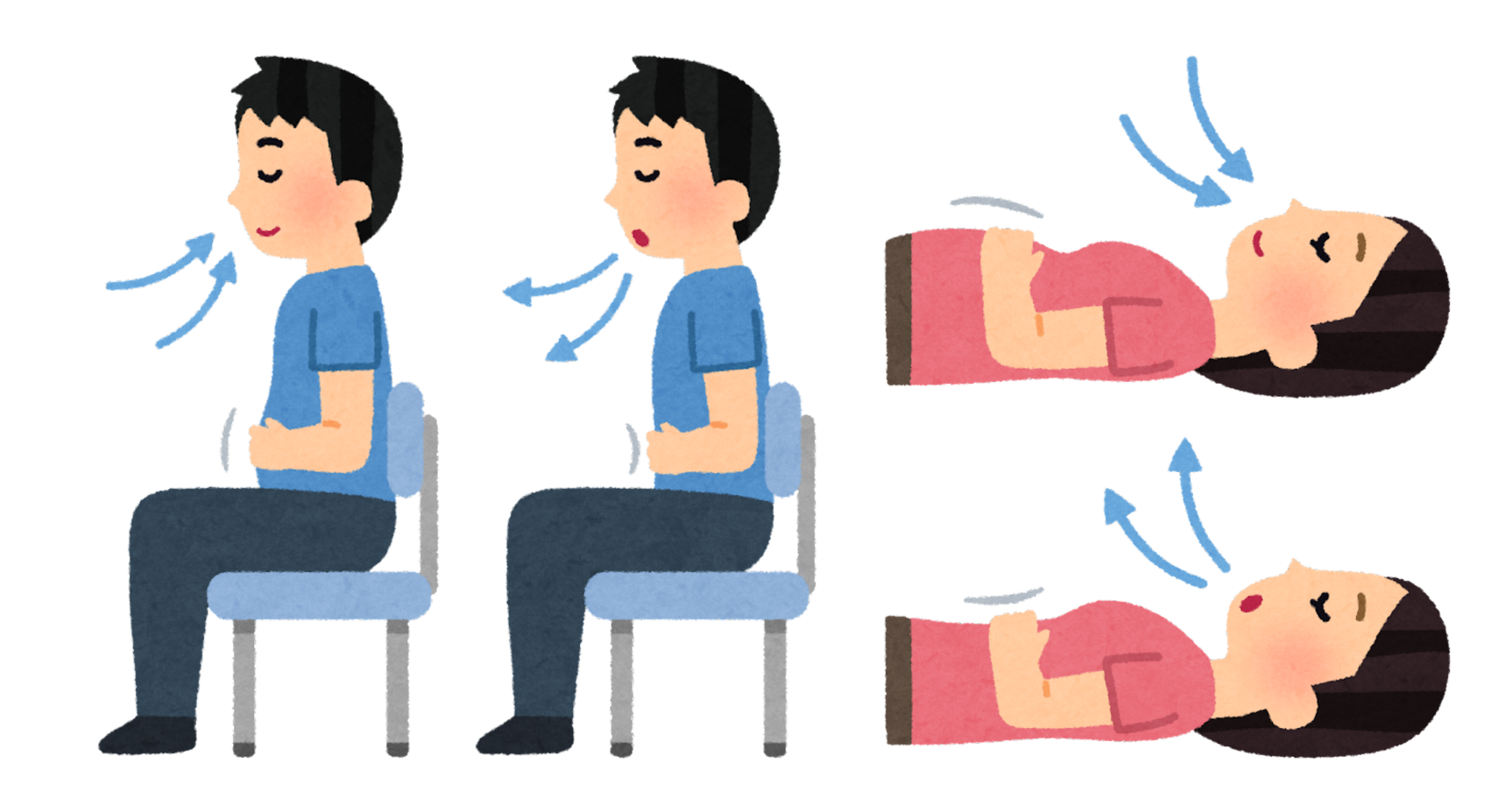
These steps can be done either sitting or lying down on the ground and relaxing your muscles, like this:
We recommend using one of these body cues to help kids (and adults) learn the sensation of belly breathing:
Fill the ballon. From a sitting position, put your hand on your belly and pretend your belly is a balloon. Breathe in and feel the balloon expand, then breathe out and feel the balloon shrink.
Push the book. From sitting, hold a book flat across your belly. Watch the book move forward as you breathe in, and backwards (towards your body) as you breathe out.
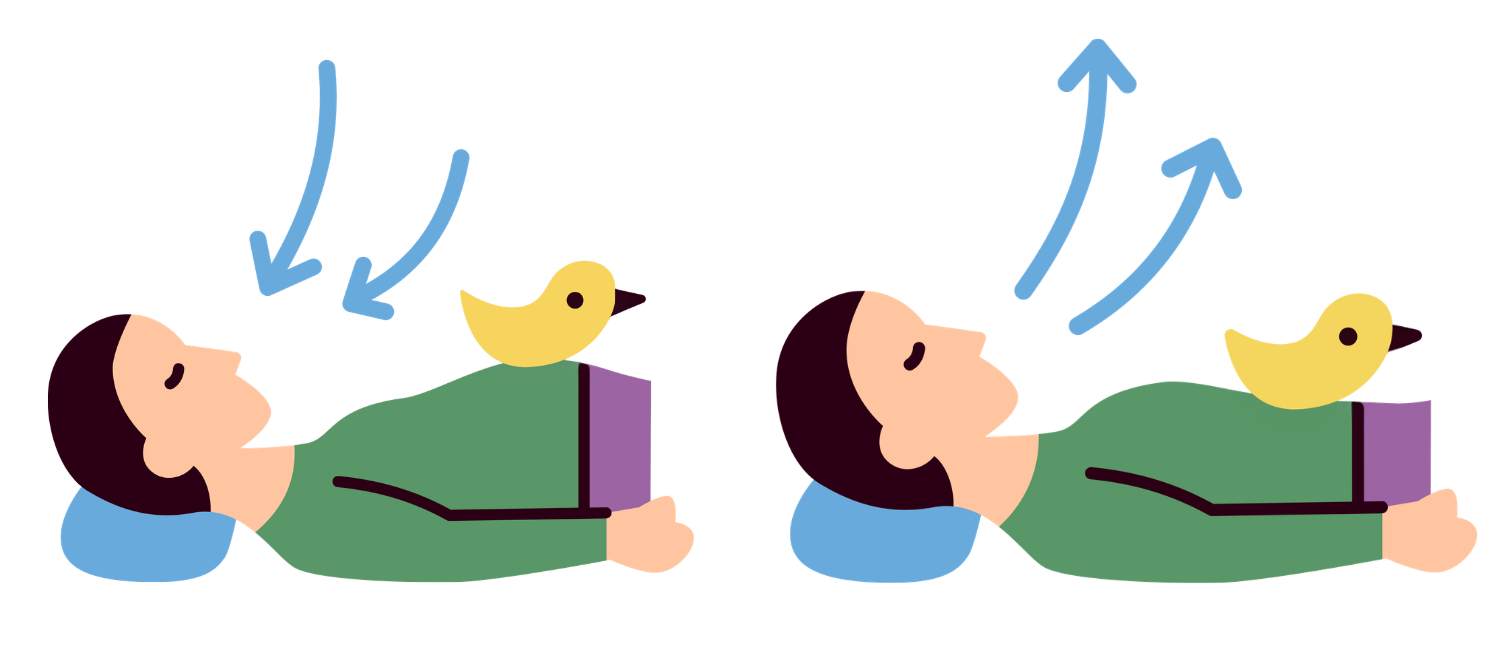
Send your stuffed animal on a ride. Lay on your back, put a stuffed animal on your stomach and watch it rise up as you breathe in and fall down as you breathe out. See how high you can make it go!

What Betsy likes about Tummy Ride: We vetted ten different books about belly breathing, and this was one of the only ones we found that actually teaches this skill correctly! The key is that your belly gets bigger and pushes out when you’re inhaling, and gets smaller and sucks in when you’re exhaling. Oftentimes, when we feel anxious, our bodies naturally breathe faster and higher up in our chests. With belly breathing, we do the opposite — keep our breath slow and low in our bellies. We love how this book shows correct examples of belly breathing on every single page!
What Marin likes about Tummy Ride: I absolutely fell in love with this book because it does such a great job of teaching belly breathing, including using one of my favorite body cues. When I am teaching this skill to kiddos in therapy, I love having them pick a favorite toy to ride on their bellies as they breathe in, just like it shows in the book. Giving a stuffed animal a ride up to the sky is such an easy way for you and your kids to know if they have got this skill down. I’m also so excited that they wrote this board book for toddlers. Belly breathing is a skill anyone of any age can benefit from!
One thing we don’t love about Tummy Ride: Tummy Ride doesn’t tell a story — it’s really just about teaching the correct technique for belly breathing in a fun and silly way. The words are a bit repetitive. When we read this book, we like to get creative, reading the parts we like (like “your wave lifts your hands up high/your wave brings your hands down low”) and pointing out the cute illustrations to highlight all the ways to practice belly breathing (“Look at this kiddo laying in the pool - he has a rubber duck on his tummy!”).
Buy Tummy Ride or listen online for free
We think Tummy Ride would be a great addition to any child’s library. We’d love to hear your reactions to this review and your questions about belly breathing — we’ll highlight some answers in future posts. Reply to this email, or join our community to leave a comment!
FYI: The links above for buying Tummy Ride are affiliate links (see this page for more information).