



Clinical psychologists picking kids books rooted in mental health science 🌸
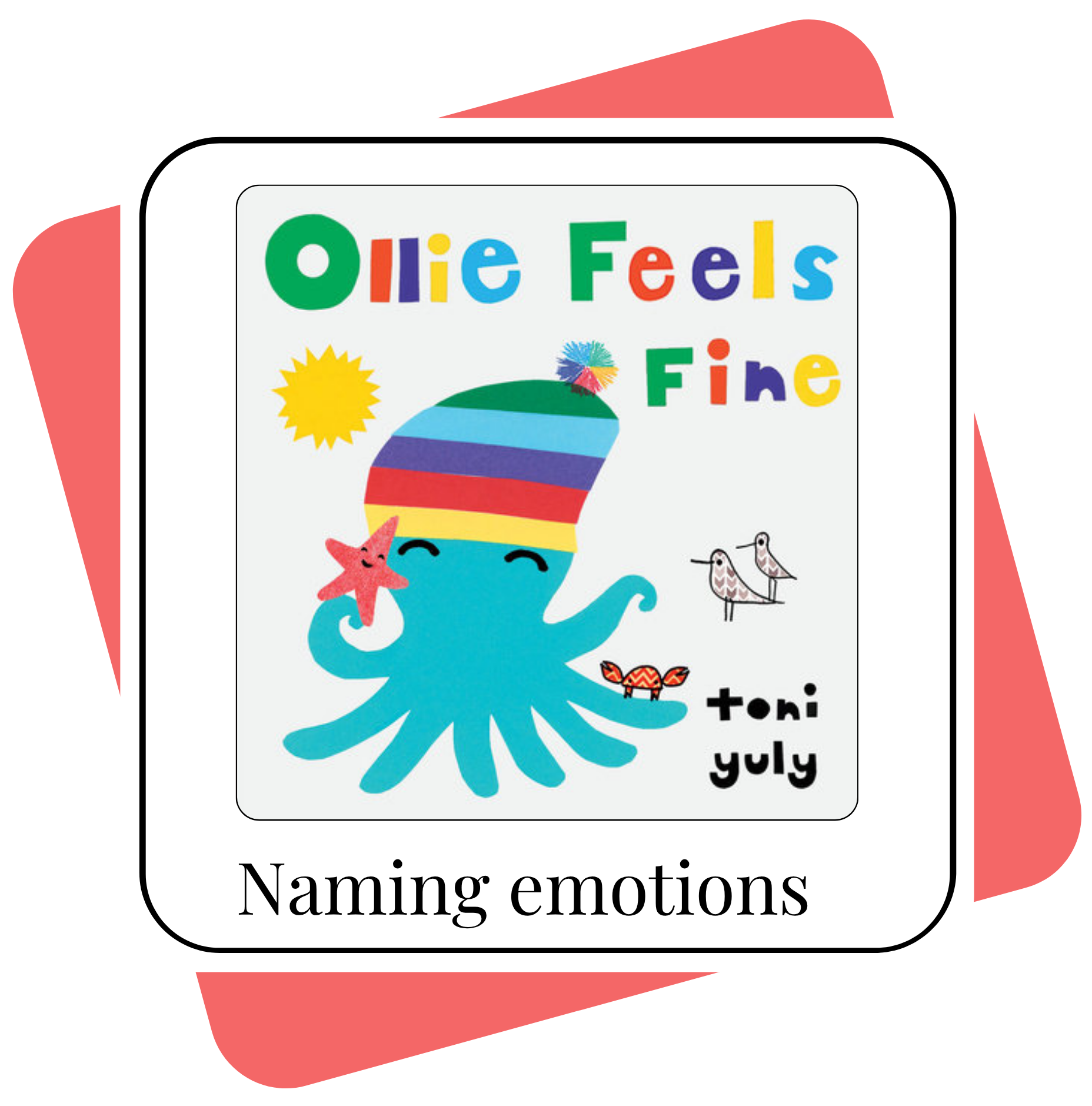
Ollie Feels Fine: A book about naming emotions for toddlers (age 1+)
Each week, we recommend a kids book that teaches a mental health concept. Today, we’re sharing a book that tackles feelings: Ollie Feels Fine written and illustrated by Toni Yuly. This book highlights the concept of naming emotions — the idea that noticing and naming our feelings can actually help us cope when feelings become overwhelming (aka “big feelings”). Read on to learn why we recommend Ollie Feels Fine to the parents we know, the science behind naming emotions, and tips for talking to your child about their feelings.
About the Book
Full of bright colors and a lively sea creature theme, Ollie Feels Fine follows octopus Ollie and starfish Stella as they move through their underwater world — and all the feelings that go with it. A big wave! Ollie feels surprised. A shark that gets too close! Ollie feels scared. We love how this book draws a link between situations that happen and the emotions we feel in response. Plus, we think toddlers will love the book’s fun sound effects (splat! bump!) and noticing how Ollie changes colors as she feels different emotions.
Buy Ollie Feels Fine or listen online for free
What Science Tells Us about Naming Emotions
Sometimes parents aren’t sure how to respond when their kids show negative emotions like sadness, anger, or fear. At times, parents worry that they are failing as caregivers if their child experiences a negative emotion. Sometimes parents worry that by paying too much attention to these emotions, they might make them worse. Fortunately, there is solid research that shows that paying attention to emotions and naming them is extremely helpful for kids and promotes their well-being.
Research shows that talking with children about emotions — including asking questions like “why does James feel sad?” — leads to kids talking about their own emotions more and helps them understand how emotions work (like knowing that losing a toy might make a child feel sad). Another study found that when parents talk about emotions in everyday conversations, the non-emotion words they use help build kids’ “emotion vocabulary” (e.g., “what a wonderful drawing! I am so proud of you!”; here “wonderful” is a non-emotion word that helps the child learn what proud means). Research on the brain has also shown that simply putting feelings into words can calm the brain’s response to upsetting things. This means that helping kids name their emotions can help strengthen their ability to regulate big feelings.
How to Help Your Child Name Their Emotions
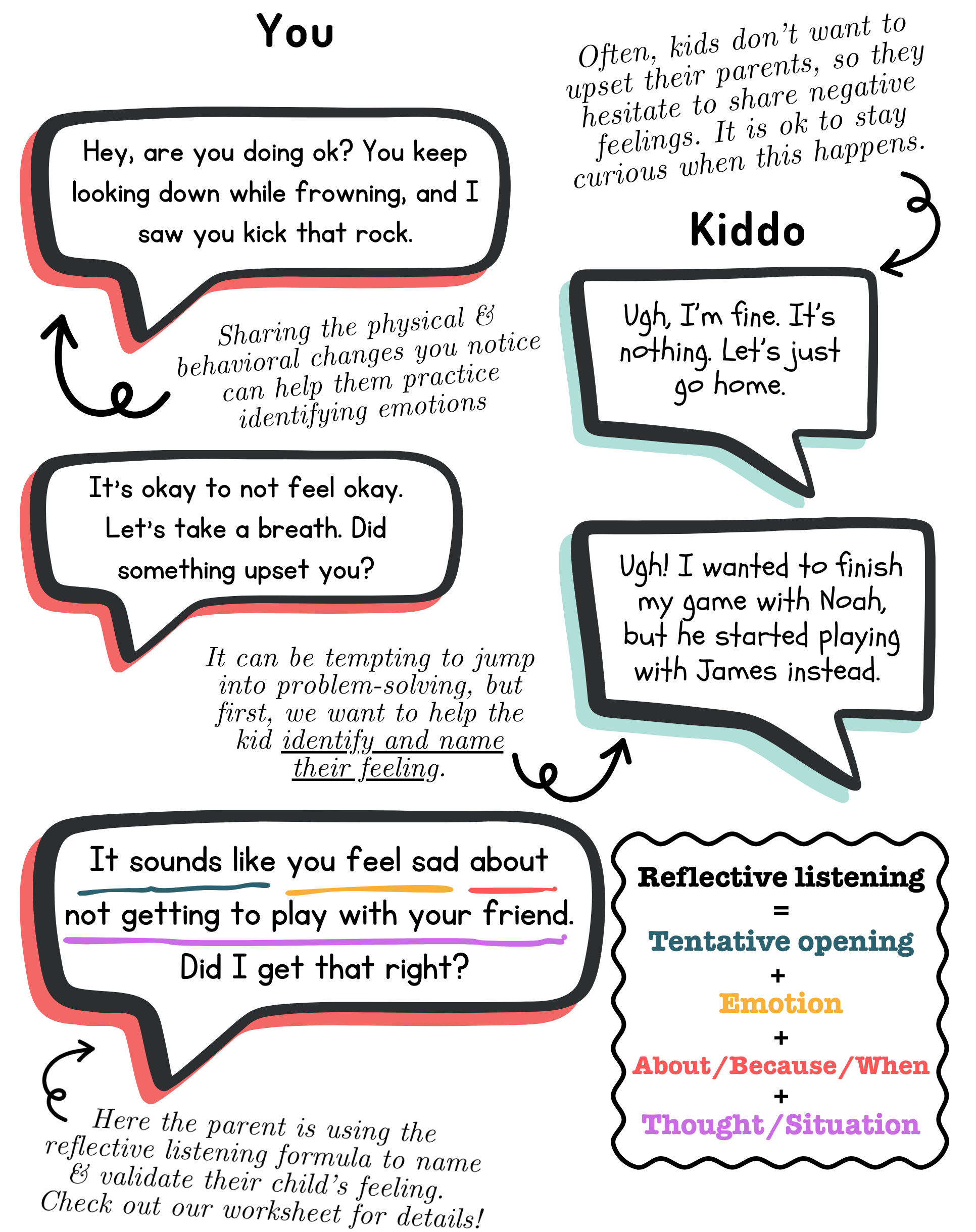
Try out these prompts for practicing naming emotions with your kiddo:
What Marin likes about Ollie Feels Fine: On top of the great emotion naming that happens earlier in the book, I love how this book highlights that having a lot of emotions at once can feel overwhelming. Sometimes, like a big wave hitting the shore, we can get all mixed up in a current of different feelings. 🌊
What Betsy likes about Ollie Feels Fine: I love the sweet depiction of how friends can support each other emotionally at the end of the book. Stella notices that Ollie is feeling a lot of emotions all at once and offers Ollie a hug. It’s a simple but powerful gesture that reminds me a bit of how parents can help kids using co-regulation.
One thing we don’t like about Ollie Feels Fine: Though we love Ollie Feels Fine, we dislike the title. While “numb”, “overwhelmed”, or “unsure” are all feeling words, “fine” isn’t a specific emotion. We think the title misses a chance to send a message that feeling lots of emotions (negative and positive) is a normal part of being human an octopus. If we could rename this book, we would call it “Ollie Feels a Lot.” 😉
Go deeper on the science and practice of naming emotions:
You can use this video from Sesame Street (which shows a bunch of people having different feelings) to help jump-start your child’s comfort level with talking about and showing emotions. Pick an emotion from the video (e.g., happy, sad, mad) and ask your child to show the feeling with her face. You can trade off, practicing expressing emotions!
Want to practice noticing feelings when they are big and small? Check out our printable Minds in Bloom Feelings Thermometer! 🌸
You can also use our Toddlers Feeling Chart 🌸 to help young kids name their emotions! Keep it on your fridge or bulletin board to make talking about feelings a part of everyday life.
Expand your emotion vocabulary! This tipsheet from the University of Kansas encourages parents to use lots of different emotion words, even ones that kids may not understand at first (like embarrassed, lonely, and joyful). Remember, kids learn emotion words through the context provided by the other words you use, so it’s okay to use advanced feelings words!
Parents who want to take a deep dive on labeling emotions can check out this detailed article from Headstart (which has suggested ideas for improving emotion labeling) and also this detailed handout from Vanderbilt University on building kids’ emotional vocabularies.
Buy Ollie Feels Fine or listen online for free
We think Ollie Feels Fine would be a great addition to any child’s library. We’d love to hear your reactions to this review and your questions about naming emotions. Reply to this email, or join our community to leave a comment!
FYI: The links above for buying Ollie Feels Fine are affiliate links (see this page for more information).