

A trick for talking about hard feelings to make them less powerful
Pick of the week: May 12, 2026


Clinical psychologists picking kids books rooted in mental health science 🌸
When Sadness is at Your Door: A picture book about externalizing sadness for preschoolers (age 3+)
Each week, we recommend one kids book that teaches a mental health concept. Today, we’re sharing a book that tackles sadness: When Sadness is at Your Door, written and illustrated by Eva Eland. This book highlights the concept of externalizing emotions — the idea that talking about sadness (and other hard feelings) as being separate from yourself can help them have less control over your thoughts and actions. Read on to learn why we recommend When Sadness is at Your Door to the parents we know, the science behind externalizing emotions, and tips for talking to your kiddo about their hard feelings.
About the Book
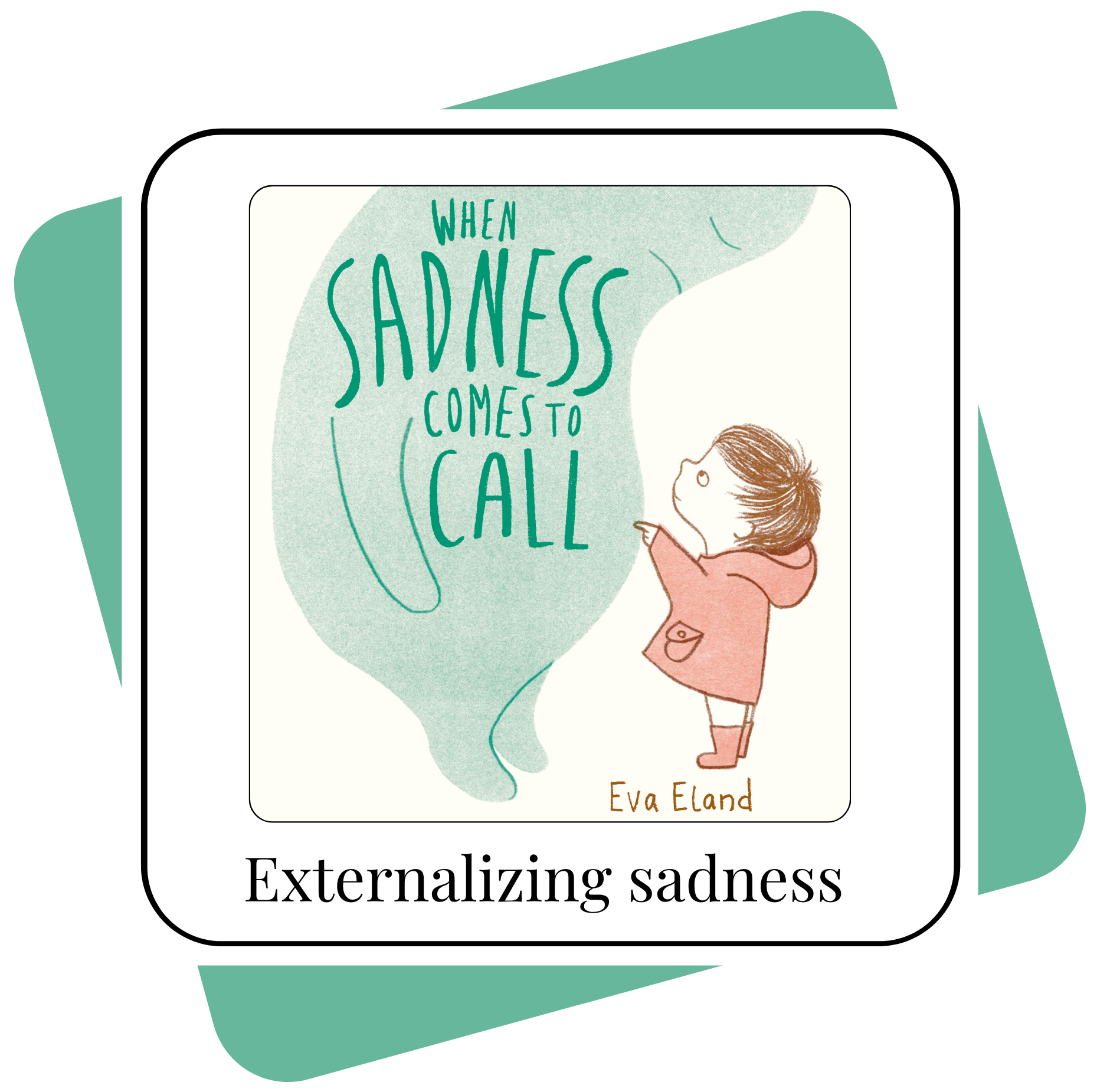
In When Sadness is at Your Door (published in the UK as When Sadness Comes to Call), Sadness, appearing as a large, green, transparent figure, arrives unexpectedly and begins following a child around. The child tries to push Sadness away, but it doesn’t work. Only when the child gives Sadness a name and starts going about his life and doing regular activities with Sadness by his side do things get easier. As the story continues, Sadness grows smaller and smaller, until one morning, the child wakes up and Sadness is gone. By showing Sadness as separate from the child, this book demonstrates the skill of externalizing emotion, which involves talking about feelings as temporary visitors rather than parts of who we are.
Buy When Sadness is at Your Door or listen online for free
What Science Tells Us about Externalizing Sadness
Externalizing emotions involves talking about feelings in a very specific way — for example, encouraging children to give their emotion a name and a physical description. Therapists who use this technique will often ask kids questions like, “what do you want to name your sadness?” or “what does your worry look like?” Kids often enjoy coming up with a creative name for their externalized feeling. The goal is to get kids talking about their emotions — and the experience of having that emotion — as separate from themselves, which can sound like this:
“My Anger Volcano is trying to erupt!”
“Mr. Worry is telling me that I might mess up.”
“The Squiggly Cloud of Doom is covering me and making everything look grey!”
“The Anxiety Monster is trying to boss me around, telling me something bad is going to happen!”
(While monster-related names are common, Marin has worked with kids who want to call their anxiety “George.”)
Externalizing emotions is a skill used frequently by child therapists — for example, this study found it common during childhood OCD treatment. Why talk about emotions this way? Three reasons:
Externalizing emotions makes them feel less scary and reduces their disruptiveness
First, using language to indicate that emotions are separate from the child — rather than a part of the child — can help kids understand that they are not their feelings, symptoms, or experiences. When we view emotions and experiences as “temporary visitors” rather than as permanent parts of who we are, it can make it easier to remember that emotions are fleeting and temporary, not constant — they might be tough to experience, but they will go away eventually. This mindset can make it easier to continue to do the things we care about, like hobbies or spending time with friends, even while experiencing big emotions. This is closely linked to two ideas we’ve written about before — observing sadness (rather than fighting it) and doing mood-boosting activities.
Externalizing emotions sends the message that the child is not the problem
Second, externalizing emotions sends a very clear signal to the child that the emotion is an experience they are having, and that they are not bad for having this experience (many kids start to have their belief especially when their emotion is linked to disruptive behavior). Talking about emotions as separate from kids empowers kids and parents to work together as a team to address the feeling or symptom. Externalizing emotions helps kids think things like, “my parents and I can work together to deal with the Anger Volcano,” and can help parents think things like, “I want to support my child in pushing back against their Worry Monster.” Parent use of externalizing seems to be good for kids’ mental health — this study found that when parents used more externalizing talk doing exposure therapy for OCD, kids had fewer OCD symptoms at the end of treatment.
Externalizing emotions empowers kids to use skills for changing thoughts and behavior
Lastly, externalizing emotions can make it easier for kids to begin to notice and change their thoughts and behaviors. Asking questions like “What is Sadness telling you to do?” or “Is the Anxiety Monster saying any mean thoughts?” can prompt kids to talk about their thoughts with less shame. It can also make it easier for kids to notice connections between emotions, thoughts, and behaviors. For instance, saying something like “The Sadness Cloud is telling you that nobody wants to play with you. Hm… is that silly Cloud telling untrue stories again? Let’s go to the park and test out whether that story is true!” This article by childhood CBT expert Dr. Philip Kendall talks about how naming a character who is responsible for negative thoughts (like a “worry monster” or “guard dog”) can help kids develop more helpful and balanced thoughts.

What Marin likes about When Sadness is at Your Door: This book does an awesome job of showing how inviting our hard emotions in, rather than trying to push them away, can actually help them get smaller faster. The more we tell ourselves not to feel something, the bigger this feeling tends to get. The boy in this story is so gentle with his invitation as he opens the door to his sadness. It really reminded me of the compassion we can all feel for ourselves when big feelings show up. Feelings are what make us human after all, so why not show them kindness when they arrive?
What Betsy likes about When Sadness is at Your Door: I love how this book shows the child and Sadness doing activities like drawing, listening to music, and walking in the woods together. This connects to the idea of mood-boosting activities — doing activities we enjoy — or making a point to get active — even when we feel down. Parents can combine the idea of externalizing sadness with getting active by saying things like “I can tell Sadness is visiting you right now! What if we go to the toy store — silly Sadness is invited too! We can see how Sadness reacts.”
Buy When Sadness is at Your Door or listen online for free
We think When Sadness is at Your Door would be a great addition to any child’s library. We’d love to hear your reactions to this review and your questions about externalizing sadness — we’ll highlight some answers in future posts. Reply to this email, or join our community to leave a comment!
FYI: The links above for buying When Sadness is at Your Door are affiliate links (see this page for more information).