

Helping picky eaters get curious about new foods
Pick of the week: June 30, 2026


Clinical psychologists picking kids books rooted in mental health science 🌸
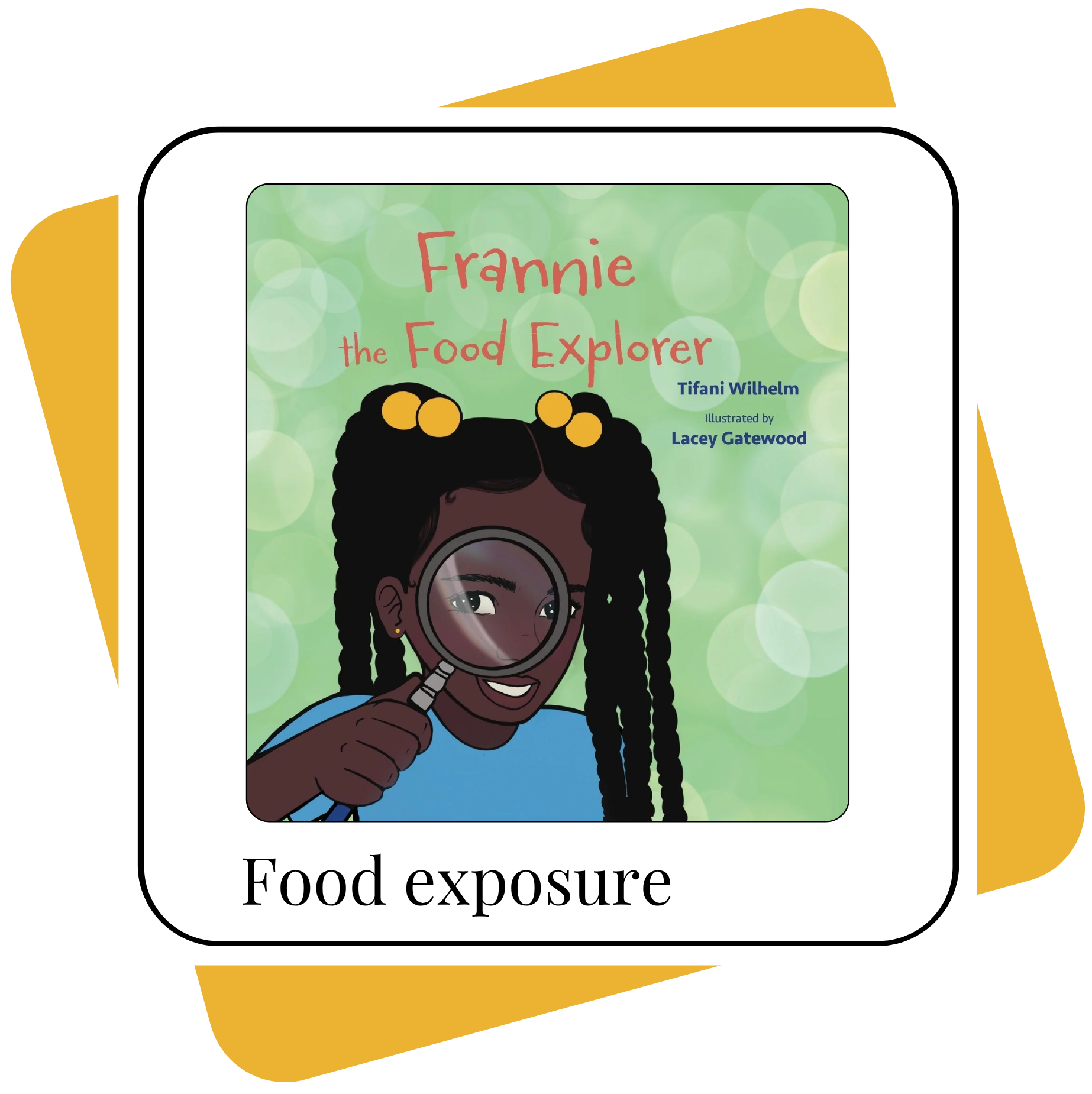
Frannie the Food Explorer: A picture book about picky eating for kids (age 5+)
Each week, we recommend one kids book that teaches a mental health concept. Today, we’re sharing a book that tackles picky eating: Frannie the Food Explorer, written by Tifani Wilhelm and illustrated by Lacey Gatewood. This book highlights the concept of food exposure — the idea that approaching avoided foods in a structured way can help kids overcome picky eating. Read on to learn why we recommend Frannie the Food Explorer to the parents we know, the science behind food exposure, and tips for talking to your kiddo about picky eating.
About the Book
Frannie doesn’t like peas 🫛. Her family encourages her to “just try them,” but that just makes Frannie want to hide! It’s only when Frannie’s mom offers to help her explore the peas that she becomes willing to give it a go. Frannie’s mom coaches her through seeing, smelling, touching, licking, and finally, tasting the peas, highlighting what food exposure for picky eating can look like. By the end of the book, Frannie has tried a few peas and feels empowered to explore other foods.
Buy Frannie the Food Explorer or listen to Marin read it for free and see a demonstration of sensory food exposure on our new YouTube channel!
What Science Tells Us about Food Exposure
How can seeing, smelling, and touching disliked foods help kids become less picky? Kids who struggle with picky eating often have greater sensory sensitivity and may avoid foods that produce unfamiliar or uncomfortable sensations, like the jellylike seedy inside of a tomato or the dense fluffiness of mashed potatoes. Clinicians often find that these kids stick to foods with familiar appearances and textures (like eating all white foods). Exposure — a skill we’ve written about before that is used to help people approach feared situations — can help kids (and adults) become more comfortable with these sensations. Cognitive behavioral treatment (CBT) for clinically picky eating uses “sensory exposure” to help kids gradually explore the different sensory properties of a new food. When doing sensory exposure in CBT, kids are encouraged to explore the foods using all five senses, as Frannie demonstrates:
By sight
By touch
By smell
By taste (by taking a bite, which can be tiny — like the size of a grain of rice)
By texture (by taking a second bite).
Notice that only the last two steps involve putting the food in your mouth! Whenever this exploration is attempted, parents should use their specific praise skills to enthusiastically celebrate any attempts at eating, even if the bite isn’t swallowed but is only placed in the kid’s mouth or chewed. (You may notice this list is slightly different from Frannie’s mom’s order — in both cases, the goal is to learn about the food, not necessarily to like the food).
To help prevent future eating problems among kids just starting solids or kids who don’t have problems with picky eating, parents can encourage a “food explorer” mentality — putting new foods in front of their child and letting them explore it freely. This leverages your child’s natural curiosity to explore different sensations. For talking kiddos, parents can ask questions like: “What colors and shapes do you notice?” and “Does it smell salty or sweet?” to encourage sensory exploration. Help model neutral language for your kiddo, rather than descriptions that are positive (“that looks delicious”) or negative (“that looks disgusting!”). For pre-talking kids or babies, parents can practice putting a food item in front of the child and letting them do what they want with it. It’s okay if the child doesn’t eat it — they might explore the food’s textures by smashing their hands in it or smearing it on the table. Sensory exploration often involves play!
For kids with pickiness that is causing problems, a more structured approach might be needed. This could look like building a list of foods your child avoids, and using rewards to help motivate them to gradually explore each one using the 5 steps above. In CBT for clinically picky eating, therapists work with kids to complete each sensory exposure step repeatedly for each food they avoid. Researchers note that 10-15 attempts with the unfamiliar or disliked food might be needed. Exposure works: In one study, parents either gave their child a small taste of a vegetable they disliked every day for two weeks (exposure condition) or received educational materials about nutrition (control condition). At the end of the two weeks, children in the exposure condition both liked and consumed more of the vegetable.
What Marin likes about Frannie the Food Explorer: I love how Frannie’s parents incorporate play into their food-exploration process, like encouraging Frannie to roll the peas, smash peas, and make a game of bouncing them down her arms, her cheeks, and eventually her lips! Frannie’s mom clearly says that this type of play isn’t rude; instead, this food play helps kids’ brains understand that new foods aren’t threatening and allows them to learn more about the food's textures in an approachable way. As Frannie’s mom says, playing with a feared food is a HUGE win and shouldn’t be underestimated when building willingness to try novel foods!
What Betsy likes about Frannie the Food Explorer: I like how Frannie’s mom talks about negative thoughts about food. She says: “your brain might say ‘Ew, those green peas look so strange.’” This way of discussing thoughts — they’re things our brains say, and they’re not necessarily true — can help make thoughts less sticky.
Something we don’t love about Frannie: Some of the language Frannie’s mom uses isn’t how we recommend talking about exposure. For example, she refers to the steps of food exposure as “easy” and “not hard” and says to Frannie, “there’s no need to cry!” Exposure isn’t easy — it’s hard work! Telling a kid otherwise can be invalidating and actually make them less motivated to put in the effort. Instead, we recommend that parents name their child’s emotions and use reflective listening while doing food exposures.
Buy Frannie the Food Explorer or listen to Marin read it for free and see a demonstration of sensory food exposure on our new YouTube channel!
We think Frannie the Food Explorer would be a great addition to any child’s library. We’d love to hear your reactions to this review and your questions about picky eating — we’ll highlight some answers in next week’s post. Reply to this email, or join our community to leave a comment!
FYI: The links above for buying Frannie the Food Explorer are affiliate links (see this page for more information).