



Clinical psychologists picking kids books rooted in mental health science 🌸
The Rabbit Listened: A picture book about reflective listening for preschoolers (age 3+)
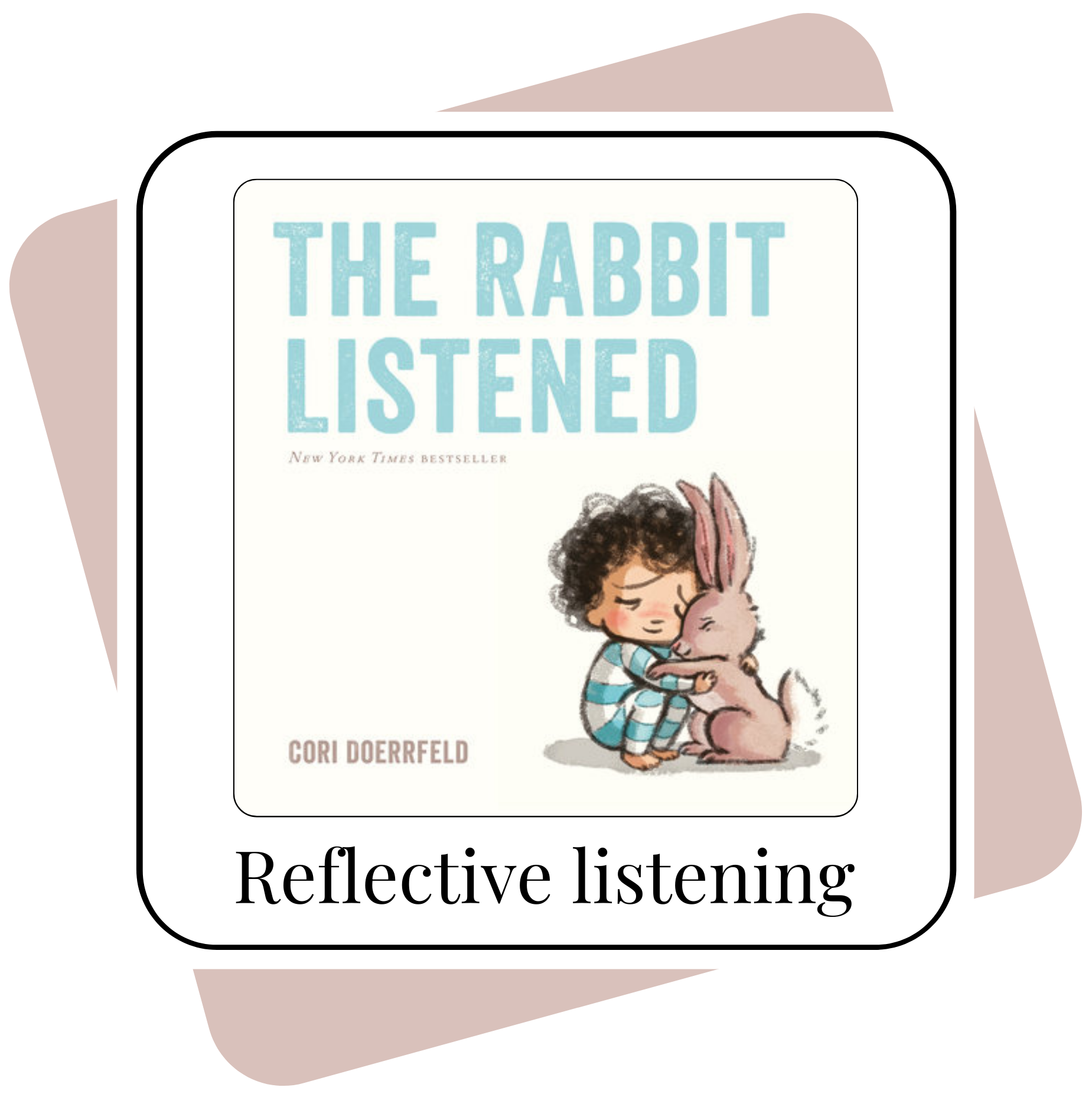
Each week, we recommend one kids book that teaches a mental health concept. Today, we’re sharing a book that showcases reflective listening: The Rabbit Listened, written and illustrated by Cori Doerrfeld. This book highlights the concept of reflective listening — the idea that carefully reflecting back your child’s thoughts and emotions can help your child feel understood and build connection. Read on to learn why we recommend The Rabbit Listened to the parents we know, the science behind reflective listening, and tips for using this skill with your child.
About the Book
The Rabbit Listened is about little Taylor, who builds an incredible block tower… only to see it come crashing to the ground. Taylor is so upset! A parade of animals comes through to try to cheer Taylor up — the chicken offers to talk, the bear offers to shout about it, the elephant offers to fix the tower — but none of this helps Taylor. Finally, along comes a rabbit, who sits with Taylor in silence and doesn’t try to problem-solve or change how she’s feeling. With the rabbit’s response (which embodies the parenting skill of reflective listening), Taylor finally begins to talk, express her feelings, and move past her sadness.
Buy The Rabbit Listened or listen online for free
What Science Tells Us about Reflective Listening
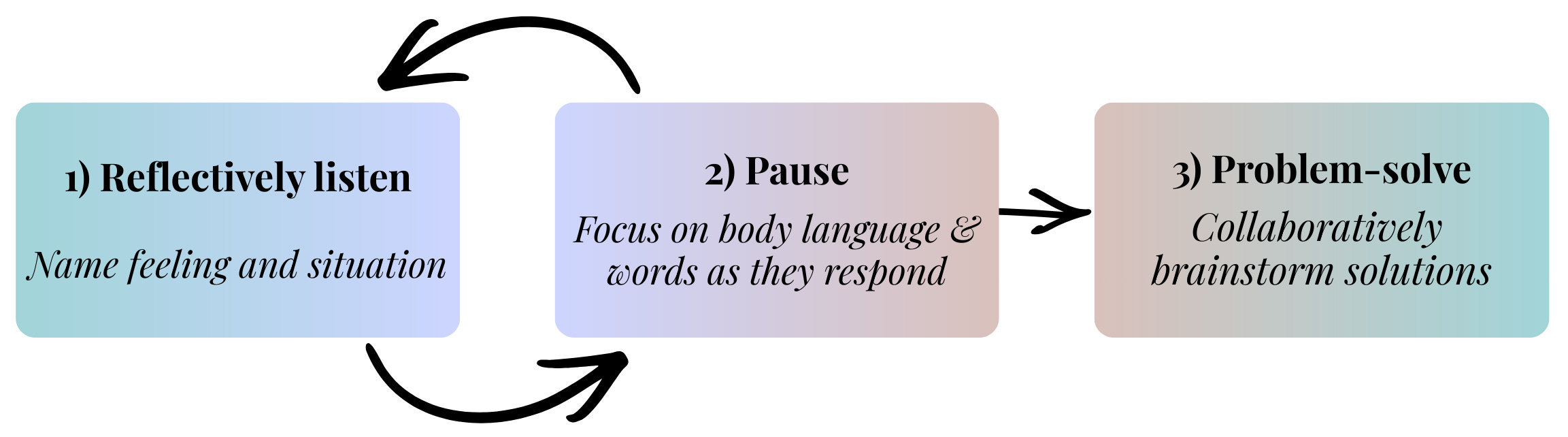
Reflective listening (sometimes called “active listening”) involves listening closely to what your child is saying (or yelling or mumbling), summarizing and mirroring their words (“So you’re saying it felt unfair when _____”), and labeling their feelings. This style of responding lets your child know you heard them and understand what they wanted you to know. Reflective listening isn’t an easy task! It often involves using nonverbal cues, such as gentle eye contact and nodding, to signal that you’re listening. It often also involves pausing the busyness of life to carefully watch the child’s body language to help understand what they’re really trying to say. Are they asking a question, making a statement, or trying to communicate something indirectly?
Research shows that reflective listening helps strengthen parent-child relationships. In one study, parents randomly assigned to learn reflective listening were less anxious, more confident, and had more knowledge about how to respond to their child’s distress than parents in a control group. Reflective listening may also improve parent-child conflict-resolution skills, as found in a study of the intervention Parent Effectiveness Training, which involves reflective listening. Research has also shown that reflective listening makes people feel more understood than giving advice does, which means parents can use it to support their child’s emotional development! When parents reflect back the emotion they see their child expressing, they help the child learn to name the emotions they are experiencing and understand their inner worlds better, which likely builds their self-esteem (“My feelings make sense, and my parent gets me”).
Here are some tips for practicing reflective listening:
Try setting small reminders for yourself and notice what your child does in response when you use reflective listening. You don’t have to reflect everything they say (life is busy), but it helps if reflective listening is a regular part of what you offer them. Practicing with “small stuff” builds the habit, so when something big comes up, your child already thinks, “My parents are good listeners.”
Many kids show strong feelings before they have the words to describe them. If you think this is true for your child, you can offer a feeling label like, “That sounds disappointing,” or “I wonder if you’re feeling nervous because ____.” This kind of tentative language helps your child learn to name their emotions while creating space for them to correct you if you’re wrong.
One of the biggest challenges when doing reflective listening is that it can be very hard for parents to sit with their child’s distress. This often leads parents to try to make the child feel better by telling them all the reasons they don’t need to have that hard feeling, which ends up accidentally minimizing the emotion (like, “that was just a little fall, you’re fine!” or “it’s no big deal, you will have another chance next year!”). This can make kids feel like their feelings aren’t logical or valid. Notice when you have an urge to tell your child they shouldn’t feel upset, and see if you can replace this with naming your child’s emotion (“It sounds like you’re really sad that…”) while practicing self-regulation skills to keep your cool when sitting with their distress.
When listening, avoid asking questions, problem-solving, or trying to teach them something. All of these are valid parenting strategies, but they are often much more effective if reflective listening comes first. Kids are better able to learn the important information their parents are sharing when the intensity of their emotion decreases, which usually happens once they feel heard and understood.
We also want to address some myths about reflective listening. Some parents worry that using this style means they are agreeing with or “co-signing” their child’s interpretation. In reality, reflective listening is about understanding your child’s point of view, and doesn’t require you to agree with that point of view. Parents can focus on validating their child’s emotion and what they’re upset about (“You feel really angry because I took the stick away”) and also summarize their child’s beliefs without necessarily agreeing with them (“You think it’s really unfair that I took the stick away”). Another myth about reflective listening is that it requires agreeing to your child’s requests or not having boundaries. In reality, kids can feel heard even when the answer is “no.” Parents can practice reflective listening to understand their child’s perspective before shifting to maintaining a boundary or establishing a consequence.
How to Use Reflective Listening with Your Child
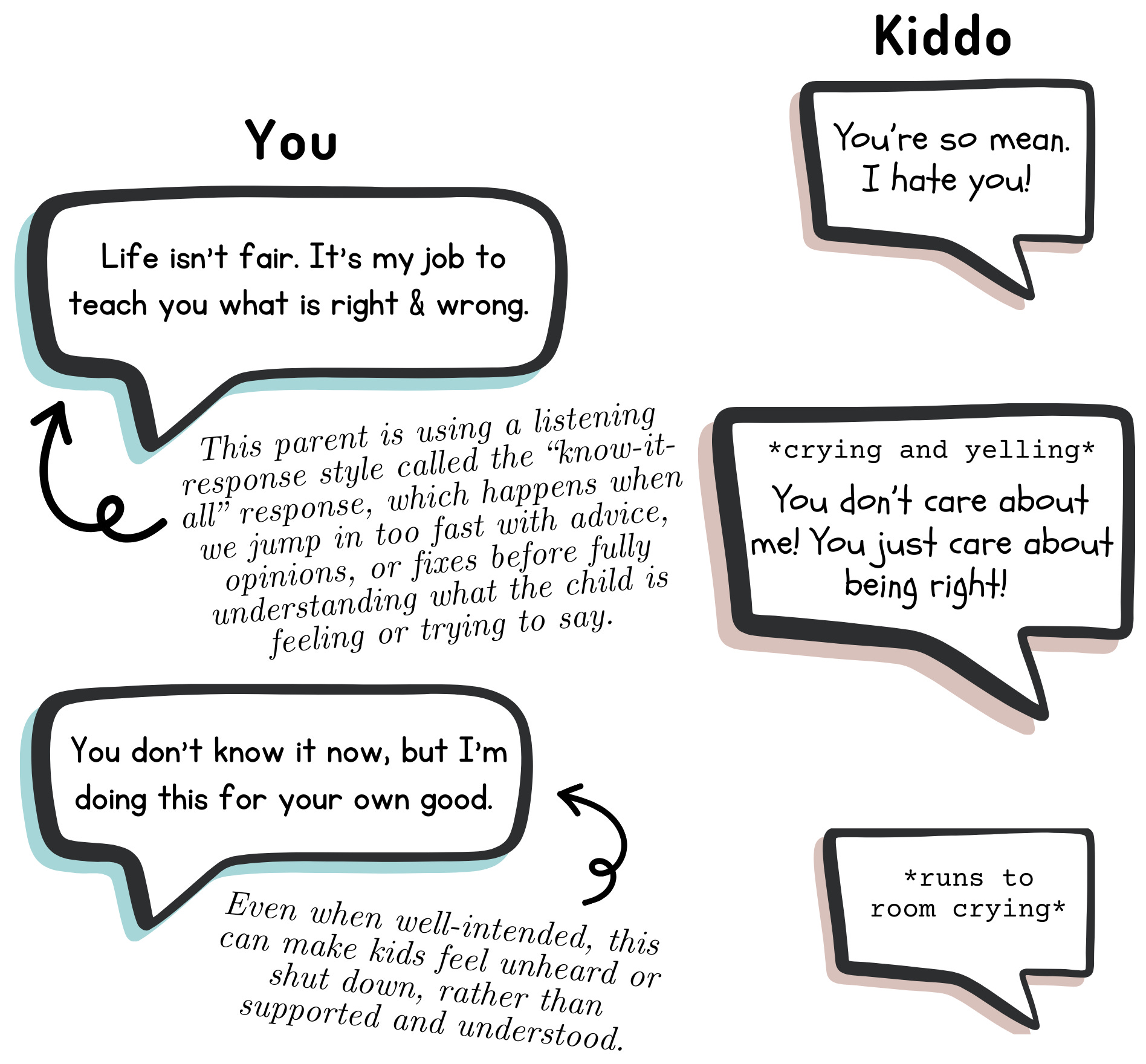
Here is an example of a listening style to avoid, because it often leads to the child becoming more distressed and then withdrawing from their parent:
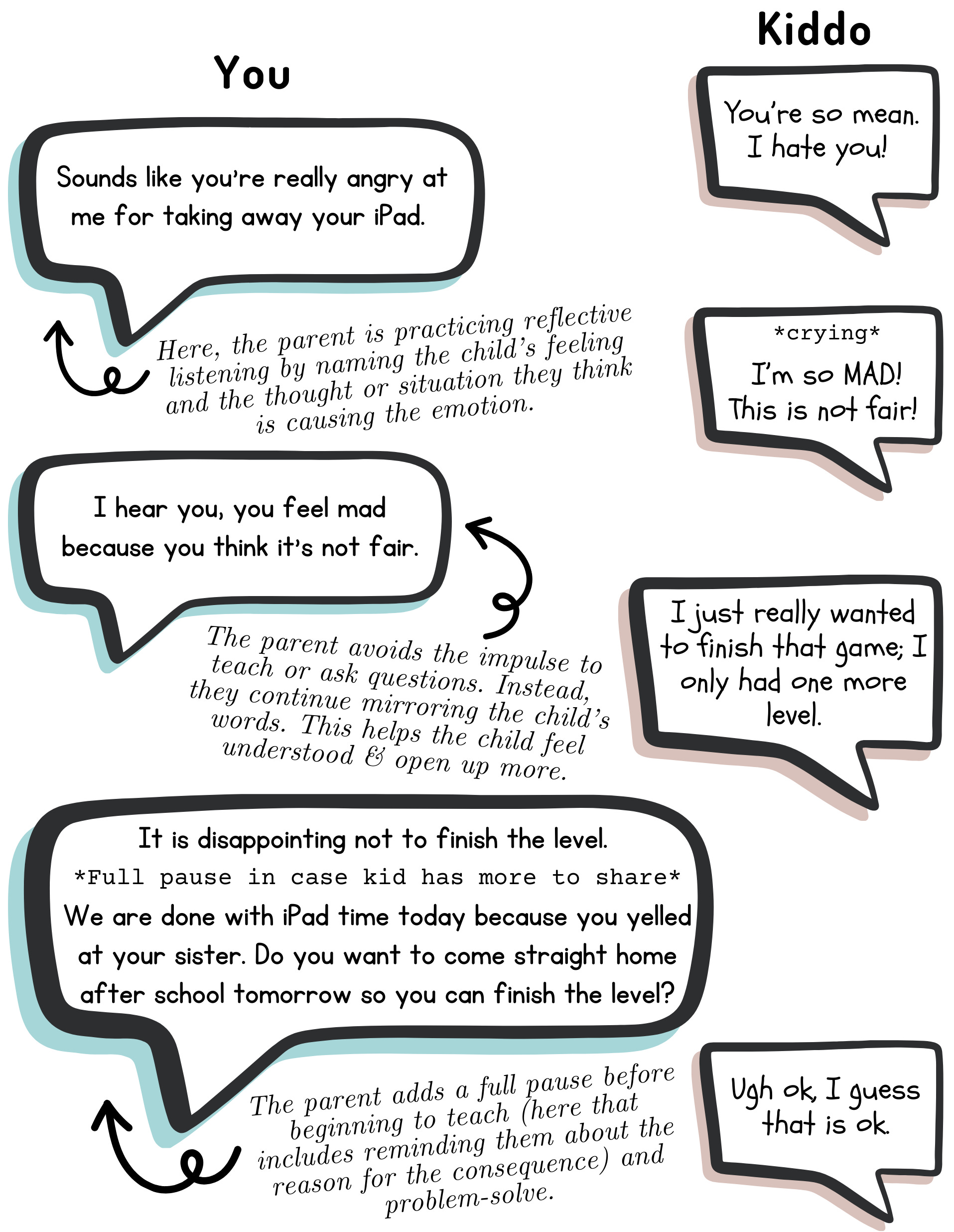
Instead, to reduce your child’s distress and deepen your connection while achieving your parenting goals, we recommend trying out these reflective listening prompts:
What Marin likes about The Rabbit Listened: I love how this book illustrates the power and simplicity of one of my favorite parenting skills! I teach reflective listening to almost every parent I work with because so many parents ask, “Why doesn’t my child talk to me when they’re upset? I tell them they can tell me anything!” Often, kids open up more when they feel listened to, not when they’re asked lots of questions or given advice right away. Think about when you’re telling a friend something hard… most people prefer a friend who listens more than they talk, right? But it is easy to forget this when your kid is upset, and all you want is for them to feel better as soon as possible. As the rabbit shows us in this book, saying less often has a much greater impact than we might imagine. I have seen countless parents go from daily fights with their kids or from having their questions constantly ignored to feeling they are finally being let into their kids’ inner worlds just by adopting this simple habit.
What Betsy likes about The Rabbit Listened: I love love love how the rabbit just sits in silence with Taylor. Being with someone in their pain, and not trying to fix or change it, is such a powerful way to support other people when they are suffering. This moment reminded me quite a moment in A Blue Kind of Day — when Coen was feeling sad, his family snuggled close to him and waited (showcasing the skill of observing emotions). This made me think about how observing emotions and reflective listening are related to each other — when we focus on summarizing and mirroring during reflective listening, rather than trying to change or problem-solve tough emotions, we are also observing those difficult emotions and saying that they’re okay and don’t need to be changed. For both Taylor (in Rabbit Listened) and Coen (in Blue Kind of Day), when their parents used these skills, they finally felt seen and supported, which allowed them to open up and move forward.
Go deeper on the science and practice of reflective listening:
Check out our Reflective Listening Formula handout to practice using this skill with your own child! 🌸
A well-loved parenting book which emphasizes reflective listening is How To Talk So Kids Will Listen & Listen So Kids Will Talk (there’s also a little kid version).
This is a bit off-the-wall, but this episode of the NYTimes “The Interview” podcast interviewed Chris Voss, a former FBI hostage negotiator, who highlights something he calls “tactical empathy,” which is really just reflective listening! We thought this was a fun example of the wide applicability of reflective listening skills.
Parents interested in the study on Parent Effectiveness Training (PET), mentioned above, might enjoy reading this article about the intervention in the Australian Institute of Family Studies Family Matters magazine. We like how table 1 gives real-life examples of parents practicing reflective listening!
We also wanted to share an example from a parent about how reflective listening helped her when rushing to get out the door one morning.
Buy The Rabbit Listened or listen online for free
We think The Rabbit Listened would be a great addition to any child’s library. We’d love to hear your reactions to this review and your questions about reflective listening. Reply to this email, or join our community to leave a comment!
FYI: The links above for buying The Rabbit Listened and other books are affiliate links (see this page for more information).