

Helping kids get some space from big feelings
Practicing externalizing emotions


Bite-sized mental health skills for real parents 🌸
Last post, we recommended When Sadness is at Your Door, which highlights the concept of externalizing emotions — the idea that talking about sadness (and other hard feelings) as being separate from ourselves can give them less control over our thoughts and actions (read that post here). This week, we share some resources to help you coach your kid to externalize emotions at home, and answer your real-life questions about helping kids see their emotions as separate from themselves.
Buy When Sadness is at Your Door or listen online for free
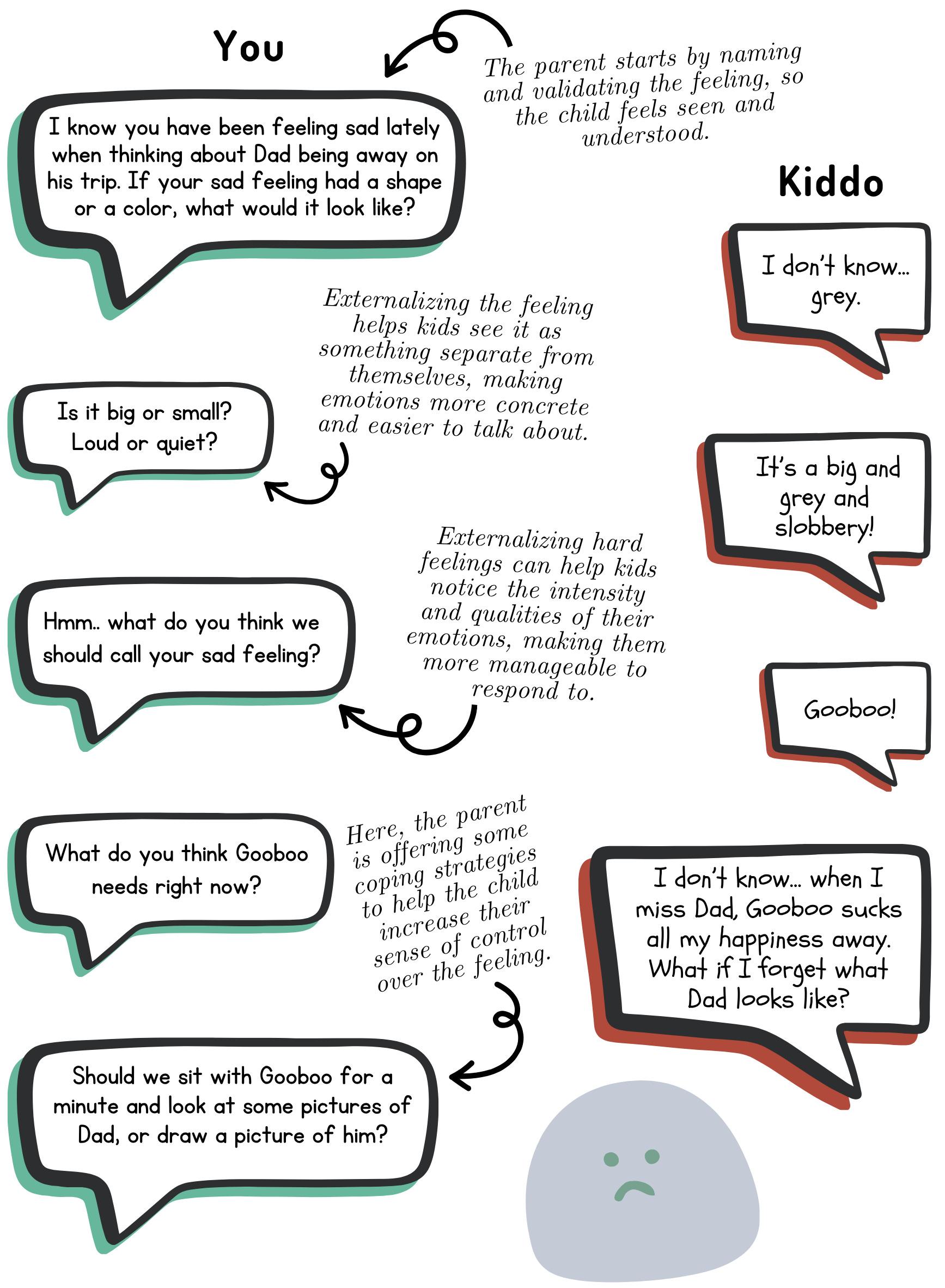
How to Talk About Externalizing Sadness with Your Child
We want to make practicing externalizing hard emotions as approachable as possible. Here are some ideas of how you can talk to your child about externalizing sadness. We’ve included some comments to help you understand why we recommend these steps.
Questions From Our Community About Externalizing Emotions
Q: At what age should I start thinking about teaching my kiddo to externalize their emotions?
A: This is a great question! There isn’t really one particular age at which kids are ready or not to start practicing externalizing emotions. Instead, this skill builds on a series of other foundational emotion skills, some of which we’ve talked about in our earlier posts, like:
Being able to understand that emotions change over time (like when using our feeling thermometer to notice how an emotion can be big sometimes and small at other times)
Using emotion regulation or coping skills (like belly breathing) to change the intensity of what we feel
For a young person, building a foundation of these basic emotion skills might look like:
Feeling confident naming their emotions, even if it’s with a grown-up’s help
Being able to recognize and name emotions in other people or characters (like noticing them talking about a character in a book that’s sad or angry)
Being able to notice specific body cues that might help them to understand that they’re feeling a certain emotion, like “I cry, and my heart squeezes when I’m sad.”
When a kid is showing these more basic emotion skills (e.g., recognizing how emotions affect their body and naming those emotions), that’s probably a great time to introduce the idea that emotions can be externalized. Often, this happens around the preschool years, but it may start earlier for some kids or later for others. You might try saying something like, “It looks like the anger monster is getting really loud,” when you notice your child is feeling angry, and see how they respond to that cue. If it feels confusing, upsetting, or they take it very literally, you can take a step back and continue practicing basic emotion skills of noticing and naming emotions first. The goal isn’t for the kiddo to grasp the idea at a really high level right away, but to gradually understand that emotions are something they experience, not their identity. We like to say “I am the sky, my emotions are the weather”.
Go deeper on the science of externalizing emotions:
This 10-step guide on taming the worry monster has some great ideas for helping kids externalize worries and fears. It’s written by a psychologist (Daniel Peters, PhD).
We also like this longer guide on externalizing worry, written for parents of kids 5+!
We love this blog post from a Beck Institute therapist, who talks about using externalizing emotions during CBT with a 9-year-old!
Do you notice your child identifying with their emotions? Have you tried helping them externalize difficult emotions? Share your experiences or questions about externalizing sadness and other hard feelings in the comment!
FYI: The links above for buying When Sadness is at Your Door are affiliate links (see this page for more information).